Coffee Exporter to Estonia: Indian Coffee Buying Guide
Published by Prism Exports
A Tallinn roastery producing a few tonnes of coffee each month has different sourcing needs from a soluble coffee plant buying in bulk. Smaller volumes and specific grade requirements can make lot selection and traceability especially important. A conversation with a coffee exporter to Estonia can start with lot size and traceability as well as price. Prism Exports can help buyers discuss sourcing options for their requirements.
Estonia follows EU import rules, and shipments from tropical origins travel a long way to the Baltic region. Many roasters also favor lighter, Nordic-influenced roast styles. These factors shape what buyers may want to specify. This guide covers grades, compliance, small-volume logistics, moisture protection, and payment. Prism Exports can help you review these considerations when planning an order.
What Estonian Roasters Buy and Why It Differs
The Nordic roasting influence is real. Lighter roasts expose the bean rather than the roast, so defects that vanish in a dark commercial roast show up plainly in the cup. Tell a coffee exporter to Estonia how light you roast, because it changes which defect tolerance you can live with. Washed arabica dominates the speciality end, while café and office blends still use robusta for body and crema.
Volumes are the other constraint. With a population near 1.3 million, few buyers move a full container of a single grade each month. Some import through Muuga and hold stock in bonded warehousing, releasing it as they roast; others buy alongside partners in Latvia or Finland. A coffee supplier to Estonia used to Baltic buyers expects part-container discussions rather than treating them as an awkward exception.
Green Coffee Beans India Supplies: Grades and Profiles
India is better known for robusta volume, but the arabica side is what interests Baltic speciality buyers. Any request for green coffee beans India can ship should name the grade, screen and defect tolerance instead of asking for “premium quality”. A serious Indian coffee exporter will answer in the same terms.
Washed Arabica for Lighter Roasts
Arabica Plantation A, B and C are washed lots sorted by screen, Plantation A the largest bean and the most forgiving in a light roast. Estates in Chikmagalur, Coorg and the Baba Budangiri hills give clean, medium-bodied coffees that sit well in a filter programme. Cup the sample yourself before committing.
Robusta and Monsooned Options
Robusta Cherry AA and AB, or washed Robusta Parchment, work as the base of an espresso blend where crema and body matter. Monsooned Malabar AA, swelled by monsoon wind exposure in coastal warehouses, gives a low-acid, earthy profile that stands out beside bright African coffees.
Certification and Compliance for the EU Market
Estonia applies EU import rules, so nothing here is Estonia-specific except the speed of the paperwork. Green coffee normally sits under HS heading 0901 and unroasted coffee typically enters the EU duty free, though VAT applies at import. A coffee exporter to Estonia cannot confirm your tariff position for you; a customs agent can.
Residues and Contaminants
Pesticide residues must fall within EU maximum residue levels, and ochratoxin A limits apply downstream to roasted and soluble coffee, so green coffee is contracted against them.
| Parameter | Typical contract spec | Why it matters |
| Moisture | 10.5% to 12.5% | Above range risks mould and weight claims |
| Foreign matter | 0.5% maximum | Stones damage destoners and roaster intake |
| Black and broken beans | 2% to 5% by grade | Very visible in a light roast |
| Screen retention | 90% on stated screen | The grade you paid a differential for |
| Ochratoxin A | Contracted to meet EU limits | Reflects drying and storage discipline |
| Pesticide residues | Within EU MRLs | A failure stops the consignment at entry |
Organic and Sustainability Schemes
Baltic and Nordic buyers ask about certification more than most. EU organic status must be certified at origin and documented properly. Coffee also falls within the EU deforestation regulation, so plot geolocation data and a due diligence statement are required. Ask whether a coffee beans exporter from India can supply that data in a usable format.
Small-Volume Buying: MOQ, LCL and Shared Containers
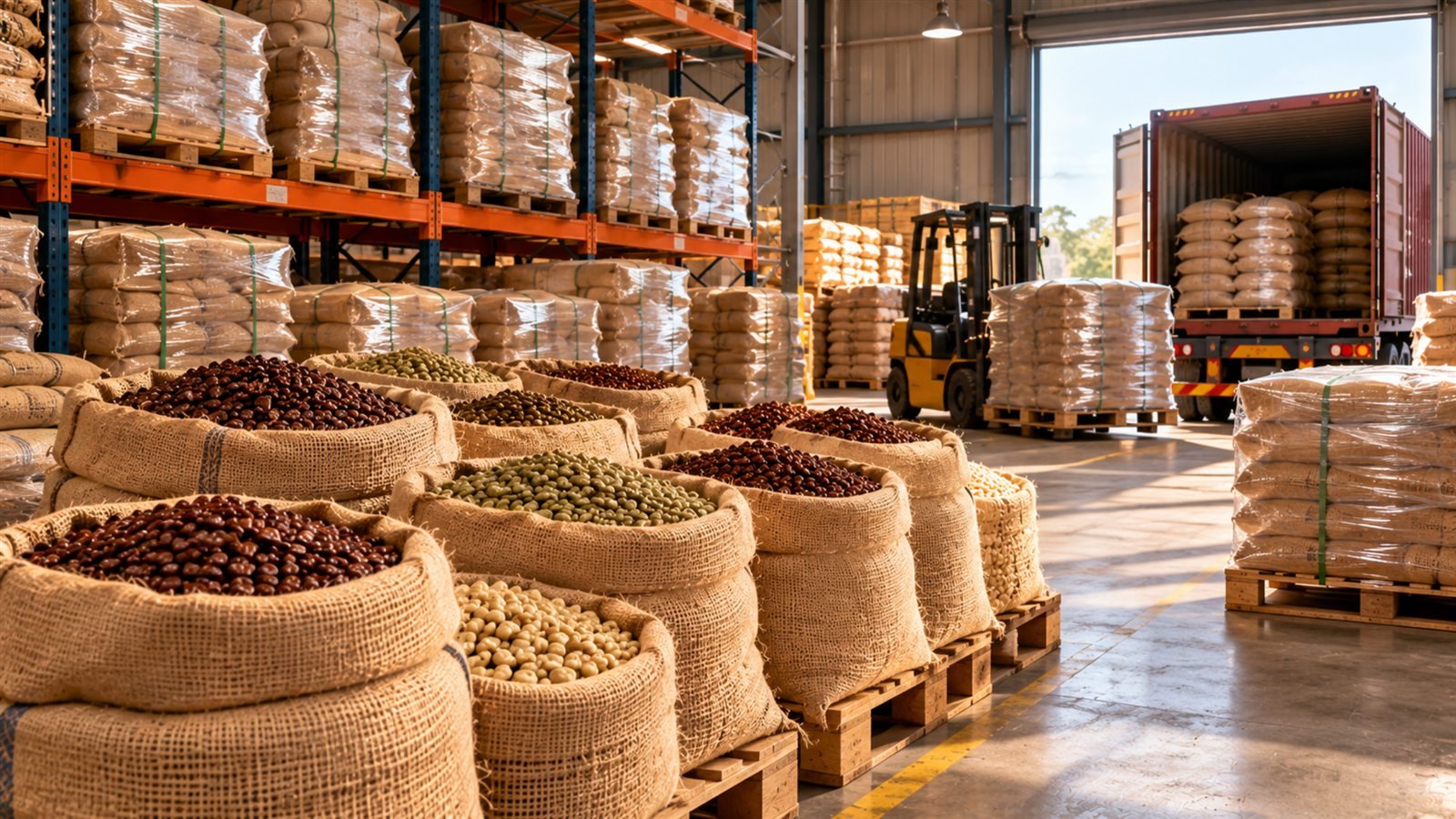
A 20-foot container takes roughly 320 jute bags of 60 kg, about 19.2 MT. That is a lot for a small roastery, and green coffee does not improve while it waits.
- Full 20-foot container: lowest cost per kilo, but you need storage and turnover to justify it
- LCL of 1 MT to 5 MT: flexible for trials and single-origin lots, though freight per kilo climbs and schedules slip
- Shared container with another roaster: the middle path, increasingly common across the Baltics
- Bonded warehouse release: land a full container and draw stock down as you use it
Routing from Cochin, Chennai or Mangalore runs through Suez to Hamburg, Rotterdam or Gdańsk with a feeder into Muuga. Transit of four to six weeks is realistic, and a coffee exporter to Estonia quoting three weeks door to door is being optimistic.
Protecting Quality From Tropical Loading to a Baltic Winter
Most buying guides skip this. A container stuffed in humid coastal India and opened in Tallinn in February has crossed a huge temperature range, and warm moist air inside condenses on the cold steel roof, then drips back onto the bags. The result is patchy mould on the top layer and a claim nobody enjoys.
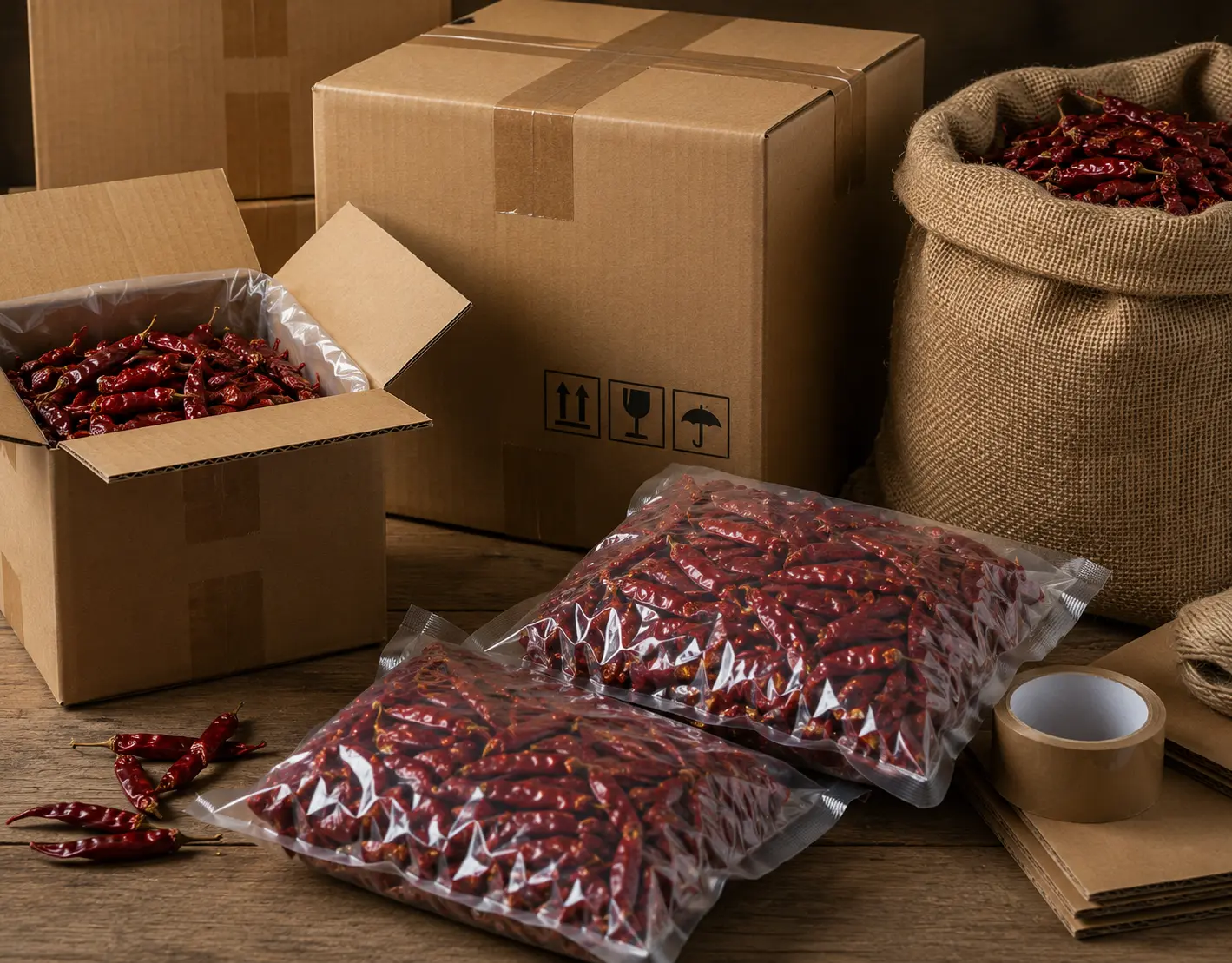
Protection is straightforward. Insist on moisture below 12.5% at loading, ask for a food-grade liner or kraft paper lining, specify desiccant sized to the container, and request loading photographs. Any experienced Indian coffee bean supplier already does this for northern European destinations, but write it into the contract.
How to Choose a Coffee Exporter to Estonia
Small buyers get less attention from large exporters, so responsiveness matters as much as capability when you shortlist an Indian coffee exporter.
- Coffee Board of India registration, a valid IEC code and an FSSAI licence
- Willingness to handle part-container and LCL volumes without heavy penalties
- Quick, repeatable sample shipping with a sealed reference retained
- Plot-level traceability data for EU due diligence
- References from small EU roasters, not only from bulk buyers
A dependable Indian coffee bean supplier tells you when a grade is not available at the screen you want. The ones who always say yes tend to ship something close and hope you will not notice.
Costs, Incoterms and Payment With a Coffee Exporter to Estonia
Pricing works off the New York arabica contract or the London robusta contract, plus or minus a differential for grade, screen and defect count. Get that differential separately so you can see what quality actually costs.
Quotes arrive in USD per MT with a stated validity, usually FOB an Indian port or CIF a northern European port with an onward feeder. For small volumes, CIF or DAP simplifies life. Payment is typically an irrevocable letter of credit at sight, or an advance with the balance against documents. Bank charges on a small credit can be disproportionate, so ask what a 3 MT transaction really costs first.
Frequently Asked Questions
Can I buy less than a full container from India?
Yes. LCL consignments of one to five tonnes are common for speciality lots, and a coffee exporter to Estonia will often support a trial if a larger programme is planned. Expect higher freight per kilo, a longer and less predictable transit, and higher handling costs at the destination terminal.
How long does shipping from India to Estonia take?
Plan on four to six weeks port to port, usually via a northern European hub with a feeder leg into Muuga. Add two to four weeks beforehand for contract, lot allocation, testing and stuffing, plus time for credit issuance if that is your payment route.
Does a coffee beans exporter from India provide organic certification?
Only if the lots are certified at origin and the chain of custody is documented. Ask for the transaction certificate covering your specific lot, not a generic company certificate. Certified lots carry a premium and need longer lead times because availability is narrower.
How do I avoid condensation damage in winter arrivals?
Contract moisture at 12.5% maximum, specify a food-grade container liner and desiccant, and ask for photographs at stuffing. Have the container opened and inspected promptly on arrival rather than leaving it standing. A good coffee supplier to Estonia will propose these measures without being asked.
Conclusion
Buying Indian coffee into a small Baltic market is mostly about matching scale to specification. Order what you can actually roast while it is fresh, write moisture and defect tolerances into the contract, sort out traceability data before shipment rather than at customs, and take winter condensation seriously. A coffee exporter to Estonia who engages with part-container volumes and answers compliance questions directly is worth more than one quoting the lowest price per tonne on a full load.
If you are weighing up grades, volumes and routing, a direct conversation with an experienced export team is the fastest way to get answers matched to how much coffee you actually turn over.