Turmeric Exports to New Zealand: Packaging, Pricing and Shipping Explained
Published by Prism Exports

Turmeric is one of India's most recognised agricultural products, valued for its golden-yellow colour, earthy aroma and wide range of food applications. It is used in spice blends, food manufacturing, traditional cooking and speciality food products. New Zealand offers opportunities for Indian spice businesses serving food distributors, wholesalers, retailers and manufacturers looking for quality turmeric.
Businesses exploring Turmeric Exports to New Zealand should understand more than product availability. Packaging, pricing, quality standards, shipping arrangements and import regulations all influence a successful export transaction. Prism Exports focuses on quality-oriented sourcing and international trade coordination for overseas buyers. With attention to product specifications and shipment requirements, Prism Exports aims to support businesses looking for dependable Indian spice supplies.
Understanding the Turmeric Export Market in New Zealand
New Zealand imports a range of food ingredients to support its retail, hospitality and food-processing industries. Turmeric is used in curry powders, sauces, seasoning mixtures, packaged foods and speciality products.
Indian turmeric is valued for its natural colour, distinctive aroma and different quality grades. Buyers may purchase whole dried turmeric fingers, turmeric powder or processed turmeric products depending on their manufacturing needs.
Potential Buyer Segments
Some important customer groups include:
Spice wholesalers and importers.
Food processing companies.
Indian and Asian grocery distributors.
Restaurants and catering businesses.
Supermarkets and speciality food retailers.
Private-label food manufacturers.
Understanding the requirements of these buyers helps suppliers select appropriate product grades and packaging options.
Popular Indian Turmeric Varieties for Export
India cultivates several turmeric varieties, each offering different characteristics in terms of colour, aroma and curcumin content.
Alleppey Finger Turmeric
Alleppey Finger Turmeric from Kerala is known for its attractive yellow-orange colour and relatively high curcumin content. It is often considered for spice processing and commercial food applications.
Erode Turmeric
Erode turmeric from Tamil Nadu is widely recognised in Indian spice markets. It is used in food preparation, commercial spice production and turmeric powder manufacturing.
Salem Turmeric
Salem turmeric is another established variety from Tamil Nadu. Its colour and aroma make it suitable for different culinary and processing requirements.
Nizamabad Turmeric
Nizamabad turmeric from Telangana is commercially traded and used in food manufacturing and spice processing.
The choice of variety should depend on the buyer's specifications, intended application and required quality grade.
Packaging Requirements for Turmeric Exports
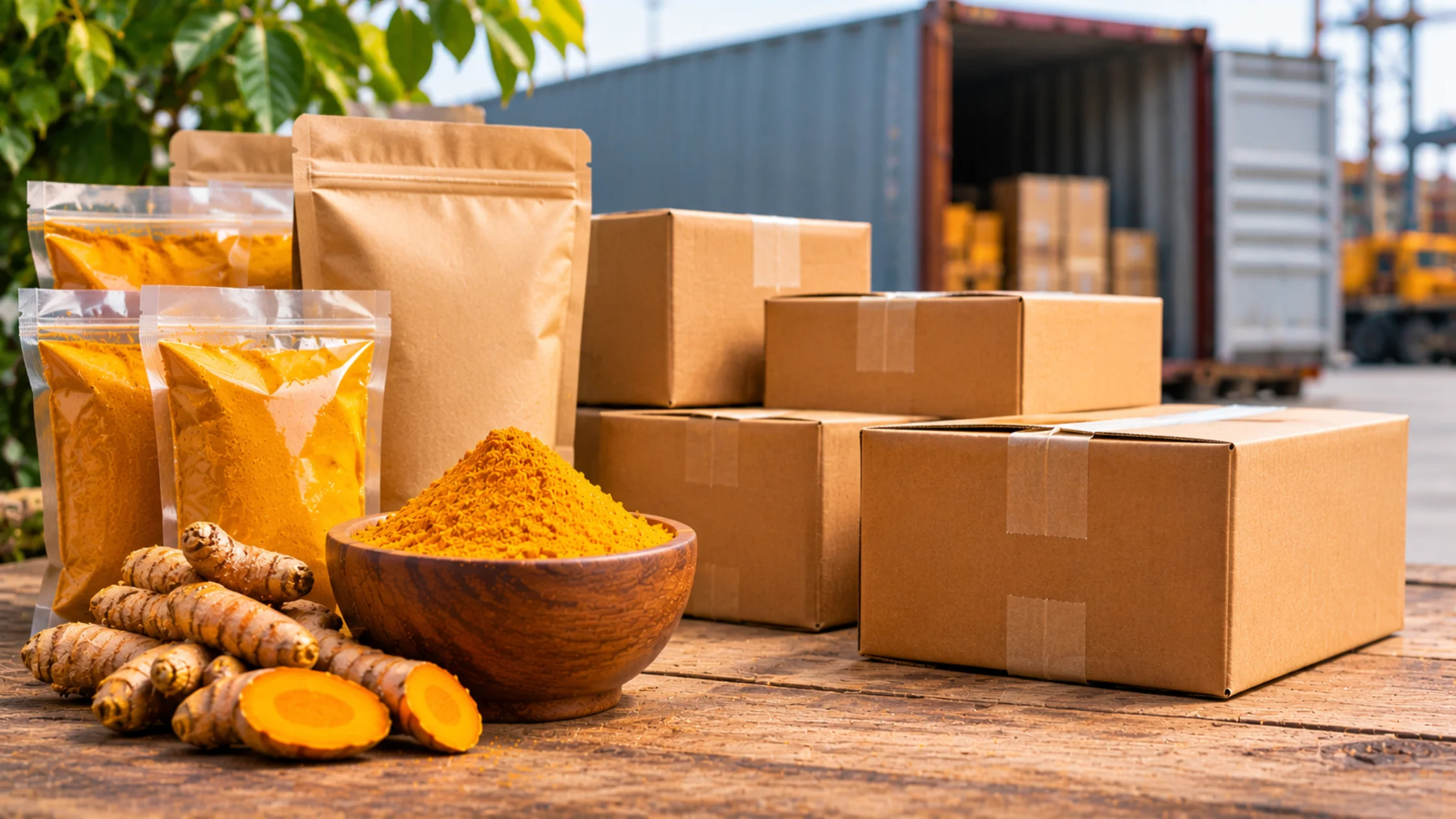
Packaging plays an important role in maintaining turmeric quality during storage and transportation. The right packaging protects the product from moisture, contamination, physical damage and external odours.
Common Export Packaging Options
Depending on the product and order quantity, exporters may use:
PP woven bags with inner liners: Suitable for bulk turmeric fingers and commercial consignments.
Multi-layer laminated bags: Help protect products from moisture and external exposure.
Food-grade bulk bags: Used for larger industrial orders.
Vacuum-sealed packaging: Suitable for selected retail or speciality products.
Custom retail packaging: Useful for private-label and supermarket requirements.
Important Packaging Considerations
Before finalising packaging, buyers and suppliers should discuss:
Product weight and bag dimensions.
Moisture protection.
Food-grade packaging materials.
Batch and lot identification.
Storage and handling instructions.
Destination-specific labelling requirements.
Proper packaging helps preserve the product's physical quality throughout the supply chain.
Pricing Factors for Turmeric Exports to New Zealand
Turmeric export prices can vary depending on the product variety, quality grade, processing method and shipment quantity. Buyers should understand the components of a quotation before confirming a commercial order.
Factors That Influence Export Pricing
Turmeric variety: Different varieties may have different market prices.
Curcumin content: Higher specified curcumin levels may influence the purchase price.
Processing: Cleaning, polishing, grading and grinding can affect production costs.
Order quantity: Bulk purchases may have different unit pricing.
Packaging: Custom or specialised packaging can increase costs.
Transportation: Freight charges depend on shipment size and delivery method.
Insurance: Cargo insurance may contribute to the overall landed cost.
Currency fluctuations: Exchange rate changes can affect international quotations.
Understanding Export Quotations
Buyers should request a detailed quotation that clearly identifies product specifications, quantity, packaging, payment terms and shipping responsibilities.
It is also important to clarify the agreed Incoterms, such as FOB or CIF, so both parties understand which transportation and insurance costs are included.
Shipping Methods from India to New Zealand
Choosing the appropriate shipping method depends on the order quantity, delivery schedule and logistics budget.
Sea Freight
Sea freight is commonly considered for large commercial turmeric shipments. It can be more economical for wholesalers and food manufacturers purchasing bulk quantities.
Exporters should coordinate container availability, cargo handling, shipping schedules and destination port arrangements.
Air Freight
Air freight may be suitable for samples, smaller consignments and urgent commercial requirements. It generally offers faster transportation but comes with higher costs per unit.
Important Shipping Considerations
Before dispatch, businesses should confirm:
Product quantity and final packaging.
Shipping method and expected transit time.
Cargo insurance arrangements.
Export and import documentation.
Customs clearance responsibilities.
Delivery location and handling arrangements.
Businesses planning Turmeric Exports to New Zealand should coordinate with their logistics partners and importers to avoid unnecessary shipment delays.
Quality Standards and New Zealand Import Regulations
New Zealand maintains food safety and biosecurity requirements for imported agricultural products. Turmeric import conditions can differ according to the product form, processing method and country of origin.
Understanding MPI Import Requirements
The Ministry for Primary Industries (MPI) oversees New Zealand's food import and biosecurity requirements.
Importers should check the applicable import health standards and requirements through the MPI system before confirming a shipment. Whole dried turmeric, processed turmeric and turmeric powder may have different conditions.
Quality Testing and Food Safety
Depending on buyer specifications and applicable regulations, testing may cover:
Curcumin content.
Moisture levels.
Pesticide residues.
Heavy metals.
Aflatoxins and other contaminants.
Microbiological parameters.
Exporters involved in exporting turmeric from india should confirm the required testing and documentation with their New Zealand buyers before dispatch.
How to Choose Reliable Indian Turmeric Exporters
Choosing a suitable supplier is important for maintaining product consistency and building long-term international business relationships.
Important Supplier Evaluation Criteria
When comparing turmeric exporters in india, buyers should consider:
Export experience and industry knowledge.
Availability of different turmeric grades.
Product samples and laboratory reports.
Packaging and processing facilities.
Export documentation capabilities.
Transparent pricing and payment terms.
Communication and shipment updates.
Organic Turmeric Sourcing
Businesses looking for organic turmeric suppliers should verify that the products have valid organic certification recognised for the intended destination market.
For organic products entering New Zealand, buyers should check the applicable organic import and certification requirements rather than relying only on a supplier's product description.
A dependable turmeric exporter in india should be able to explain product specifications, available certifications and sourcing information clearly.
Similarly, businesses involved in exporting turmeric from india should maintain proper traceability and quality records to meet international buyer expectations.
Business Opportunities for Indian Turmeric Suppliers
New Zealand offers opportunities for Indian spice businesses serving wholesalers, food manufacturers and speciality retailers.
Potential Turmeric Product Categories
Suppliers can explore demand for:
Whole dried turmeric fingers.
Turmeric powder.
High-curcumin turmeric grades.
Organic-certified turmeric.
Bulk turmeric for food processing.
Retail-ready turmeric packaging.
Businesses comparing organic turmeric suppliers should examine certification, sourcing practices and product quality before making purchasing decisions.
Experienced turmeric exporters in india can support international buyers through product selection, quality documentation and shipment coordination.
Frequently Asked Questions (FAQs)
1. What types of turmeric are exported from India to New Zealand?
Common products include whole dried turmeric fingers and turmeric powder. Different Indian varieties are available depending on colour, curcumin content and buyer specifications.
2. What packaging is suitable for turmeric exports to New Zealand?
Food-grade PP woven bags with inner liners, laminated bags and moisture-resistant bulk packaging are commonly considered. The final choice depends on product type and buyer requirements.
3. What documents are required for turmeric exports to New Zealand?
Export paperwork often comprises a sales invoice, a package contents list, an export customs declaration, and a bill of lading. Additional certificates or declarations may be required depending on the product and MPI import conditions.
4. How is the price of exported turmeric calculated?
Pricing depends on variety, quality grade, curcumin content, processing, packaging, order quantity, freight charges and insurance.
5. How can New Zealand businesses find reliable Indian turmeric suppliers?
Buyers should evaluate export experience, product samples, quality reports, registration, packaging capabilities and documentation support before confirming commercial orders.
Conclusion
New Zealand offers opportunities for Indian turmeric suppliers serving international food businesses, wholesalers and distributors. However, successful exports require careful attention to product selection, quality standards, suitable packaging, competitive pricing and reliable shipping arrangements.
If you are exploring Turmeric Exports to New Zealand, compare suppliers based on product specifications, testing capabilities and export experience. Prism Exports aims to support overseas buyers through quality-focused sourcing and professional export coordination.
For turmeric sourcing enquiries, product specifications and export-related assistance, connect with Prism Exports to discuss suitable supply options for your business. Follow us on Instagram for export updates, product information and industry insights.