
Coffee Exporter to Russia: A Buyer’s Guide
Published by Prism Exports
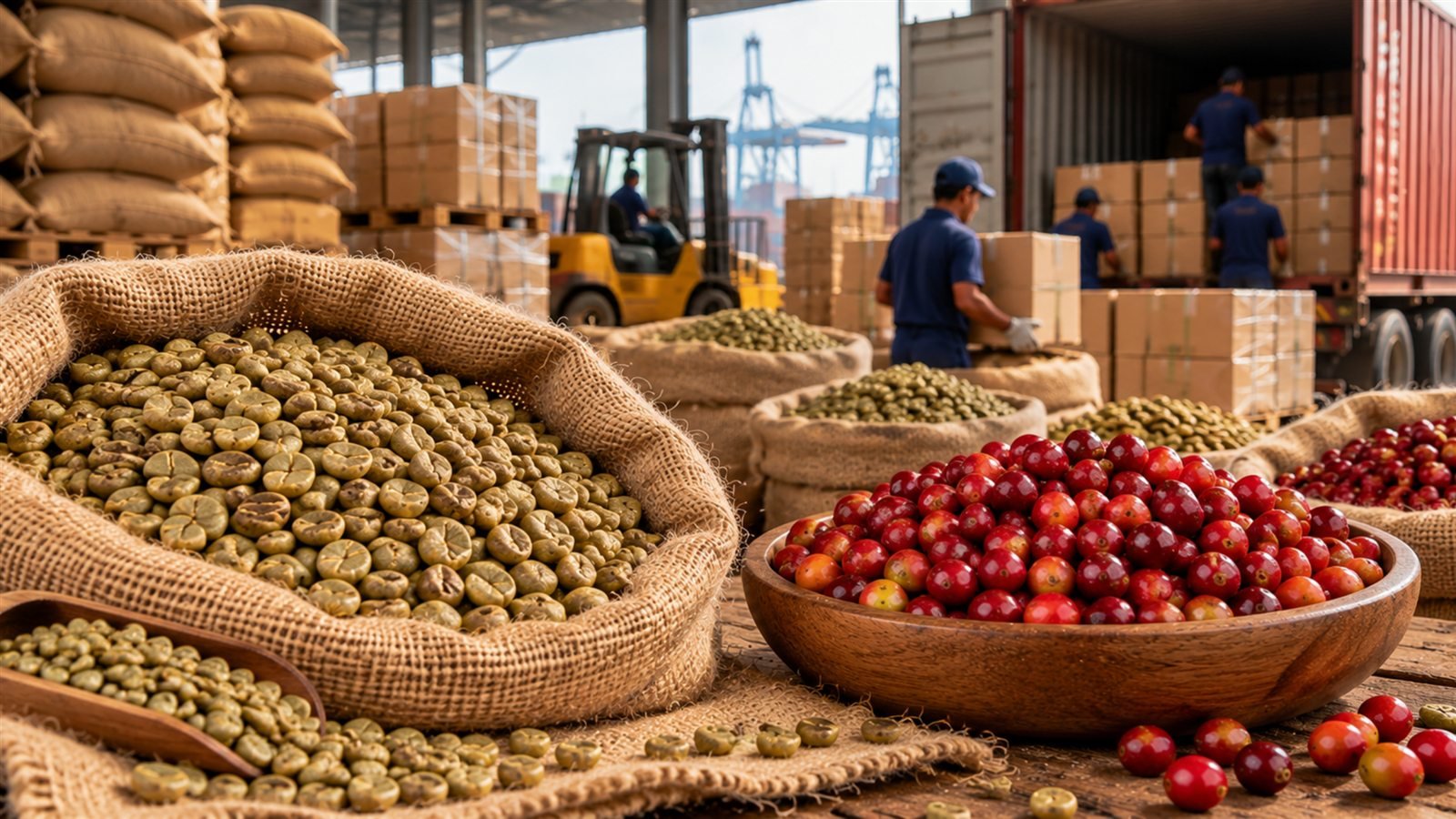
A Moscow importer once asked three questions in one line: Can you keep moisture below 12.5%? Can you load in January? And can we settle in a currency our bank can clear? That captures the practical side of choosing a coffee exporter to Russia: the specification, packaging, and payment route all need to hold up through a month at sea. Prism Exports helps buyers discuss these details before a shipment is booked.
Russia consumes substantial quantities of coffee, including robusta for soluble coffee production, and Indian coffee can suit that market. This guide covers grades, contaminant limits, EAEU documentation, container planning, and commercial terms that can help turn a trial order into a regular supply relationship. Prism Exports can help you review these requirements for your sourcing plans.
Why Russian Buyers Source From India
Two things pull Russian demand towards Indian origin. The first is cup profile. Indian robusta is clean and neutral, low in acidity, heavy in body, which is what soluble manufacturers want when they extract for yield rather than nuance. It also builds good crema, so blenders in Moscow and St Petersburg use it as an espresso base at 20% to 40%.
The second is routing. Sailings from Cochin, Chennai and Mangalore reach Novorossiysk on the Black Sea and St Petersburg on the Baltic on fairly predictable schedules, and the North-South corridor gives an overland fallback. A dependable coffee supplier to Russia quotes both port options instead of assuming one.
Grades an Indian Coffee Exporter Should Quote
Vague offers waste everyone’s week. A serious Indian coffee exporter names the grade, the screen and the defect allowance in the first email.
Robusta Grades
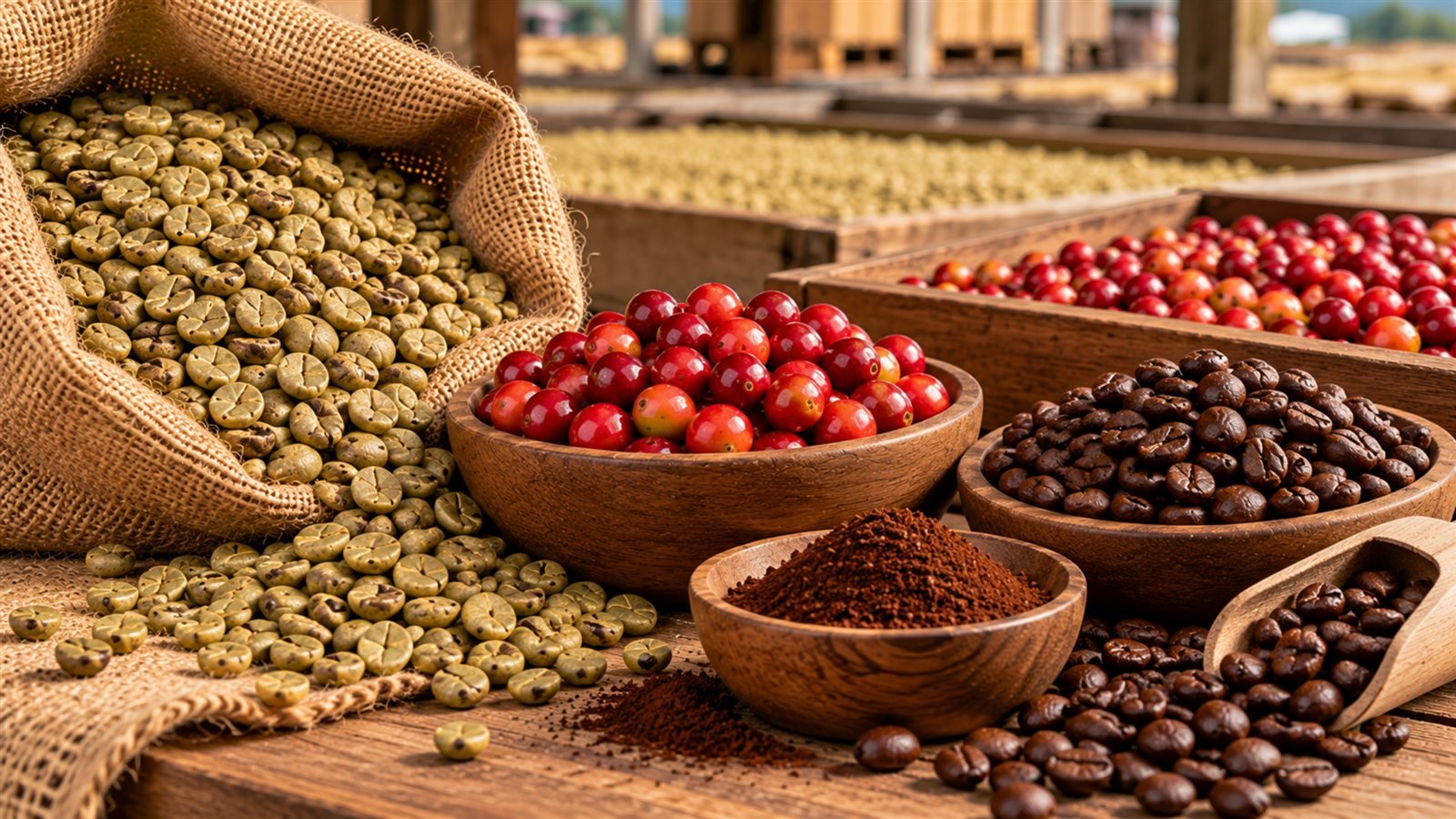
Robusta Cherry, dried in the fruit, comes as AA, AB, PB and C, with AA retained on screen 18 and AB on screen 15. Robusta Parchment, washed and dried in the husk, grades similarly and cups cleaner. Kaapi Royale sits at the top of the washed robusta range. Soluble plants usually contract Robusta Cherry AB, screen 15 and above, because the price-to-yield ratio works.
Arabica Grades
Arabica Plantation A, B and C denote washed lots by screen size, with Plantation A the largest bean. Arabica Cherry is the natural-processed equivalent. Monsooned Malabar AA is exposed to monsoon winds in coastal warehouses, which swells the bean and strips acidity, giving an earthy, low-acid cup that some Russian roasters build a single origin around.
Quality Norms, Testing and Contaminant Limits
This is where first shipments go wrong. Agree the specification in writing, then agree who tests and when. A credible coffee exporter to Russia will suggest most of this before you ask.
| Parameter | Common contract spec | Why it matters |
| Moisture | 10.5% to 12.5% | Above 12.5% invites mould and weight claims |
| Foreign matter | 0.5% maximum | Stones and husk trigger rejection at intake |
| Black and broken beans | 2% to 5% by grade | Drives roast consistency and yield |
| Screen retention | 90% on stated screen | The basis of the grade you paid for |
| Ochratoxin A | Commonly 5 µg/kg or lower | Buyer spec; drives lab and storage discipline |
| Pesticide residues | Within destination MRLs | Tested against EAEU technical regulations |
Ask for pre-shipment analysis from a NABL-accredited laboratory and consider appointing an independent surveyor to draw samples at loading. The cost is small against the value of a full container, and any experienced Indian coffee bean supplier will already have a sampling protocol.
Documentation for Shipping Into the EAEU
From the Indian Side
Expect the commercial invoice, packing list, bill of lading, certificate of origin, a phytosanitary certificate from Plant Quarantine, the ICO certificate of origin, a fumigation certificate where required, plus registration with the Coffee Board of India and a valid FSSAI licence. A competent coffee beans exporter from India assembles this set as routine, not after the vessel sails.
On the Russian Side
Import into the Eurasian Economic Union runs through food safety technical regulations, principally TR CU 021/2011, which means a declaration of conformity held by the importer of record. Green coffee normally classifies under HS heading 0901. Retail packs need Russian-language labelling, so agree artwork and translation early. Your customs broker owns this step, not your supplier.
How to Vet a Coffee Exporter to Russia
Type “coffee bean supplier India” into a search bar and hundreds of names appear. Few of them control processing capacity, and that difference shows up in the third container rather than the first.
Coffee Bean Supplier India Checklist
- Verifiable Coffee Board registration, IEC code and FSSAI licence
- Access to curing works and an in-house or named accredited lab
- Willingness to send a pre-shipment sample against a sealed reference
- Written tolerances for moisture, defects and screen retention, not “as per standard”
- Acceptance of a confirmed letter of credit, not advance payment only
- Two contactable references shipping comparable volumes
A useful conversation with a coffee supplier to Russia covers what could go wrong: a delayed harvest, a rain-affected drying window, a rolled booking. Anyone claiming nothing ever slips has not shipped much.
Incoterms, MOQ and Container Loading
Almost every coffee exporter to Russia treats one 20-foot container as the practical minimum. In 60 kg jute bags, a 20-foot unit takes roughly 320 bags, about 19.2 MT. Loading loose in a food-grade liner pushes that towards 21 MT and saves bagging cost, though soluble plants handle bulk better than roasters do. Jumbo bags of 1 MT suit buyers with forklift intake.
For smaller speciality programmes, LCL lots of 1 MT to 5 MT are possible, but per-kilo freight rises sharply and transit gets less predictable. Common terms are FOB Cochin or Chennai, CFR Novorossiysk and CIF St Petersburg. FOB gives you control of freight and often a better rate if you have a forwarder relationship. CIF is simpler if you do not.
Pricing, Payment and Lead Times From a Coffee Exporter to Russia
Green coffee prices against the London robusta contract or the New York arabica contract, plus or minus a differential for grade, screen and origin. Ask for that differential separately from the futures reference so you can see what quality is actually costing you. An established Indian coffee bean supplier quotes in USD per MT with a stated validity date, and a coffee exporter to Russia offering an open-ended price is guessing.
Payment usually means an irrevocable letter of credit at sight, sometimes confirmed through a bank in a third country, or a part advance by telegraphic transfer with the balance against documents. Confirm the settlement route with your own bank before signing anything. Lead times run two to four weeks from contract to loading during the December to March flow, plus roughly three to five weeks in transit.
Frequently Asked Questions
What is the minimum order for Indian coffee to Russia?
One 20-foot container, around 19 MT in 60 kg bags, is the normal minimum for bulk green coffee. Smaller LCL lots of one to five tonnes are possible for speciality arabica, though freight per kilo climbs and schedules loosen. Most suppliers will discuss trial volumes if a larger programme follows.
Which grade suits Russian soluble coffee plants?
Robusta Cherry AB, screen 15 and above, is the workhorse for soluble extraction because it balances price against solids yield. Plants running premium instant lines sometimes blend in washed Robusta Parchment for a cleaner cup. Confirm defect tolerance and moisture in the contract, since extraction yield reacts to both.
What documents does a coffee beans exporter from India provide?
Commercial invoice, packing list, bill of lading, certificate of origin, ICO certificate, phytosanitary certificate, fumigation certificate where applicable, and a laboratory report covering moisture, defects and contaminants. Your side handles the EAEU declaration of conformity and customs clearance through a licensed broker inside Russia.
How far ahead should I book with a coffee exporter to Russia?
Indian robusta harvest runs broadly from December into March, arabica slightly earlier. Booking six to ten weeks before your required load date gives the exporter room to secure lots at the grade you want. Late enquiries in peak season usually mean paying up or accepting a lower screen.
Conclusion
Buying green coffee from India isn’t complicated, but vague agreements can create problems. Write down the specification, agree on who will test the coffee and where, and confirm the payment route with your bank before signing the contract. Treat the first container as a chance to check quality and logistics against your expectations. A coffee exporter to Russia who asks detailed questions about your roast profile or extraction goals may be better suited to your needs than one focused only on price.
Match the grade to the end use, plan around the harvest calendar, and clarify who handles each document. If you’re comparing offers, Prism Exports can help you review specifications, volumes, and logistics against your requirements. Start a conversation with the Prism Exports team to discuss your sourcing plans and potential next steps.
For updates and more information, follow Prism Exports on Instagram.



