Green Coffee Beans from India: A Guide for Importers
Published by Prism Exports
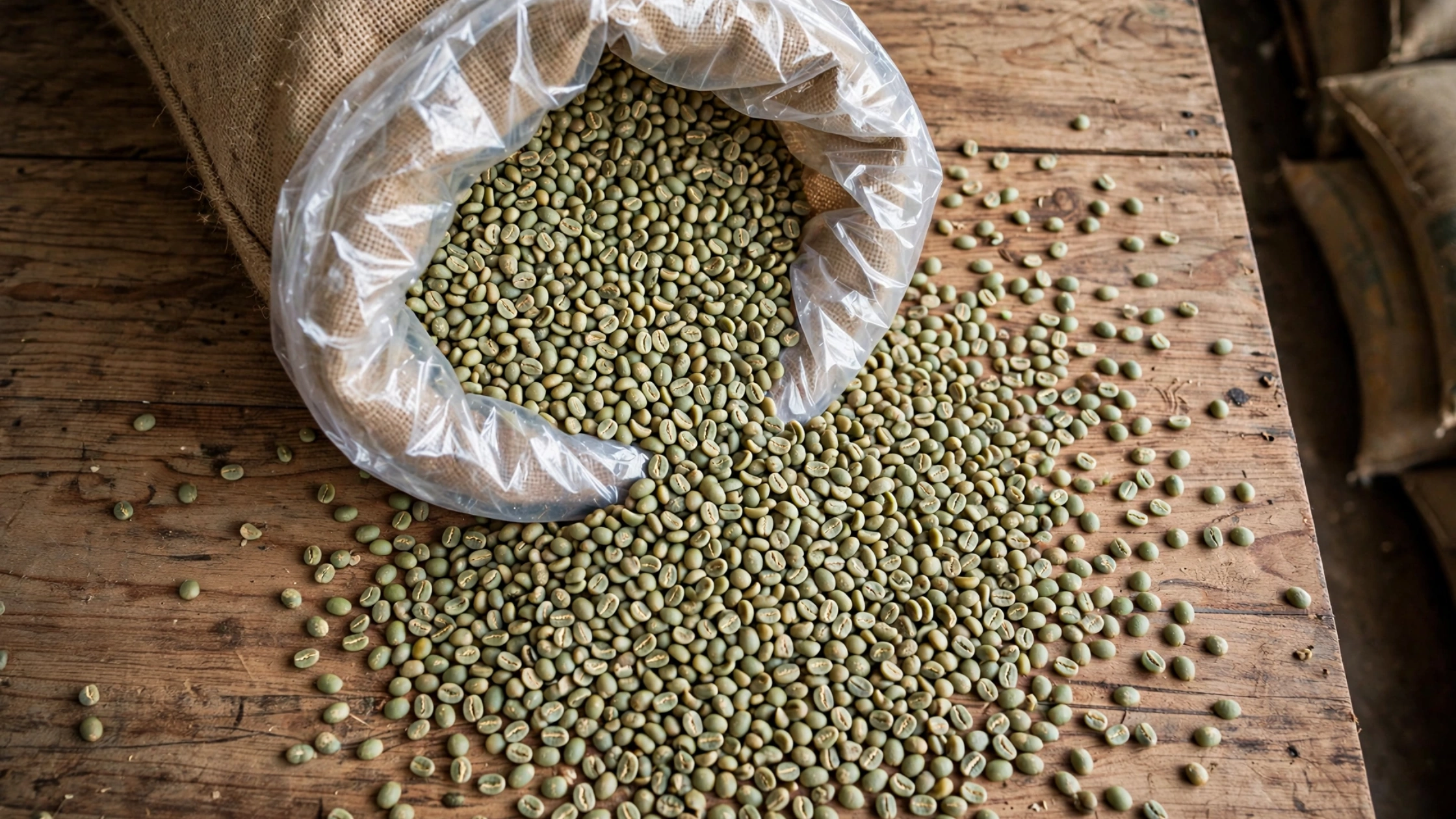
A container arrives, the bags look fine, and the first roast tastes woody and flat. Nobody swapped the coffee. It sat too long in a humid warehouse, went into plain jute for a five-week voyage, and lost the sweetness it had at origin. Prism Exports understands that Green Coffee Beans from India travel well when the handling, storage, and packing are right, and badly when they aren't, which makes the unglamorous details worth more of your attention than the cupping notes.
This guide covers the physical side of importing: how the coffee is processed, what to specify, how it should be packed and loaded, and what arrives with the paperwork. Working with Prism Exports can help buyers pay closer attention to these practical requirements when sourcing Indian green coffee for international markets.
What You're Actually Buying
Green coffee is the dried, hulled seed, unroasted and ready to ship. Between the tree and your warehouse it passes through a curing works, where parchment or dried cherry is hulled, cleaned, size-graded over screens, gravity-separated and often colour-sorted. That's the step where consistency is won or lost.
Most Green Coffee Beans from India are held as parchment or cherry until an order exists, then cured to specification. That's a practical advantage: hulling closer to shipment means a fresher bean, so ask when your lot was cured, not only when it was harvested.
Processing Methods and What They Do
Washed and natural
Washed coffee is pulped, fermented and dried without the fruit, producing a cleaner cup with defined acidity. Natural or cherry processing dries the whole fruit, giving heavier body, more sweetness and more variability. Robusta appears in both forms, and washed robusta parchment is the grade espresso blenders usually want.
Monsooned
Monsooning is unique to India's west coast. Green beans are spread in open-sided warehouses through the southwest monsoon, absorbing moisture until they swell and pale. Acidity drops away, body thickens. Buyers either love it or don't touch it, and there's little middle ground.
Quality Parameters for Green Coffee Beans from India
Put every one of these on the contract with a number against it:
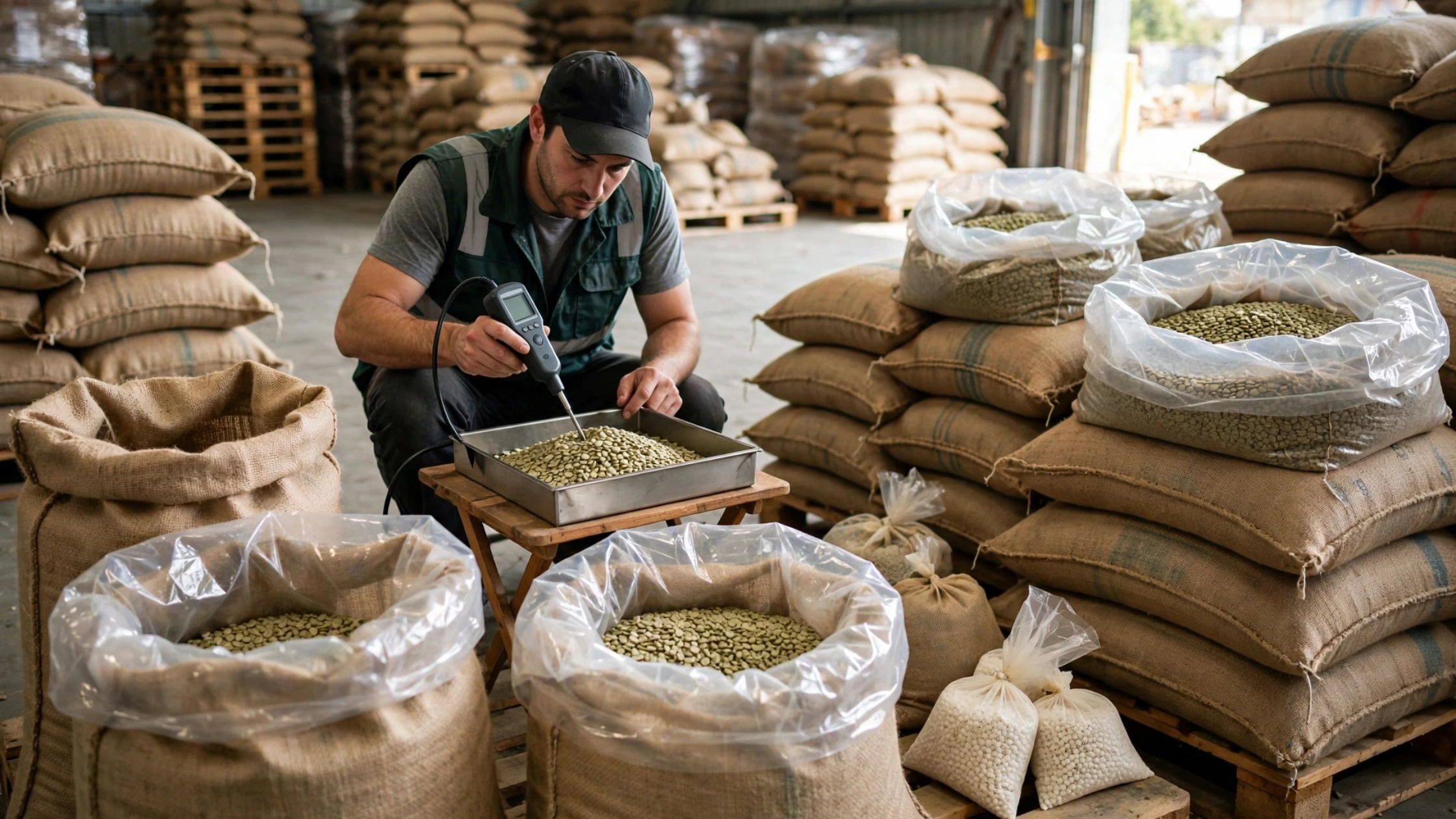
- Moisture: 10-12%, tested at loading. Below 10% you lose weight and roast unevenly; above 12% mould risk rises sharply.
- Water activity: ideally 0.55-0.62 for a long voyage.
- Screen size: stated as a minimum retention percentage over a named screen.
- Defect count: per 300g, with the grading standard named.
- Cup profile: score and descriptors from a recent cupping, not a template.
- Crop year and curing date: both, since they answer different questions.
- Foreign matter: stones, husk and stick limits in percentage terms.
A capable Indian Green Coffee Supplier reports most of these routinely. If a quotation arrives with only a grade name and a price, treat it as an early warning about how the rest of the shipment will be handled.
Packaging Choices That Decide Arrival Quality
Packaging is where importers most often try to save money and regret it. Green Coffee Beans from India ship in four common formats, and the right one depends on voyage length, destination climate and how long you'll hold stock.
Hermetic liners cost a modest amount per bag and routinely pay for themselves on any tropical crossing. For Bulk Green Coffee Beans going to a high-volume roastery with silo intake, FIBCs cut handling time significantly, though you lose the flexibility of moving individual bags.
Container Loading and the Condensation Problem
Coffee sweats. A container loaded in coastal Karnataka at 30 degrees and 80% humidity, then routed through cooler waters, forms condensation on the roof that drips back onto the bags. That's the classic cause of a mouldy top layer in a sound lot.
Ask your Green Coffee Beans Supplier how they mitigate it. The usual measures are hermetic liners, container desiccant bags rated for the transit, a kraft or Tyvek ceiling liner, dunnage to keep bags off the steel floor, and loading only in dry weather. A Green Coffee Beans Supplier who has never been asked will show it. Inspect the empty container for odour too, because green coffee picks up taint from a previous cargo with alarming ease.
A 20ft container holds around 320 bags of 60kg, close to 19.2 MT, which is the standard shipping unit. Weight limits mean 40ft containers are used less often for coffee than you'd expect.
Documentation from a Green Coffee Bean Exporter India Buyers Trust
Every consignment moves under Coffee Board of India oversight, so your supplier needs current registration and will issue an ICO certificate of origin against the shipment. Alongside that, expect the commercial invoice and packing list, bill of lading, phytosanitary certificate, certificate of origin, and lab analysis covering moisture, defects, ochratoxin A and pesticide residues where required.
Certification claims deserve their own paperwork. Organic, Rainforest Alliance and Fairtrade lots need valid transaction certificates, not just a logo on the offer sheet, and a reliable Green Coffee Bean Exporter India importers return to will send those in draft before shipment.
Storage and Shelf Life Your Indian Green Coffee Supplier Can't Control
Your responsibility starts at the port gate. Green Coffee Beans from India hold well for roughly nine to twelve months when stored properly, with the first six being the sweet spot for most roast profiles. Keep it cool, dry, dark, off the floor and away from anything strongly scented.
Warehouse conditions around 15-20°C and 50-60% relative humidity are the usual target. Rotate stock by curing date rather than arrival date. Past-crop coffee isn't ruined, but it flattens, and if you're buying it, buy it at a discount and use it in blends where the loss of brightness doesn't matter.
Buying Green Coffee Beans from India: Terms and Timing
Green coffee is priced against terminal markets, robusta on London and arabica on New York, with a differential for grade, quality and certification. An offer from a Coffee Exporter from India is therefore short-dated, often valid for days, and any Coffee Exporter from India quoting a flat price for a month is either padding it or guessing. Compare on landed cost, not FOB alone.
MOQ is usually one 20ft container, though smaller LCL trial lots of a few tonnes are common on first orders. Harvest runs November through February, curing follows, and the widest choice sits in the first half of the year. Allow three to six weeks from signed contract to loading, and add time if you need certification paperwork or specialised packing.
Frequently Asked Questions
What moisture level should Green Coffee Beans from India be shipped at?
Specify 10-12% moisture with water activity between 0.55 and 0.62, tested at the point of loading rather than at purchase. Anything drier roasts unevenly and loses weight; anything wetter risks mould and ochratoxin development during transit. Add a hermetic liner requirement if the voyage crosses tropical waters.
How many bags fit in a container?
A 20ft container typically takes around 320 jute bags of 60kg, which is roughly 19.2 MT and the standard trade unit. Bulk bags of one tonne fit fewer units but load faster. Weight restrictions mean coffee rarely ships in 40ft containers, so plan volumes in 19-20 MT increments.
Can I buy small quantities for a trial roast?
Yes. Most exporters send samples of a few hundred grams, then ship an LCL consignment of two to five tonnes if the cupping goes well. Freight per kilo is higher on small lots, so budget for that rather than comparing it against full-container pricing.
How long does green coffee stay fresh?
Expect nine to twelve months of acceptable quality with good storage, and best results within six. Vacuum or hermetic packaging extends that window. Age matters less than conditions: a well-stored ten-month-old lot usually cups better than a four-month-old one kept in a hot, humid shed.
Conclusion
Importing Green Coffee Beans from India rewards attention to practical detail more than to marketing. Specify moisture and water activity properly, insist on packaging matched to the voyage, ask direct questions about container preparation, and check that certification paperwork exists before the coffee sails. Prism Exports can help buyers focus on the practical requirements involved in sourcing and shipping Indian green coffee beans. The origin is genuinely strong, with shade-grown estates and a robusta profile that suits espresso, but none of that survives a badly loaded box. Buy on landed cost and rotate stock by curing date.
Follow Prism Exports on Instagram.
If you're planning a first shipment or reviewing why the last one disappointed, talking it through with Prism Exports is usually the quickest way to find the weak link.