How to Check Export Quality Red Chilli Before a Bulk Order
Published by Prism Exports
The sample was beautiful. Deep red, clean, uniform pods, and the analysis report matched the offer sheet line for line. Six weeks later the container lands with dull colour, more broken pods than promised, and moisture two points high. Nothing was falsified. The sample simply wasn’t the shipment, and nobody wrote down a process for making sure it would be. Prism Exports understands why consistent quality verification matters when sourcing export-grade red chilli for international markets.
Verifying export quality red chilli before you commit to a container is a repeatable procedure, not a matter of instinct. It takes a written specification, a proper sampling method, the right lab tests, and an inspection at loading. Here’s how each piece works.
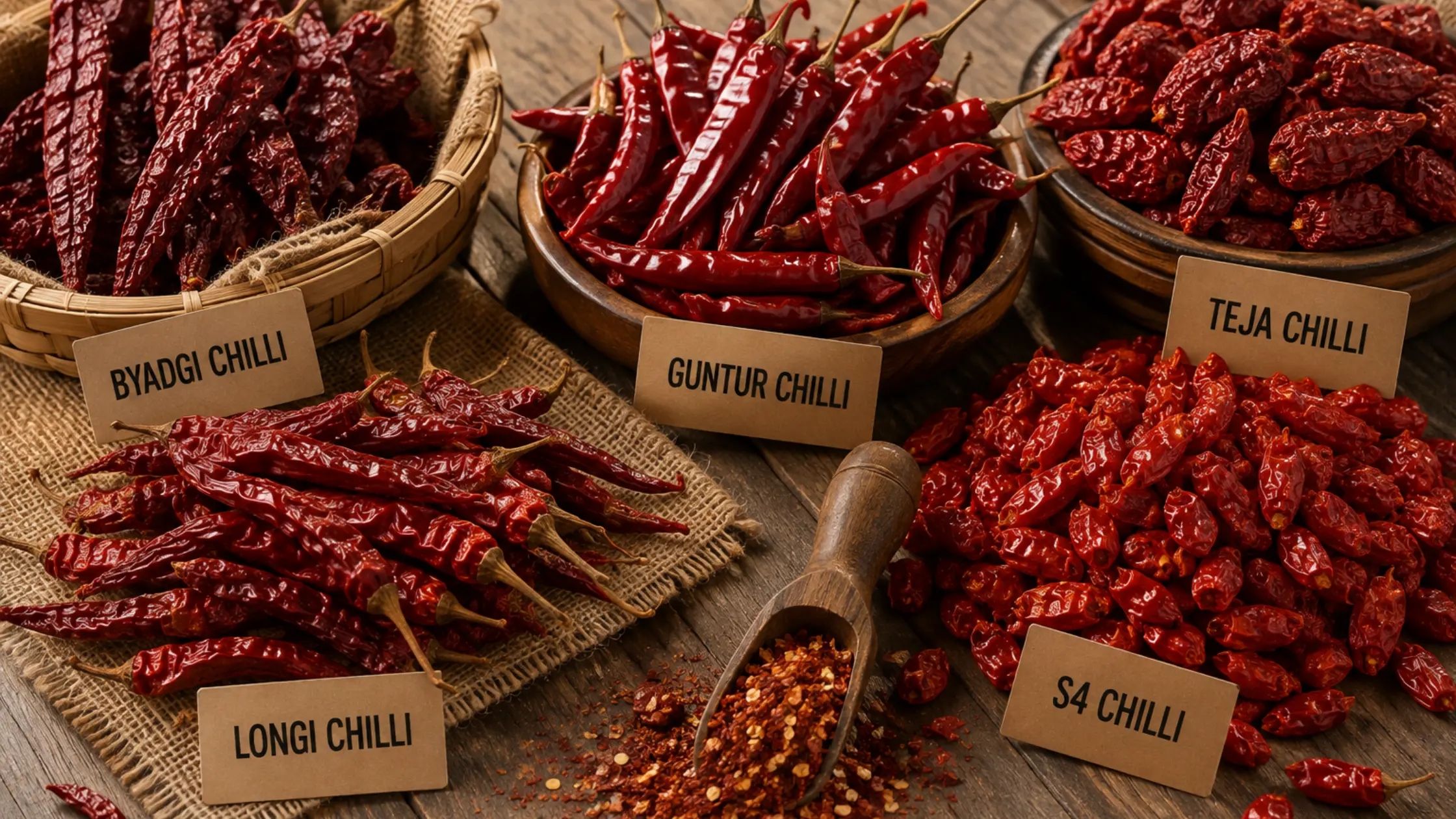
What Export Quality Red Chilli Actually Means on Paper
The phrase has no fixed legal definition, which is why buyers get burned by it. What counts as export quality red chilli for a Middle Eastern retail buyer differs from what a German oleoresin extractor accepts. Both are legitimate; they measure different things.
Your job is to replace the phrase with numbers. Every parameter that matters to your end use gets a stated value and a tolerance, and that document becomes the contract annexure. A supplier who resists putting figures in writing is telling you something useful before you’ve spent a dollar.
Start from your customer’s requirement and work backwards. If your buyer rejects anything under a given ASTA colour, that number belongs in your purchase order, not in a friendly email.
The Visual Assessment You Can Do Yourself
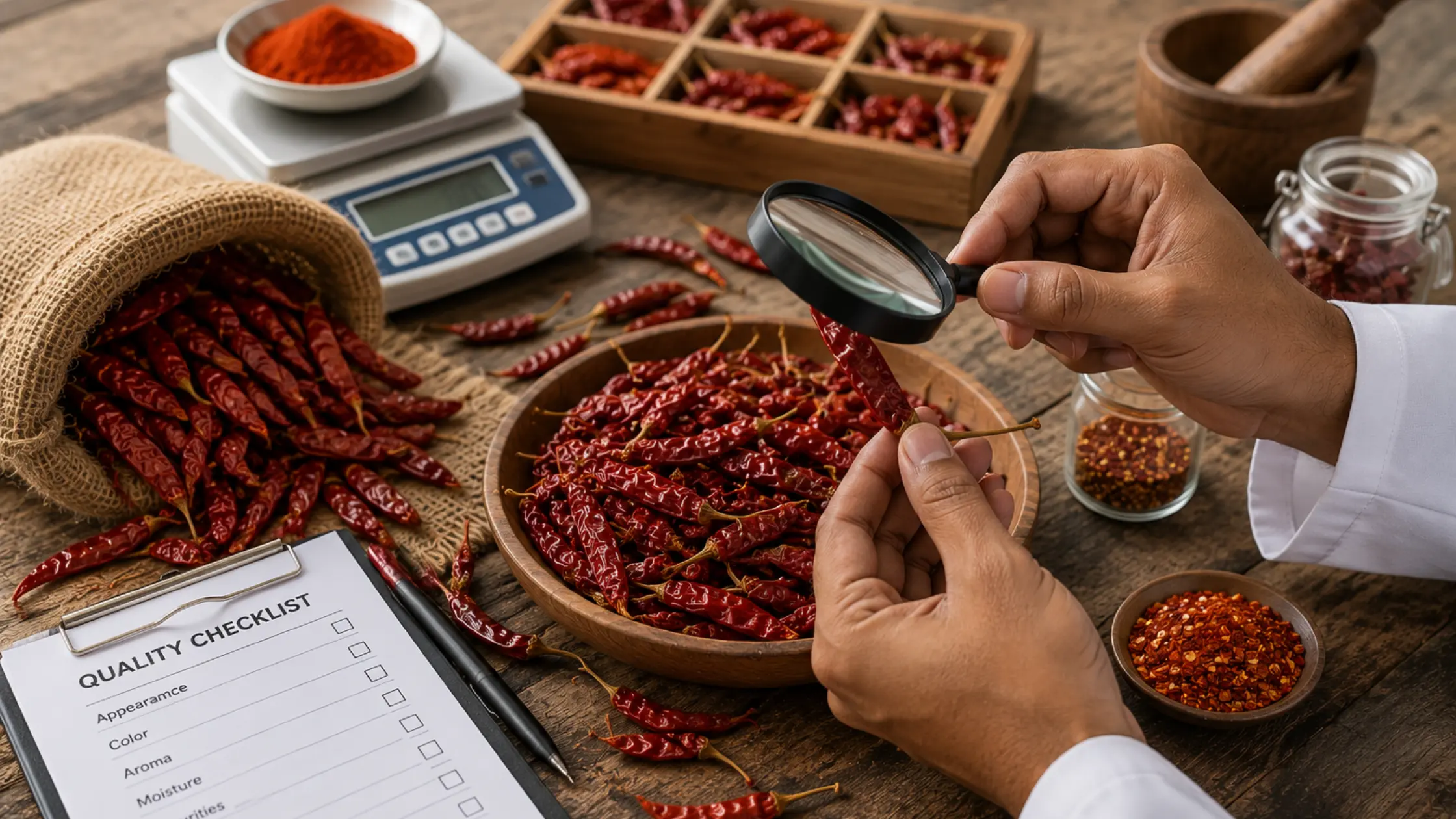
Send someone to look, or ask for photographs and video of the actual lot rather than a staged sample. Most export quality red chilli problems are visible before any lab gets involved.
Colour, Pod Integrity and Stem
Look for even colour across the pod, not just at the tip. Patchy or brownish material usually means poor drying or sun bleaching. Check the share of broken pods and loose seeds, because breakage in the bag becomes colour loss and dust at your end. Confirm stem treatment matches your order: stemmed, stemless, or stemless with tips removed.
Smell, Feel and Mould Signs
Good dry chilli smells sharp and clean. A musty or fermented note means moisture problems, and where there’s moisture there may be aflatoxin. Pods should be pliable but snap cleanly, not bend limply. Any white bloom, black spotting or clumping inside the bag is a stop signal regardless of what a certificate says.
Red Chilli Quality Standards Worth Testing Against
Published red chilli quality standards vary by market, so build your table from your own destination’s rules rather than from a supplier’s template. The gap between Indian domestic norms and EU limits catches more first-time importers than any other single issue.
Sampling: The Step Everyone Rushes
A lab report is only as honest as the sample behind it. If the sample came from one bag near the door, that certificate describes one bag and nothing else, whatever it says about export quality red chilli.
1. Draw from a defined percentage of bags spread across the whole lot, top, middle and bottom of the stack
2. Use a probe or trier rather than scooping from the open mouth of a bag
3. Combine the increments, mix thoroughly, then reduce by quartering to your final sample size
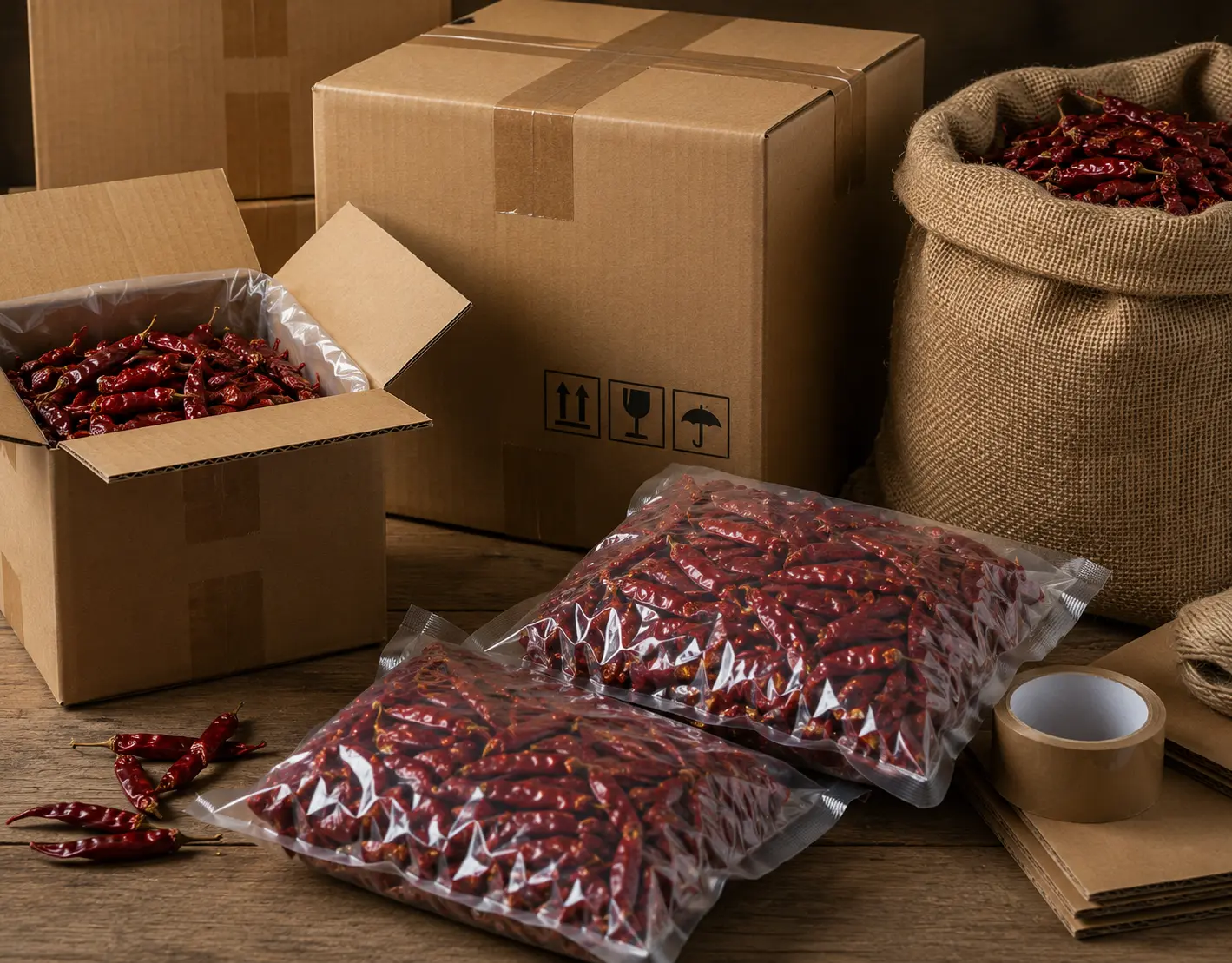
4. Split the final sample into three sealed parts: one for the supplier, one for your lab, one held in reserve
5. Label everything with lot number, date, bag count and the name of the person who drew it
That reserve sample is the part buyers skip and later wish they hadn’t. If a dispute arises on arrival, a sealed retained sample is the only thing that settles it quickly. Any competent bulk red chilli supplier will cooperate with this process without complaint, because it protects them too.
Aflatoxin and Pesticide Residues
These two cause most border rejections, and they behave differently.
Aflatoxin is a storage and drying problem. It concentrates in damaged and mouldy pods and spreads unevenly through a lot, which is precisely why sampling discipline matters. Ask how the material was dried, how long it’s been stored, and whether damaged pods were sorted out before packing.
Residues are an agronomy problem that starts in the field. A responsible Indian red chilli supplier knows which farms the material came from and what was sprayed. Test against your destination’s current MRL list, not last year’s, and not the Indian default. Passing at origin and failing at your port is an expensive, entirely avoidable outcome.
For any export quality red chilli shipment heading into a strict market, do this testing before loading. Testing after arrival gives you a claim, not a solution.
Locking the Sample to the Shipment
The sample-to-shipment gap is where most disappointment lives. Close it deliberately:
- Approve a sealed, numbered reference sample that both sides retain
- Write the approved parameters into the purchase order, with tolerances
- Require pre-shipment analysis from an NABL-accredited lab on the actual production lot
- Reserve the right to appoint an independent inspector at loading, at your cost
- Ask for container stuffing photographs with the seal number visible
- Agree in advance what happens if a parameter falls outside tolerance
That last point deserves real negotiation time. Decide now whether an out-of-spec lot means a price adjustment, a replacement or a rejection. Agreeing it after the container sails is a far harder conversation.
Choosing a Supplier Who Can Repeat It
One good container proves very little. What you want is a dry red chilli supplier who holds the same specification across four shipments in a year, which needs owned or tightly controlled processing rather than opportunistic trading.
Ask practical questions. Do they run their own cleaning and sortex line? Who does their lab testing, and how often? Can they show redacted reports from earlier shipments of the same product? Have they shipped to your destination market, and what happened? A red chilli wholesale supplier with genuine export volume answers these easily. Vagueness here predicts vagueness later, and a red chilli wholesale supplier who dodges the sortex question is usually buying finished material from someone else.
Consistency usually costs a little more per tonne. Set against one rejected container of export quality red chilli, it’s the cheapest thing you’ll buy. A dry red chilli supplier working on thin trading margins has no room to absorb a claim, which matters on the day something goes wrong.
Frequently Asked Questions
How do I check export quality red chilli without visiting India?
Request video of the actual lot, insist on third-party sampling and pre-shipment testing at an accredited lab, and appoint an independent inspector at loading. Many buyers also send a small courier sample from the drawn lot for testing in their own country before releasing the shipment.
What moisture level should I insist on?
Around 10 to 12% suits most whole dry chilli, and it’s the range most export quality red chilli contracts use. Below that, pods get brittle and break in handling; above it, mould and caking risk climbs quickly. Specify the test method alongside the number, since methods differ slightly.
Who should pay for third-party inspection?
The buyer normally pays for an independently appointed inspector, and it’s money well spent on a first order with any new bulk red chilli supplier. Costs are usually modest against container value. Once a supplier has delivered consistently, many buyers reduce inspection to spot checks.
Can a supplier guarantee my container passes EU border checks?
No credible exporter guarantees clearance, because testing has natural variation and MRL lists change. What an experienced Indian red chilli supplier can do is test against your destination’s current limits before loading and share the raw report. Treat any absolute guarantee as a warning rather than reassurance.
Conclusion
Checking export quality red chilli properly is unglamorous work: a written specification with real numbers, a sampling method that reflects the whole lot, testing at an accredited lab against your own destination’s limits, a sealed retained sample, and an inspection at loading. None of it is difficult, and none of it is optional if you’re moving containers rather than cartons. Prism Exports understands the importance of these checks in maintaining consistent quality and helping international buyers source red chilli with greater confidence. Buyers who follow this sequence rarely find themselves negotiating discounts on arrival, because the problems get caught while the goods are still in the exporter’s warehouse and still their responsibility. Follow Prism Exports on Instagram for the latest products and updates. If you’re preparing a first bulk order and want help setting a realistic specification for your market, speaking with Prism Exports is the fastest way to get answers matched to your requirement.