
How to Choose a Reliable Indian Spice Supplier for Bulk Orders
Published by Prism Exports
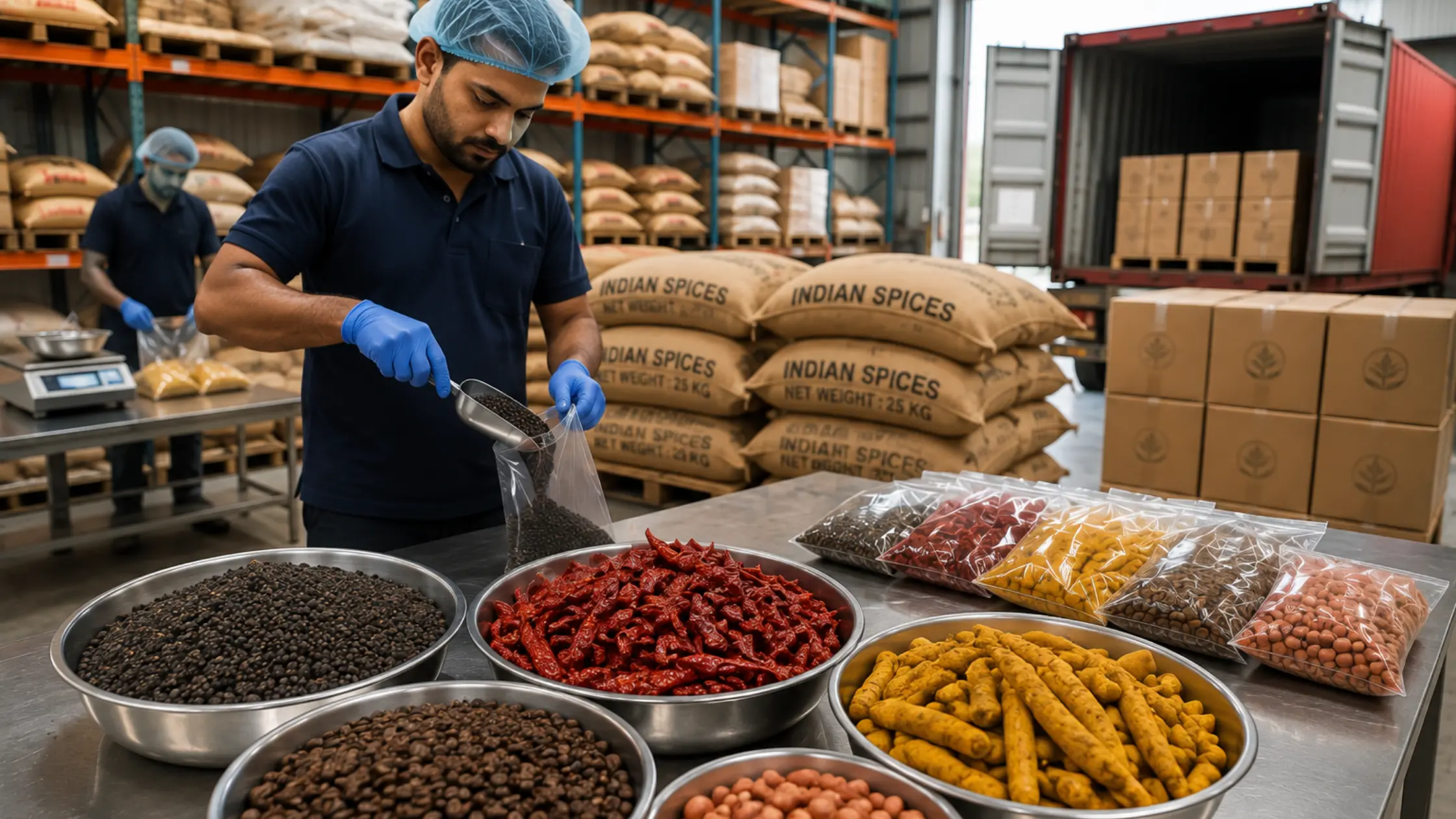
A buyer in Rotterdam once described losing most of a turmeric container to a moisture clause nobody had written down. The lot looked right, smelled right, and still got downgraded at destination. Choosing an Indian spice supplier such as Prism Exports for bulk orders is almost never about who quotes the lowest USD/MT number on day one. With Prism Exports, the focus is on understanding specifications, consistency, and dependable export practices.
It's about who can repeat the same specification across four consecutive shipments, in a season when the crop tightens and local mandi prices move against them. Whether you’re contracting 20 tonnes or 200, the real cost of a poor decision isn’t the price gap. It’s demurrage, re-inspection, a held lot, and a customer who quietly stops re-ordering.
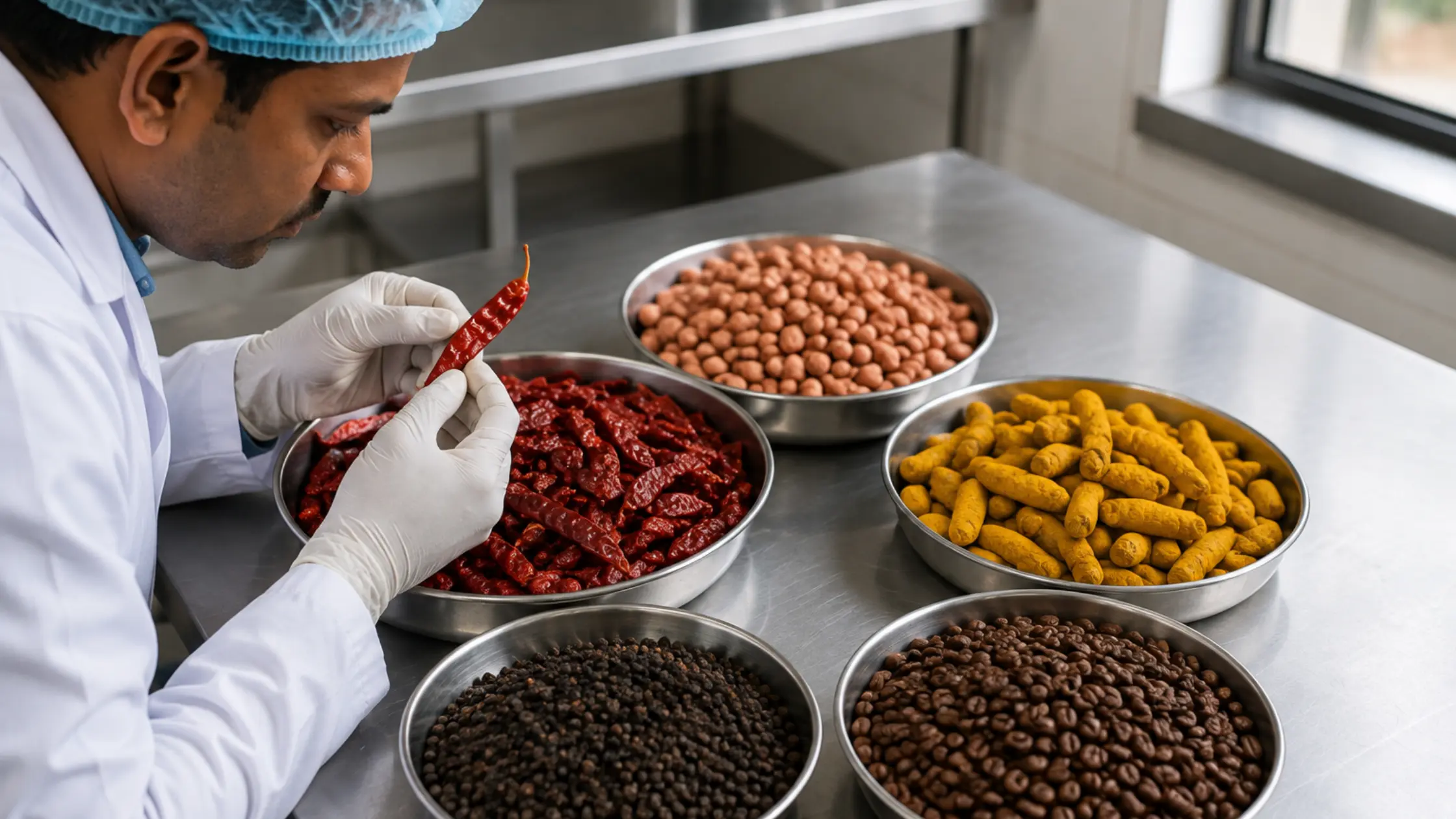
What a Reliable Indian Spice Supplier Actually Looks Like
Reliability is unglamorous. It shows up as the third consignment matching the first, lab results landing inside the tolerance you agreed, and documents reaching your customs broker before the vessel berths. Anyone can send a flattering first sample. Far fewer can hold a specification through a short crop year.
Ask how long the company has been shipping your exact product to your exact market. A house that moves cumin to the Gulf every month isn’t automatically ready for EU pesticide-residue limits, where one MRL breach can trigger border rejection and increased checks on your later lots. A serious Indian spice supplier raises that difference before you do, and asks which destination you’re clearing into on the first call.
Start With Origin, Not With the Price List
India’s spice belts behave very differently from one another, and origin quietly sets your quality ceiling. Ask any Indian spice supplier where material is actually procured before you discuss price.
Matching variety to your end use
Chilli from Guntur brings heat; Byadgi brings colour and low pungency, which is why oleoresin extractors chase it. Turmeric from Erode and Nizamabad differs in curcumin content and finger size. Cumin concentrates around Unjha, coriander across Rajasthan, pepper and cardamom in the Kerala and Karnataka hills. If your buyer needs a specific ASTA colour value, say so at the enquiry stage.
Harvest calendars and forward booking
Prices peak when arrivals thin out. Cumin and coriander arrive roughly February to April, turmeric from February, pepper from December through March. An Indian spices supplier sitting close to the growing belt can buy at arrival and hold graded stock; a pure trading desk usually can’t. Ask whether they procure at mandi level and carry cleaned material in their own warehouse.
Quality Specifications You Should Write Into the Contract
Vague contracts cause most disputes. Pin the numbers down before the proforma invoice, and expect an established Indian spice supplier to hold you to them too.
Also agree who pays for third-party testing, which laboratory both sides accept, and what happens if destination results differ from pre-shipment results. That last clause is the one people skip and later regret.
Certifications an Indian Spices Exporter Should Hold
Documentation is where credibility becomes verifiable. A genuine Indian spices exporter produces the following without hesitation:
- IEC (Importer Exporter Code) and Spices Board registration
- FSSAI licence covering the processing or storage premises
- APEDA registration where you’re buying agri-commodities alongside spices
- Phytosanitary certificate against the shipment, plus certificate of origin
- Food-safety certification such as HACCP or ISO 22000
- Organic certification under NPOP, plus NOP or EU equivalence with a valid transaction certificate
Ask for scope pages, not just certificate covers. A certificate covering a warehouse but not the grinding line tells you very little about your powder.
How to Vet a Wholesale Spice Supplier India Shortlist
Type “spice supplier India” into a search bar and you’ll get thousands of listings, most of them intermediaries. Narrowing that down is straightforward if you’re systematic:
1. Ask for three recent pre-shipment analysis reports for the same product, from different lots. Consistency across lots beats any single clean report.
2. Request photographs or a live video walkthrough of the cleaning, destoning, metal-detection and packing line.
3. Confirm whether the Indian spices supplier owns processing capacity or subcontracts it. Both can work, but subcontracting adds a link you can’t audit.
4. Send a paid sample against a written spec sheet, then order a trial lot before committing to a container programme.
5. Check references in your own market, ideally a buyer with comparable regulatory exposure.
A wholesale spice supplier India-wide will often quote confidently on anything you name. Depth in two or three products usually beats a catalogue of forty, and the best Indian spice supplier for your programme may be the one that declines half your enquiry list.
MOQ, Container Loading and Lead Times From a Bulk Spice Exporter
Loading capacity is dictated by density, not weight alone. A 20ft container typically takes around 18–19 MT of dense material such as ground spice in 25 kg bags, while whole chillies or light leafy material cube out long before they hit that weight. Bulky products often ship in 40ft units for that reason.
Discuss packing early: 25 kg or 50 kg PP laminated bags, food-grade liners, or cartons for retail-ready formats. A capable bulk spice exporter confirms pallet configuration, fumigation and liner specification rather than leaving it to the forwarder.
Ask your Indian spice supplier for a written production schedule. Realistic lead times run four to six weeks from confirmed order for standard grades, longer if you need organic segregation, steam sterilisation or custom milling. Add buffers around Indian festival periods and the tail of the monsoon, when inland movement slows.
Payment Terms and Incoterms With an Indian Spice Supplier
Most first-time trades settle on 20–30% advance with the balance against scanned documents, or an irrevocable letter of credit at sight. LCs cost more and take longer, but they protect both sides on a first container. As the relationship matures, many buyers move to open terms of 30 to 60 days.
Incoterms deserve equal attention. FOB puts freight and risk decisions in your hands, which suits buyers with existing forwarder contracts. CIF or CFR simplifies matters if you’d rather your Indian spice supplier handle booking, though you then rely on their carrier and routing. For high-value lots, agree explicitly on insurance cover.
Red Flags That Should End the Conversation
- Quotes far below the market with no explanation of grade
- Reluctance to share lab reports, or reports without an accredited laboratory’s letterhead
- Refusal to accept pre-shipment inspection by your nominated agency
- Pressure toward full advance payment on a first order
Frequently Asked Questions
How do I verify that an Indian spice supplier is genuine?
Check the IEC and Spices Board registration numbers, confirm the FSSAI licence matches the processing address, and ask for recent bills of lading with buyer details redacted. A short video call through the facility is worth more than a glossy company profile.
What’s a typical minimum order quantity?
Most exporters prefer full container loads, so MOQ often starts around 5 to 10 MT for a single product and rises for custom milling or organic runs. Smaller trial lots of 1 to 2 MT are sometimes possible via LCL, though per-tonne freight climbs noticeably at that volume.
Who pays for laboratory testing?
Pre-shipment testing is normally the exporter’s cost and forms part of the offer. If you nominate a specific third-party agency or require destination-accredited testing, expect to fund that yourself. Agree the split and the accepted laboratory in writing before production begins.
How long does shipping from India usually take?
Transit varies by lane: roughly two to three weeks to the Gulf, three to five weeks to Europe, and four to seven weeks to North America. Add one to two weeks for documentation and clearance at both ends when planning stock cover.
Conclusion
Getting this decision right is mostly discipline rather than luck. Write your specification down in numbers, confirm the certifications cover the process you care about, order a trial lot before a programme, and structure payment so neither side carries all the risk. The right Indian spice supplier welcomes that scrutiny, because it protects them from disputes too. The wrong one rushes you toward an advance payment and a loose contract you’ll be arguing about six weeks later.
If you’re comparing offers and want a clearer read on grades, documentation and realistic landed cost, talking through your requirement with Prism Exports is the quickest way to get answers matched to your market. Prism Exports can help buyers assess sourcing requirements, documentation, product specifications, and practical export considerations before committing to a bulk order. For more updates on Indian spices, export insights, products, and company news, follow Prism Exports on Instagram and stay connected with the latest updates.



