
How to Choose Quality Indian Peanuts for Bulk Import: A Peanut Supplier India Checklist
Published by Prism Exports
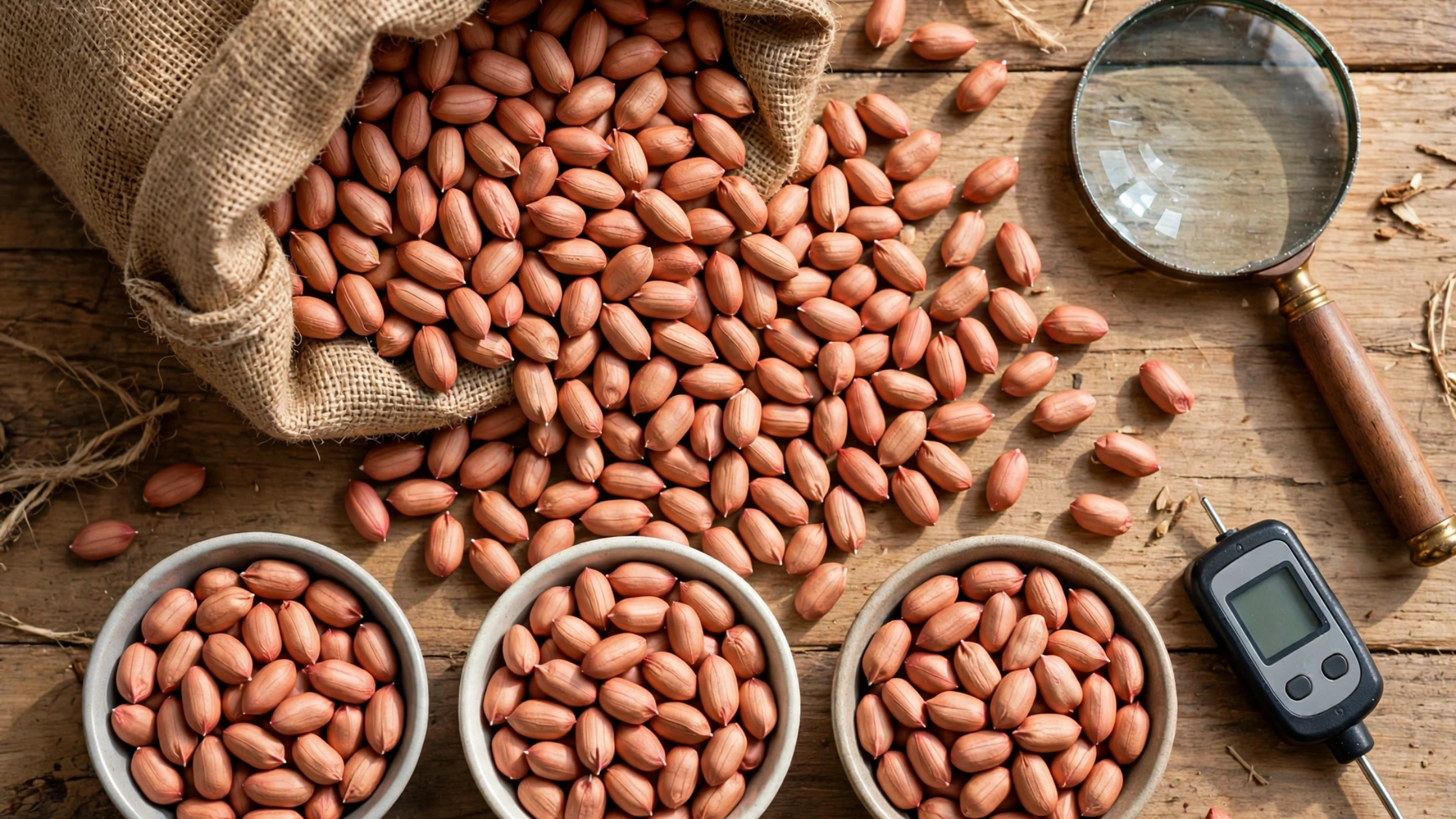
Type peanut supplier India into any B2B portal and you'll find hundreds of results within minutes. But choosing the right supplier requires more than comparing prices. Importers need to evaluate product quality, processing standards, testing procedures, specifications, documentation, and export experience before committing to a bulk order.
Prism Exports helps buyers evaluate peanut sourcing with attention to processing, sorting, quality control, and export requirements. For international buyers, these factors can make the difference between a smooth shipment and an expensive quality dispute.
That gap is what can cost importers money. A rejected consignment at destination rarely fails because the paperwork alone was wrong; it can fail because the kernels were sorted to a looser standard than the buyer expected. Clear specifications and proper quality checks allow buyers to assess the product before committing to a bulk order.
This guide explains how to assess quality before you commit, what to include in a specification, and which questions to ask before placing a bulk order.
What "Export Quality Peanuts" Actually Means
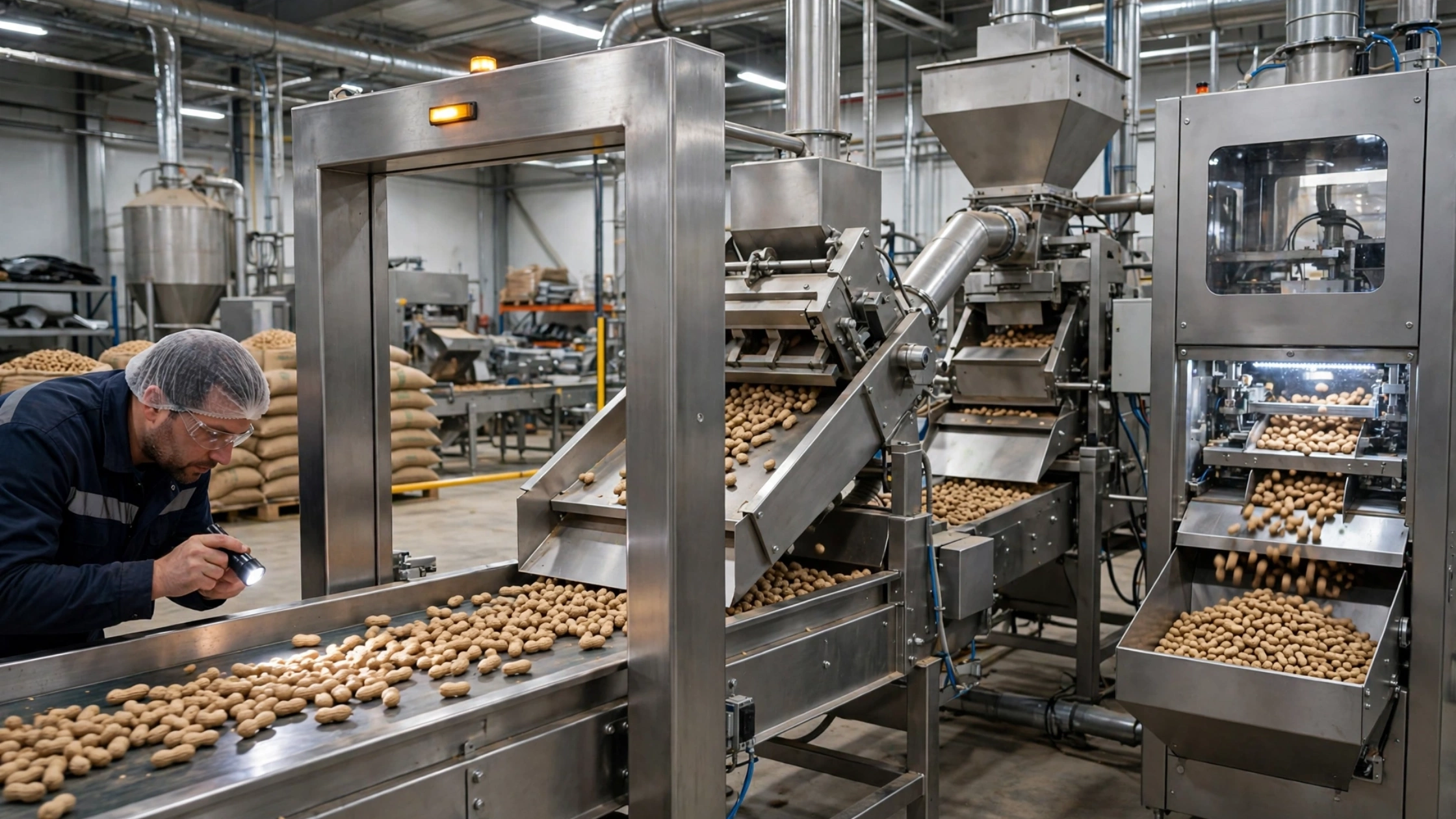
The phrase "export quality peanuts" is used widely, but it should refer to kernels that have passed through a defined quality-control process. Depending on the product and specification, this can include destoning, gravity separation, colour sorting, metal detection, hand picking, drying, and controlled storage.
Each step addresses a particular quality concern. Skipping or inadequately managing one stage can affect the final shipment.
When evaluating a sample from an Indian peanut supplier, look closely at the physical quality. Check for:
Uniform kernel size according to the agreed count
Consistent colour and appearance
Intact skins where required
Minimal shrivelled or immature kernels
No visible insect damage
No visible mould
No unusual or musty odour
Splits within the agreed tolerance
Clean kernels with minimal foreign matter
A representative sample can provide an early indication of quality, but visual inspection should be supported by appropriate laboratory testing before a bulk shipment is approved.
Testing Discipline
The second important factor is testing. Ask whether analysis is performed for each lot or shipment, whether the laboratory is appropriately accredited, and whether you can nominate an independent laboratory at your own cost.
A professional peanut supplier India should be able to clearly explain its testing process and provide the relevant reports for the shipment.
Independent testing is particularly useful when the order has strict specifications or when the destination market has specific food-safety requirements. It gives both buyer and supplier an objective reference point before the shipment leaves India.
The Specification Sheet: Counts, Moisture and Tolerances
Many quality disputes begin with a specification that is too vague to enforce. Before placing an order, put the agreed requirements in writing so that every important parameter can be measured.
Depending on the product, the specification can cover:
Peanut variety or type
Kernel count or size
Moisture
Broken and split kernels
Foreign matter
Damaged kernels
Discoloured kernels
Shrivelled kernels
Aflatoxin limits
Packaging requirements
Inspection and testing procedures
Quantity tolerance
Loading and shipment requirements
The more precisely these requirements are documented, the easier it is for both sides to evaluate whether the delivered product meets the agreement.
Why Retention Percentage Matters
A nominal 50/60 specification without a retention clause may leave room for interpretation. Buyers should agree on how much of the shipment must meet the specified screen or count.
For example, specifying a required retention percentage helps ensure that both the buyer and supplier are measuring the same quality standard.
A reliable peanut supplier India should be comfortable discussing retention, tolerances, and other measurable specifications before the order is confirmed.
Aflatoxin Control and Lab Testing
Aflatoxin is one of the important food-safety concerns associated with groundnuts. Its development can be influenced by conditions during harvesting, drying, handling, and storage.
Proper drying, stable moisture levels, suitable storage conditions, and effective sorting can help reduce quality risks. However, visual inspection alone cannot confirm aflatoxin compliance.
Requirements can also vary depending on the destination country and intended use of the product. Buyers should confirm the current requirements applicable to their market and product category before finalising the purchase specification.
Ask your peanut supplier India side to arrange pre-shipment analysis on the actual lot being shipped. Depending on the order value and destination requirements, buyers may also consider an independent laboratory test.
The cost of additional testing is relatively small compared with the potential cost of a rejected or delayed shipment.
Questions to Ask Any Peanut Supplier India Before You Order
Send these in writing and keep the replies. The answers form a useful baseline if anything goes wrong later.
1. Do you own the processing facility, and can I see photographs or arrange an audit?
2. Which sorting equipment is in line: destoner, gravity separator, colour sorter, metal detector?
3. Is aflatoxin tested per lot or per shipment, and at which accredited laboratory?
4. Can pre-shipment samples be drawn from my lot and sealed by a third-party inspector?
5. What is your storage arrangement, and how long has this crop been held?
6. Which ports do you load from, and what is realistic transit to my destination?
7. What happens commercially if my independent test comes back above the agreed limit?
That last question is the one that matters. A dependable bulk peanut supplier will have an answer ready, usually involving re-sorting, replacement or a pre-agreed price adjustment. Vagueness at this point is a warning.
Samples, Inspection and the First Container
Ask the peanut supplier India to provide pre-shipment samples from the actual lot whenever practical, rather than relying only on a general type sample from an earlier crop.
Have samples properly identified and sealed, and retain a portion for your own records where appropriate.
For higher-value shipments, buyers can consider appointing a recognised third-party inspection agency to supervise sampling and loading.
Treat the first shipment as an opportunity to evaluate the supplier's complete process. Check how quickly samples are provided, whether the documentation matches the agreed specifications, whether testing is completed on time, and how the supplier responds when you raise detailed questions.
A peanut exporter from India that handles the first shipment professionally and consistently can be more valuable than a supplier offering a slightly lower initial quotation.
Payment Terms and Working with a Bulk Peanut Supplier
Payment terms should be agreed clearly before the order is confirmed. Depending on the buyer, supplier, destination, and established trading relationship, transactions may use arrangements such as letters of credit or other mutually agreed payment structures.
New buyers should carefully review the payment terms, shipment documents, inspection requirements, and applicable trade conditions before making an advance payment.
The Incoterm should also be clearly stated. For example, FOB Mundra and CIF at the buyer's destination involve different responsibilities, costs, and risk-transfer points.
Price should not be evaluated in isolation. Sorting, testing, packaging, storage, and compliance with tighter specifications all have costs.
If a quotation is significantly below the level required to meet the agreed quality specification, buyers should ask how the supplier intends to achieve that specification without compromising quality.
A professional Indian groundnut supplier should be able to explain the relationship between the required specification and the final price.
Frequently Asked Questions
How do I verify a peanut supplier India before paying?
Confirm the Indian groundnut supplier holds APEDA registration, an IEC code and FSSAI licensing, then ask for recent shipping bills to a comparable market with sensitive details redacted. Request a video walk-through of the processing line and speak to a reference importer in your region. Independent inspection at loading is the strongest safeguard.
What moisture level should I specify for bulk peanuts?
Seven to eight percent maximum at loading is the usual commercial standard for shelled kernels. Below that the kernels get brittle and you lose weight; above it you're inviting mould and aflatoxin development in transit. Always state that moisture is measured at loading, and name the test method used.
Can I order a small trial quantity first?
Some suppliers will arrange LCL trial lots of around 5 to 10 MT, though per-tonne freight rises sharply and pricing usually can't be held for later full-container orders. A more practical approach is to order one 20-foot container of a mid-range count while applying full inspection and testing protocols.
Which peanut grades suit peanut butter production?
Smaller counts such as 70/80 and 80/90, plus split and blanched kernels, are commonly used because oil content matters more than kernel appearance. Confirm free fatty acid levels and the aflatoxin ceiling for your market, since butter production generally requires tighter control than snack packing does.
Conclusion
Choosing a peanut supplier India buyers can rely on comes down to several key factors: consistent product quality, proper testing, clear specifications, reliable documentation, and transparent communication.
Prism Exports focuses on consistent processing and quality checks to help buyers source peanuts according to their required specifications. Buyers should evaluate samples carefully, insist on appropriate lot-level testing, consider independent inspection where necessary, and review how the supplier handles the first shipment rather than focusing only on the initial quotation.
Indian peanut supply offers a wide range of counts, varieties, and export options. For buyers starting a new sourcing programme, discussing product specifications, aflatoxin requirements, packaging, shipment terms, and destination-market requirements with a qualified peanut supplier India can help ensure the product matches their requirements and expected volumes.
If you are sourcing Indian peanuts for bulk import, contact Prism Exports to discuss your required peanut grade, specifications, packaging, and destination requirements.



