How to Evaluate Black Pepper Manufacturers in India Before Placing a Bulk Order
Published by Prism Exports
Black pepper is an essential spice in food manufacturing, restaurant kitchens, seasoning production, and international food distribution. For businesses purchasing large quantities, selecting the right supplier involves more than comparing prices. Product consistency, processing methods, food safety, packaging, and delivery reliability can all influence the success of a bulk order. Evaluating Black Pepper Manufacturers in India carefully helps importers, wholesalers, and food processors identify suitable suppliers for their commercial needs. India has an established spice industry, offering opportunities to source whole peppercorns and processed pepper products. Businesses interested in sourcing spices from India can approach Prism Exports to discuss their requirements. By understanding the key factors involved in supplier evaluation, buyers can make informed decisions and assess potential partners, including Prism Exports, against their product and export requirements.
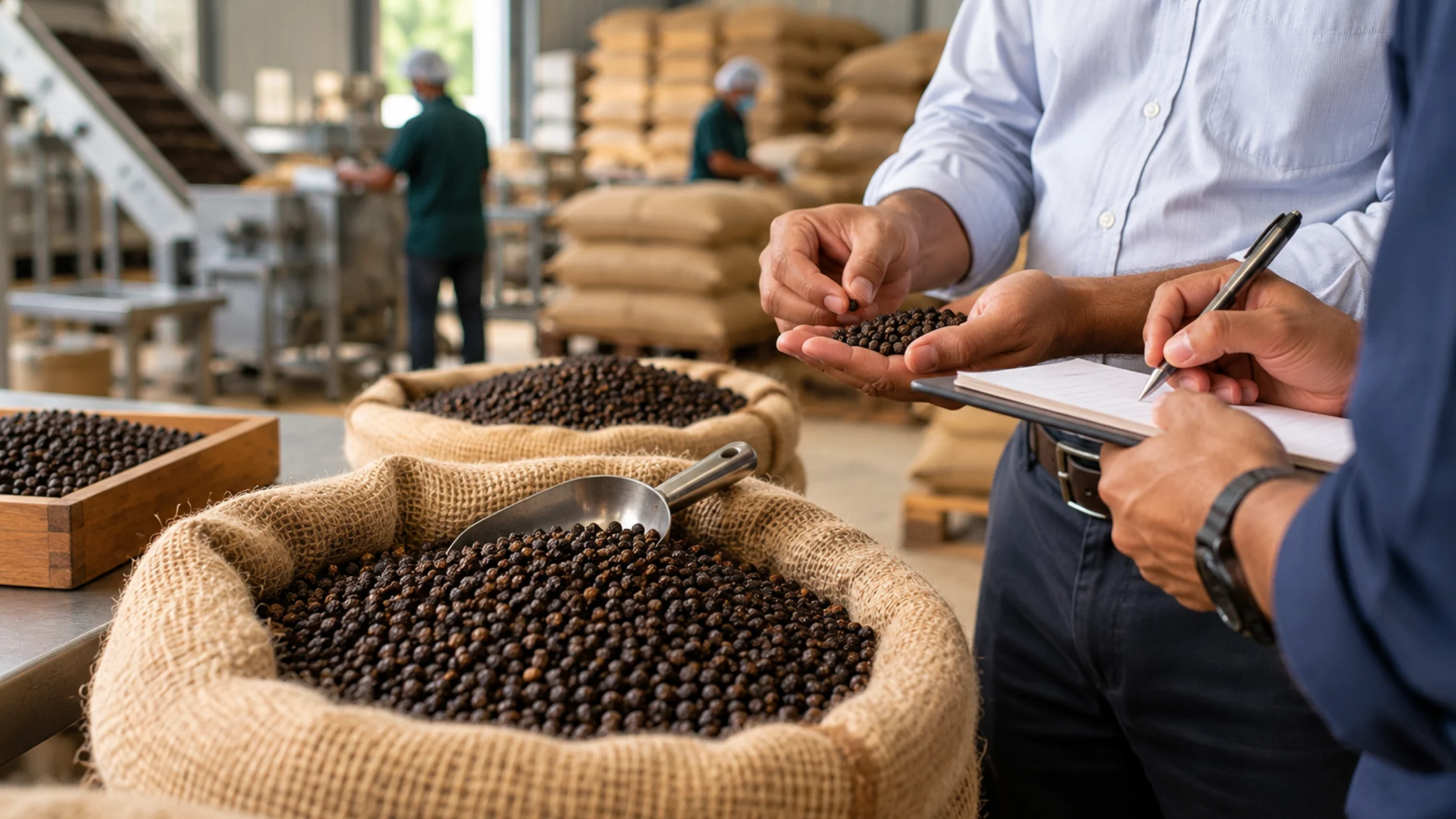
1. Understand Your Black Pepper Requirements Before Buying
Before contacting manufacturers, define the type of black pepper your business needs. Clear specifications make supplier comparisons easier and reduce the risk of receiving unsuitable products.
Choose the Right Product Form
Black pepper is commonly available as whole peppercorns, cracked pepper, and ground powder. Each form serves different commercial purposes.
- Whole peppercorns: Suitable for spice distributors, grinders, restaurants, and food manufacturers.
- Cracked pepper: Commonly used in seasoning blends, marinades, and selected food products.
- Ground black pepper: Convenient for packaged foods, spice mixes, and commercial kitchens.
Consider your production process, storage arrangements, and customer expectations before selecting a product.
Define Quality Specifications
Your purchasing requirements may include peppercorn size, moisture content, cleanliness, aroma, piperine content where specified, and acceptable levels of foreign matter.
Write down these requirements before requesting quotations. A detailed specification allows manufacturers to provide more accurate pricing and helps you evaluate samples consistently.
2. Verify the Manufacturer's Business Credentials
A supplier's business credentials can help you understand its legitimacy, operational capabilities, and suitability for a long-term relationship.
Check Registrations and Business Information
Review the company's legal business details, contact information, relevant registrations, and applicable export credentials. If the manufacturer claims to hold quality or food-safety certifications, request copies and verify their validity and scope.
Ask each manufacturer to provide current evidence of the approvals relevant to your product and destination. The relevant requirements depend on the product, activities performed, and destination market.
Understand Manufacturing Capabilities
Some businesses process black pepper directly, while others source products from growers or third-party processors. Ask which activities the company performs itself.
Useful questions include:
- Does the business clean, grade, grind, or package black pepper?
- What quantities can it supply within your required timeline?
- Can it maintain agreed specifications across repeat orders?
- Does it provide relevant quality reports?
- Can it coordinate export documentation and shipping?
Clear answers help you understand the supplier's capabilities before making a financial commitment.
3. Evaluate Black Pepper Quality and Testing Procedures
Product quality is one of the most important factors when assessing manufacturers. Variations in raw material, drying, processing, and storage can affect the final product.
Inspect Appearance, Aroma, and Cleanliness
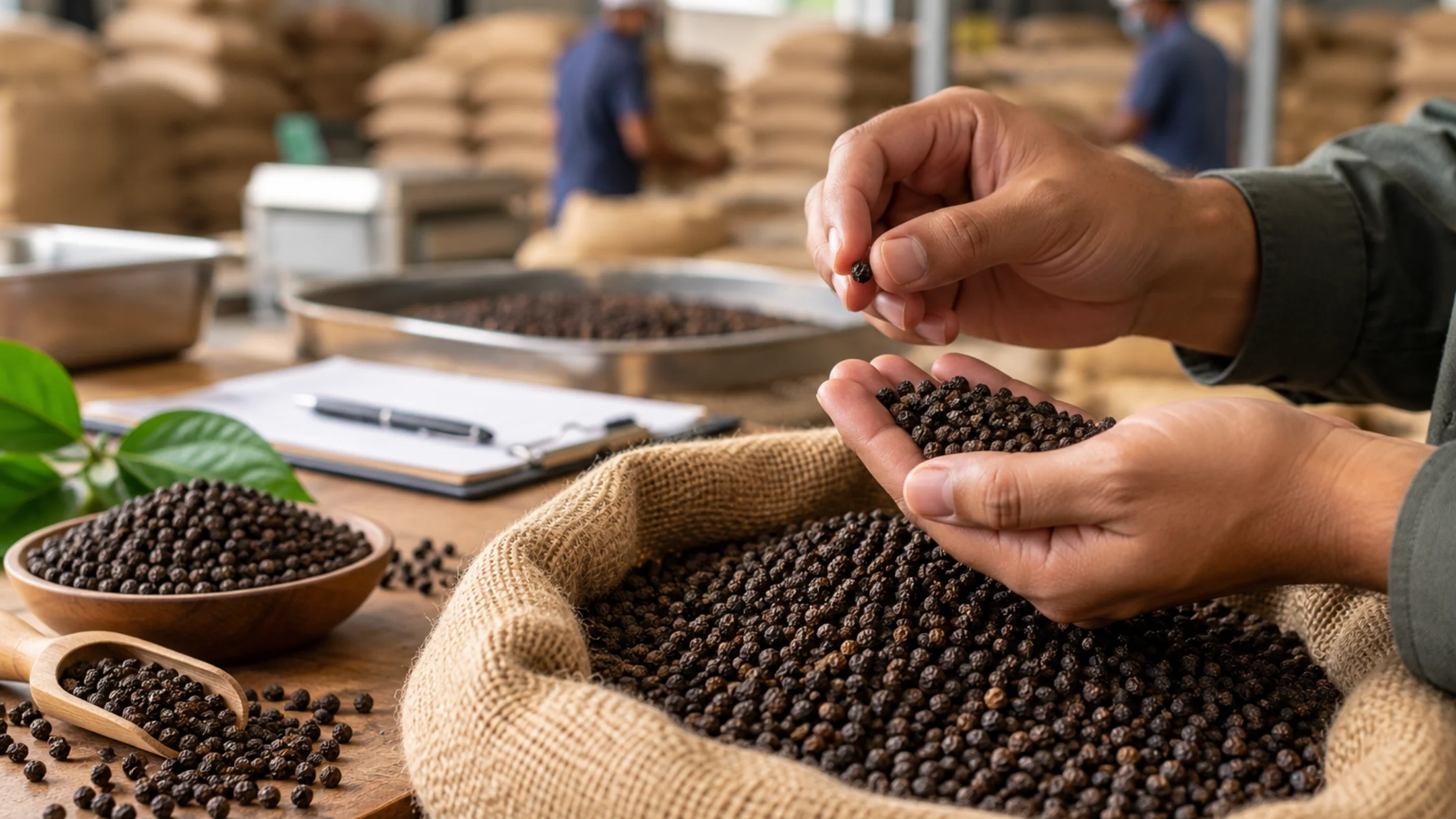
Black pepper should meet the agreed standards for colour, aroma, physical condition, and cleanliness. Buyers should look for excessive foreign matter, damaged peppercorns, unusual odours, and inconsistent sizing where uniformity is required.
Request a representative sample and compare it against the written specification before confirming a large order.
Check Moisture and Relevant Laboratory Results
Moisture content is important for storage stability. Depending on the buyer's requirements and destination regulations, testing may also cover microbiological quality, pesticide residues, heavy metals, and other relevant contaminants.
Ask for current, product-specific laboratory reports where applicable. Confirm that the testing methods and acceptance limits match your requirements and the rules of the importing country.
4. Assess Sourcing, Processing, and Product Consistency
The quality of black pepper begins with the raw material and continues through processing and storage. A reliable manufacturer should be able to explain how it manages these stages.
Understand the Origin and Raw Material
Black pepper is cultivated in several Indian regions, including parts of Kerala and Karnataka. Growing conditions and post-harvest handling can influence pepper characteristics.
Ask for accurate information about the product's origin and sourcing arrangements. Regional origin alone does not guarantee a specific quality grade, so samples and specifications remain important.
Review Processing and Storage Practices
Cleaning, grading, drying, and suitable storage help maintain product quality. If ground pepper is required, the grinding process and particle-size specification should also be discussed.
For repeat orders, ask how batches are identified and checked. Consistent procedures help buyers compare shipments and investigate any differences in quality.
5. Manufacturer vs. Black Pepper Supplier: Which Is Better?
A manufacturer and a supplier may both provide black pepper, but their capabilities can differ. The best choice depends on the quantity, product form, and level of processing your business requires.
| Comparison Factor | Black Pepper Manufacturer | Black Pepper Supplier |
| Main role | Processes or produces pepper products | Sources and supplies pepper products |
| Processing control | Depends on its own facilities | Depends on sourcing and processing partners |
| Product specifications | May offer control over grading or grinding | Depends on available products and supplier arrangements |
| Order fulfilment | Depends on production capacity | Depends on stock and supplier network |
| Export support | May export directly or work with partners | May coordinate export services where available |
| Best suited for | Buyers seeking processing details or tailored specifications | Buyers seeking flexible sourcing and supply options |
Some companies perform both roles. Confirm the services provided directly instead of relying solely on the business description.
6. Compare Pricing, Minimum Order Quantities, and Payment Terms
A competitive quotation is important, but the lowest price does not always offer the best value. Buyers should compare equivalent products and account for all relevant costs.
What Influences Black Pepper Prices?
Prices may vary according to:
- Peppercorn grade, size, and quality.
- Raw material availability and seasonal conditions.
- Processing and packaging requirements.
- Order volume and minimum quantities.
- Testing and documentation costs.
- Transportation, insurance, and destination-related charges.
Request quotations based on the same specifications to avoid comparing different grades or commercial terms.
Confirm Commercial Terms Before Ordering
Before making payment, agree on the quantity, unit price, currency, payment schedule, delivery date, and process for handling quality discrepancies.
For international orders, also confirm delivery terms and understand how costs and risks are allocated under the agreed Incoterms® rules, where applicable.
7. Check Export Readiness for International Markets
Manufacturers supplying international customers must meet the applicable requirements for documentation, packaging, food safety, and shipping.
Export-Quality Black Pepper from India
Businesses looking for Export-quality black pepper from India should confirm that the product meets their destination market's specifications. Requirements can differ according to the importing country, intended use, and product form.
Depending on the shipment, documentation may include commercial invoices, packing lists, shipping documents, customs declarations, and additional certificates or laboratory reports.
Check the destination market’s documentation rules for each order, as required paperwork can vary by shipment.
Working with a Black Pepper Exporter to UAE
Importers searching for a Black pepper exporter to UAE should check the supplier's experience with the relevant shipment requirements and its ability to coordinate the necessary documents.
Confirm applicable UAE import rules, food-safety requirements, labelling, packaging, and customs procedures before dispatch. Product availability and export capability should be verified directly with the supplier.
8. Evaluate Packaging, Logistics, and Delivery Reliability
Even high-quality pepper can be affected by unsuitable packaging or poor storage during transportation. Buyers should evaluate the complete supply arrangement, not just the product itself.
Choose Suitable Packaging
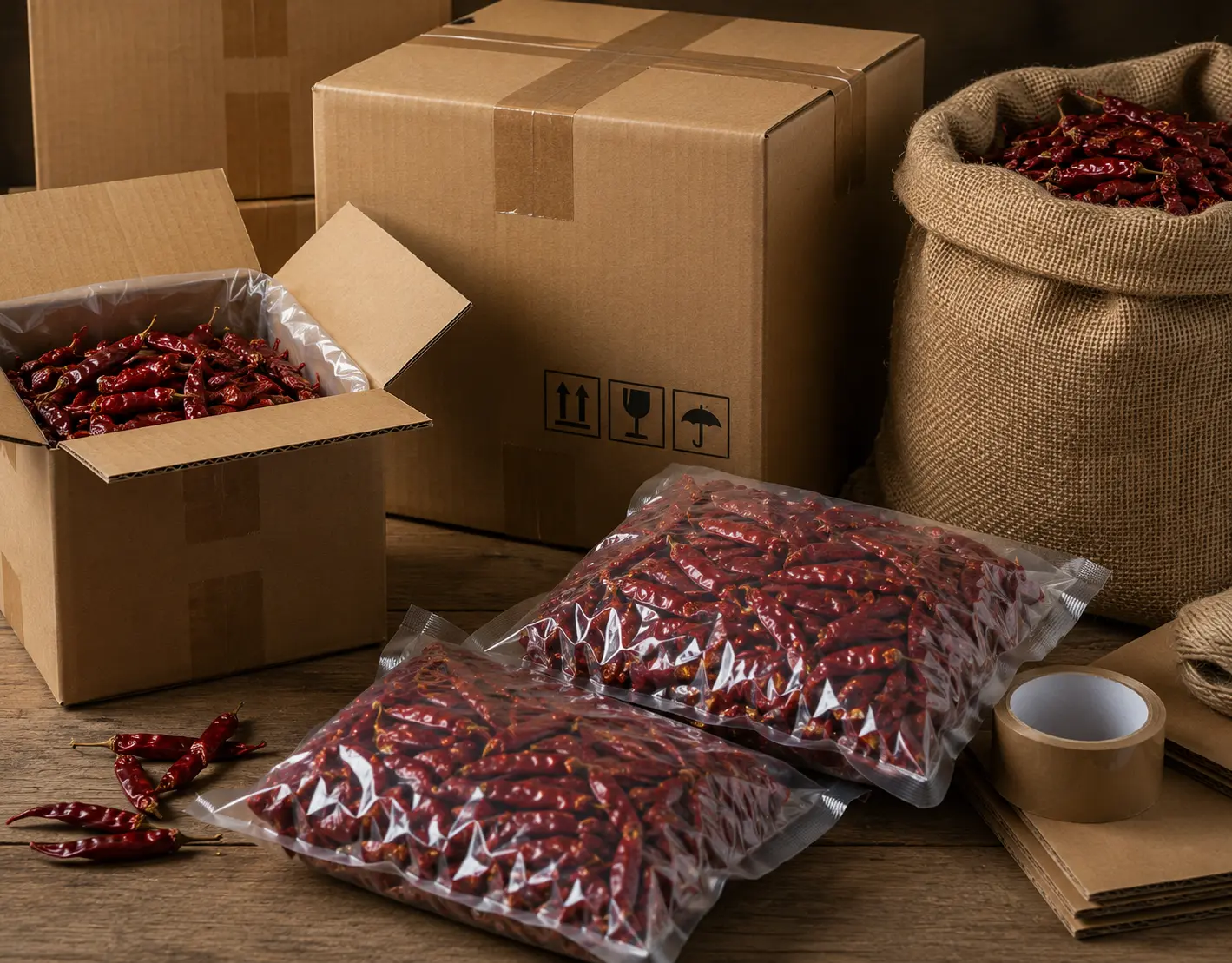
Packaging should protect peppercorns or ground pepper from moisture, contamination, handling damage, and external odours.
Discuss the following with the supplier:
- Food-grade packaging material.
- Net weight and bag dimensions.
- Batch identification and labelling.
- Storage and handling recommendations.
- Container loading and transportation arrangements.
The packaging format should suit the product, shipment size, and destination requirements.
Confirm Shipment Timelines
Ask about product readiness, dispatch dates, estimated transit time, and responsibility for freight and customs coordination.
For regular orders, discuss demand forecasts and agree on how delays or supply changes will be communicated. A written delivery plan helps businesses manage inventory and production schedules.
9. How to Build a Long-Term Relationship with a Black Pepper Exporter
A reliable supplier relationship depends on clear expectations, consistent quality, and effective communication.
Start with Samples and Verification
Before committing to a large order, assess samples, review documentation, and confirm the supplier's ability to meet your specifications.
A Black pepper supplier for international buyers should be able to explain available grades, commercial terms, packaging, and shipment arrangements clearly. Verify these details rather than relying on general claims.
Establish Repeat-Order Procedures
Once a supplier meets your requirements, document the approved specifications and agree on a process for checking future shipments. Regular communication about quantities, availability, and delivery schedules can improve procurement planning.
Prism Exports welcomes enquiries from businesses exploring Indian spice sourcing opportunities. Buyers should confirm current product availability, quality specifications, and export capabilities directly before placing an order.
10. Frequently Asked Questions
1. How do I evaluate Black Pepper Manufacturers in India?
Review business credentials, product specifications, samples, laboratory reports, processing methods, packaging, pricing, and delivery capabilities. Confirm that the manufacturer can meet your order requirements before committing to a bulk purchase.
2. What quality parameters matter when buying black pepper in bulk?
Important parameters may include peppercorn size, moisture content, cleanliness, aroma, foreign matter, and piperine content where specified. Applicable food-safety testing depends on the product and destination market.
3. Can Indian manufacturers supply black pepper for export?
Some manufacturers export directly, while others work with exporters or trading partners. Confirm the supplier's export capabilities, documentation support, product availability, and destination-market compliance.
4. What should I check when selecting a black pepper exporter to the UAE?
Verify the supplier's product specifications, export documentation, shipment arrangements, and ability to meet applicable UAE import requirements. Confirm the commercial terms and packaging before dispatch.
5. How can I compare black pepper bulk-order quotations?
Compare quotations using equivalent grades, quantities, packaging, quality specifications, payment terms, and delivery conditions. Consider the full landed cost rather than the product price alone.
Conclusion: Choose the Right Black Pepper Sourcing Partner
When comparing manufacturers, review their raw material sourcing, production controls, product standards, business documentation, pricing, and ability to fulfil export orders. Careful checks before placing a bulk order can help reduce sourcing risks and support consistent supply for your business.
Prism Exports welcomes enquiries from businesses interested in Indian spice sourcing and international trade opportunities. Contact Prism Exports to discuss your black pepper requirements, request available product information, and enquire about potential bulk-order options. Confirm current availability, product specifications, quality documentation, pricing, and shipping arrangements before finalising your purchase.
Follow us on Instagram for product updates and business information: https://www.instagram.com/prismexports/
Take the next step towards building a dependable black pepper supply relationship that supports your business goals.