
How to Source Bulk Coffee Beans from India
Published by Prism Exports
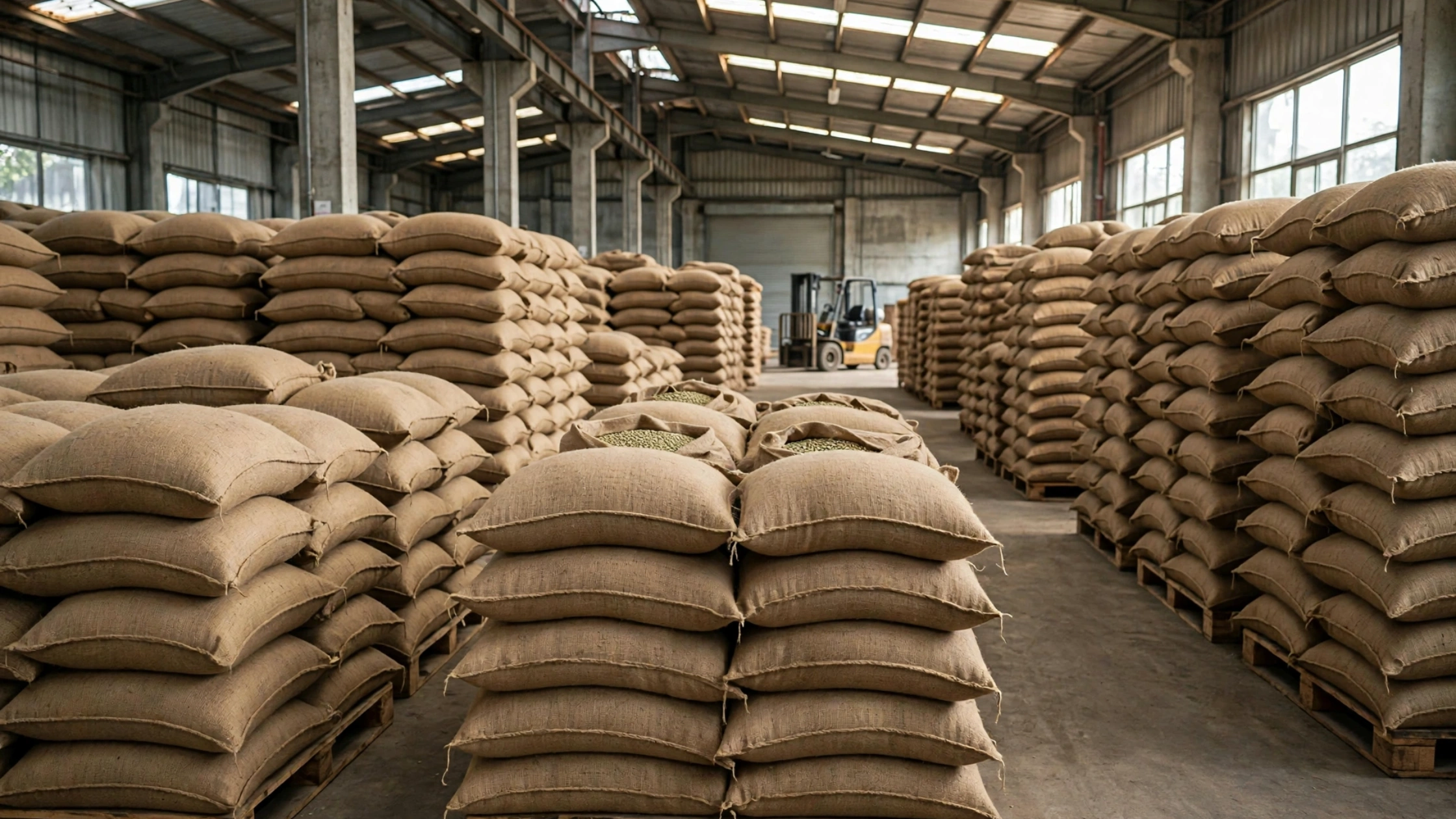
Three samples land on your desk, all labelled "Indian Arabica AA", and all three cup differently. That's the first thing worth understanding about bulk coffee beans from India: the country grows across a wide band of altitudes, shade systems and processing styles, so consistency comes from a supplier's curing and grading discipline, not from the label on the bag. Prism Exports focuses on the quality and consistency details that matter when sourcing Indian coffee for international markets.
If you're placing a full container, the questions that settle the deal are narrower than the marketing suggests. What's the moisture at loading? Who holds the Coffee Board registration and the export licence? How many weeks pass between signed contract and shipment during peak harvest? Prism Exports can help buyers assess these practical factors early, making the sourcing and negotiation process more straightforward.
Why Importers Keep Returning to Bulk Coffee Beans from India
India isn't the largest producer in the world, and no honest exporter will claim otherwise. What it has is an unusual growing model. Nearly all Indian coffee is shade-grown under a two-tier canopy and intercropped with pepper, cardamom, areca and citrus. Estates earn from several crops, which makes them less likely to cut corners in a weak coffee year.
The second reason is range. Washed Arabica, natural Arabica, washed Robusta, natural Robusta and monsooned lots all come from one origin, often from a single coffee bean exporter. For a roaster building a blend, that means fewer contracts, fewer inspections and one document set.
Where the Coffee Actually Grows
Karnataka, Kerala and Tamil Nadu
Karnataka carries the largest share, mostly Kodagu (Coorg), Chikmagalur and Hassan. Kodagu runs Robusta-heavy at lower elevations with strong Arabica pockets higher up. Chikmagalur is the classic Arabica belt, roughly 1,000 to 1,500 metres. Kerala's Wayanad is almost entirely Robusta and feeds a large slice of the soluble-coffee trade. Tamil Nadu's Shevaroys, Nilgiris and Pulneys give smaller volumes of high-grown Arabica that cup cleaner and price higher.
Monsooned Malabar and Speciality Lots
Monsooned Malabar is India's signature. Natural Arabica is spread in open warehouses on the west coast during the southwest monsoon until the beans swell and pale. The cup turns low-acid and heavy-bodied, with a mustiness some blends are built around. It's a niche, not a volume play, so expect limited availability and a clear premium.
Grades, Screen Sizes and What They Really Tell You
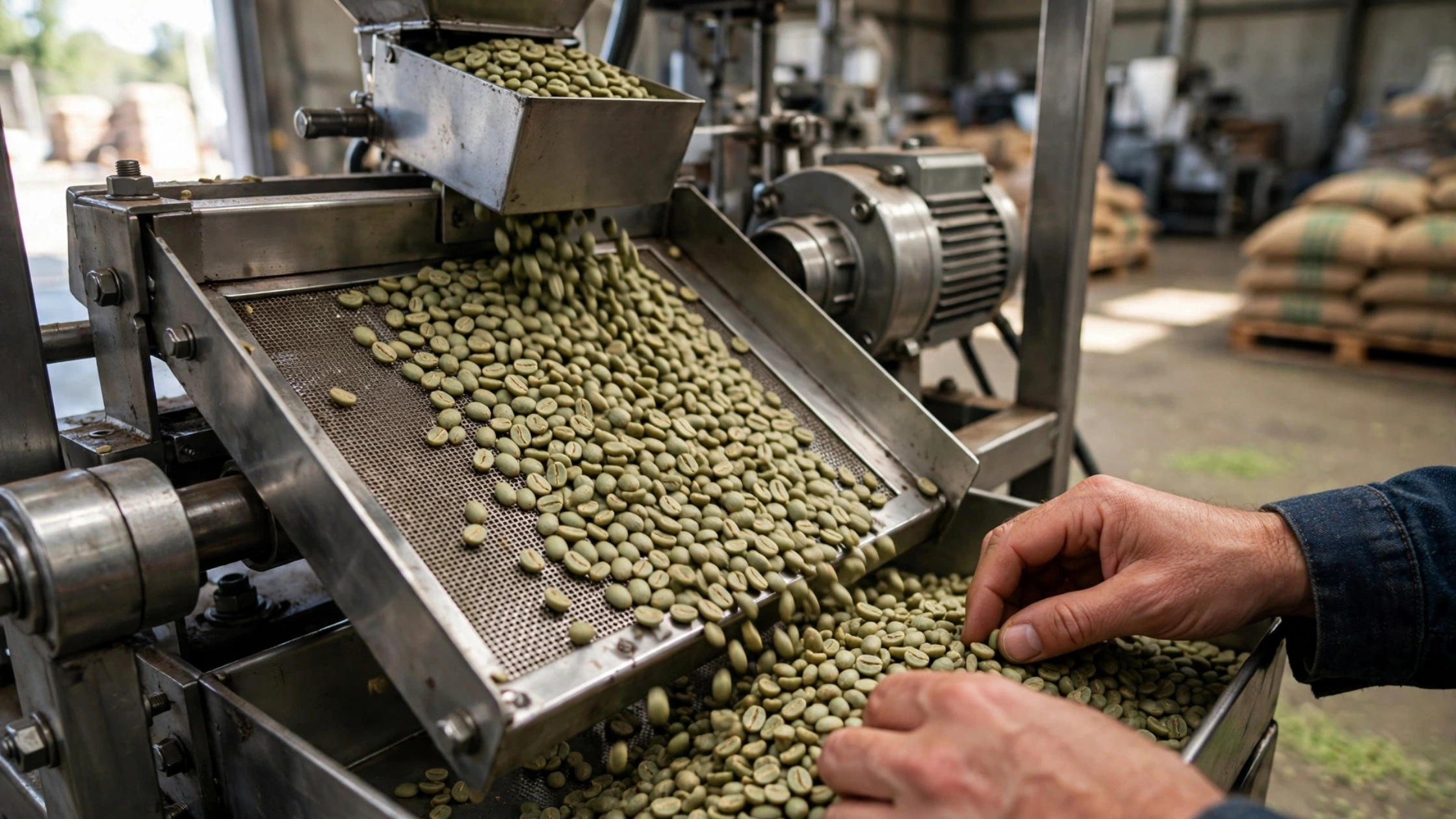
Contracts for bulk coffee beans from India are written against Indian grade names, and those grades are built on screen size and defect count rather than cup score. A grade describes bean geometry; it doesn't promise flavour. Treat it as your specification anchor and cup the lot separately.
Moisture, Defects and Residues
Contract on moisture at loading, not at the warehouse gate. Green coffee normally trades around 10 to 12 percent. Below that the bean turns brittle and you lose weight; above it you're paying for water and inviting mould across a thirty-day transit. Ask for defect counts per 300 g sample against a tolerance you set, and express screen retention as a percentage rather than one flat number. If you're shipping into the EU, agree pesticide-residue and ochratoxin A limits in writing before production starts.
How to Vet a Bulk Coffee Bean Supplier
A polished website proves nothing. What you want from a bulk coffee bean supplier is evidence of repeatability.
- Registration. Coffee Board of India export registration, a valid IEC code, and FSSAI licence covering the processing unit.
- Own curing works or tolling? Ask whether the coffee bean exporter runs its own grading line. Both models work, but only one lets them fix a problem mid-contract.
- Sample protocol. A serious coffee bean supplier draws pre-shipment samples from your actual lot, not a type sample from last season.
- Independent lab access. Third-party testing at a NABL-accredited lab, with you free to nominate the lab.
- Reference trade. Two or three importers in your region who have taken repeat containers.
Ask to see recent shipping bills to a comparable market, sensitive details redacted. Anyone regularly shipping bulk coffee beans from India treats that as normal diligence.
Documents a Coffee Exporter from India Should Hand Over
Paperwork gaps stall containers at destination more often than quality disputes do. Before the first payment, confirm your coffee exporter from India will issue:
1. Commercial invoice and packing list showing lot numbers and bag counts
2. Bill of lading or airway bill matching the contract incoterm
3. Certificate of origin, plus the ICO certificate where your customs requires it
4. Phytosanitary certificate from the plant quarantine authority
5. Analysis certificate covering moisture, screen retention and defect count
6. Fumigation certificate where the destination or packing type demands one
EU-bound cargo now also needs traceability to plot level, so anyone selling bulk coffee beans from India into Europe should be able to produce geolocation records. Ask early; retrofitting it after harvest is painful.
Pricing, Incoterms and Payment in Coffee Beans Wholesale
Bulk coffee beans from India price off the ICE terminals with an origin differential layered on top, quoted in USD per MT. Differentials move with crop size, rupee strength and how tight a grade is that season, which is why a quote older than a week means little. Ask for the differential and the terminal month separately rather than one bundled figure.
FOB from Cochin, Mangalore or Chennai suits buyers holding their own freight contracts. CIF makes sense if you'd rather hand off booking and insurance. An irrevocable LC at sight is standard on a first order; documents against payment usually appears after a few clean shipments. Nobody serious in coffee beans wholesale demands full advance on a container, and margins are thin enough that hard price pressure tends to reappear as a slide in grade.
Where Buyers Lose Money Sourcing Bulk Coffee Beans from India
Vague specifications cause most disputes. "Good quality AA" is not a specification; moisture range, screen retention, defect count and cup profile are. Buyers also skip the arbitration clause, then discover their only remedy sits in a court eight time zones away. A third pattern: approving a sample in March, loading in August, and never re-cupping, because a natural lot changes character in storage.
One more is humidity. Coffee held through the monsoon on the west coast behaves differently from February shipments, so ask when the lot was cured and how it's been stored.
Frequently Asked Questions
What is the minimum order for bulk coffee beans from India?
Most exporters treat one 20-foot container as the practical minimum, roughly 19 to 19.5 MT in 60 kg jute bags. Trial lots of 1 to 5 MT are sometimes possible as LCL, though per-kilo freight rises sharply and few suppliers hold pricing on that basis.
Is Indian Robusta good enough for espresso blends?
Washed Robusta parchment from Karnataka and Kerala is widely used as a crema and body component in Italian-style espresso blends, and the better grades are noticeably cleaner than commodity naturals. Whether it suits your blend depends on roast profile and the percentage you're using, so cup it against your current component before committing.
How long does shipment take after the contract is signed?
Plan on three to six weeks from confirmed contract to vessel during the February-to-May shipping peak, assuming the grade is available and documents are in order. Off-season or unusual specifications can push that to eight weeks. Ocean transit adds roughly three to five weeks to Europe and longer to North America's east coast.
Do I need to test every container?
Pre-shipment testing on every lot is the safer discipline, even with a supplier you trust, because crop variation is real. At minimum, insist on moisture, defect count and screen retention per lot. Residue and mycotoxin panels can run less often once a supplier has shown consistent results.
Conclusion
Buying bulk coffee beans from India rewards precision more than negotiation. Write a specification that names moisture at loading, screen retention, defect tolerance and cup profile. Confirm registrations and lab access before you discuss price. Then treat the first container as a test of process, not just of coffee, and watch how the supplier handles the small things: sample timing, document accuracy, and how quickly they answer an awkward question. Prism Exports understands the importance of clear specifications and consistent processes when supplying coffee for international markets.
Origins here are varied enough that most blend requirements can be met, provided you're specific. If you're evaluating your options for bulk coffee beans from India, a conversation with Prism Exports about your exact grade and volume will tell you more in twenty minutes than another week of browsing catalogues.
Follow Prism Exports on Instagram.



