
Indian Agricultural Products: A Guide for Global Importers
Published by Prism Exports
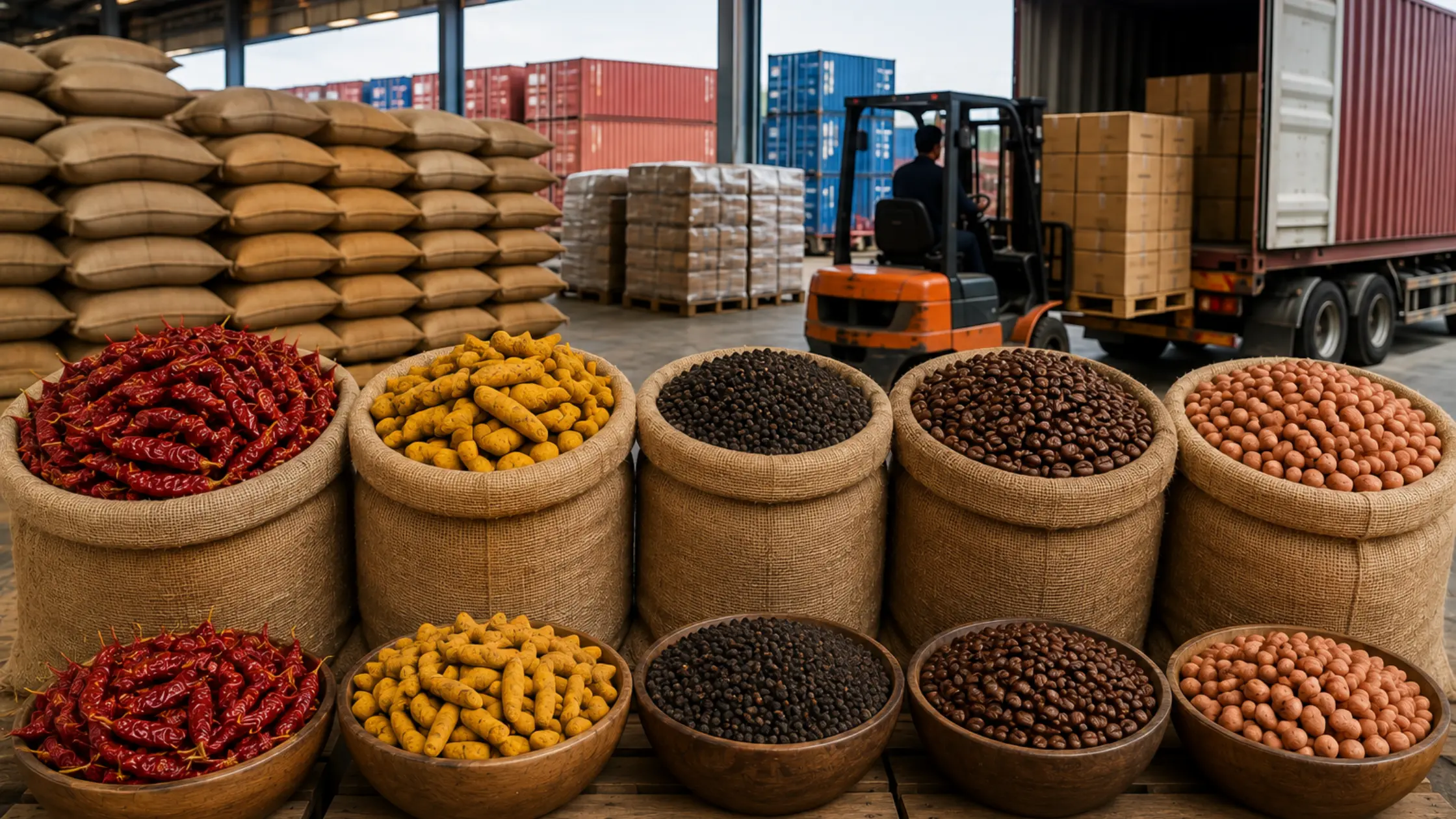
Most buyers arrive in India for one commodity and stay for four. You come for basmati rice, then discover the same supplier region ships sesame, guar and turmeric on comparable terms. Indian agricultural products cover an unusually wide span for a single origin, which is a genuine advantage once you understand how the trade is organised. Prism Exports helps buyers explore Indian sourcing opportunities with attention to product quality, documentation and export requirements. For businesses evaluating multiple commodities, Prism Exports provides a practical approach to understanding sourcing and international supply.
That breadth also creates confusion. Harvest calendars vary by crop and state, grade names differ between buyers and sellers, and certification requirements shift depending on where the cargo lands. This guide sets out the categories, the quality vocabulary and the commercial terms you’ll actually be negotiating.
Why Importers Keep Coming Back to Indian Agricultural Products
Three things sustain the trade. India grows across tropical, subtropical and temperate zones, which means a supply window somewhere in the country for most of the year. Labour-intensive sorting is economically viable, so hand-picked and colour-sorted grades exist at prices that mechanised origins struggle to match. The export ecosystem is mature too, with established laboratories, quarantine offices and freight capacity at Mundra, Nhava Sheva and Chennai.
The honest counterweight is variability. Quality across Indian agricultural products depends heavily on who processed the lot and how it was stored, far more than on the crop itself. Choosing carefully matters more here than in origins with fewer, larger suppliers.
The Main Categories You’ll Be Quoted On
Cereals, pulses and oilseeds
Rice dominates, split between aromatic basmati and a large non-basmati trade in raw, parboiled and broken grades. Pulses cover chickpeas, pigeon peas, lentils and mung. Oilseeds run to sesame, groundnut, mustard and castor. These are the volume lines, generally shipped in 25 or 50 kg bags at full container loads.
Spices and plantation crops
Chilli, turmeric, cumin, coriander, black pepper and cardamom sit here, alongside tea, coffee and cashew. Quality here is measured in colour value, volatile oil, pungency and cleanliness rather than just size and moisture.
Horticulture and processed foods
Grapes, pomegranates, mangoes, bananas and onions travel fresh in reefer containers; dehydrated onion and garlic, fruit pulps and frozen vegetables travel as processed lines with longer shelf life and simpler logistics.
Grades and Quality Standards for Indian Agricultural Products
Grade names travel badly. “Sortex clean,” “machine clean” and “commercial quality” mean different things to different sellers, so define your requirement numerically: moisture percentage, admixture, foreign matter, damaged grain, aflatoxin ceiling and the applicable pesticide residue list. Reference your destination’s limits explicitly, because compliance with Indian domestic norms doesn’t protect you at a European border.
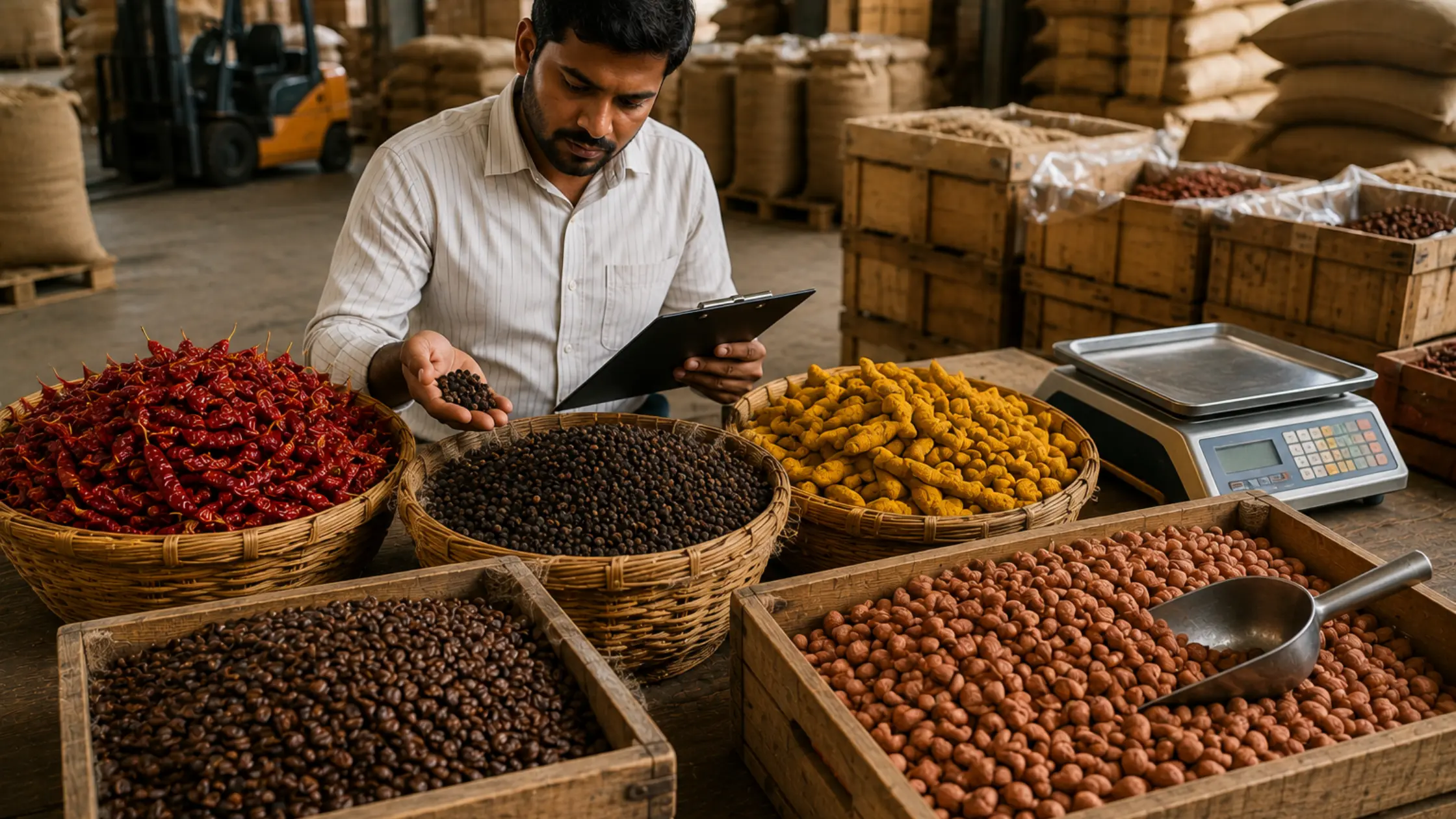
Insist on lot-specific analysis from an accredited laboratory rather than a generic certificate. Ask whether the sample was drawn from the actual shipping lot or a warehouse composite; the two can differ meaningfully. A reliable Indian agricultural products supplier will offer to have samples drawn under third-party supervision without being asked twice.
Certification and Documentation to Expect
- IEC from DGFT, and APEDA registration with RCMC covering your product category
- FSSAI licence matching the actual processing or storage premises
- Phytosanitary certificate issued per shipment by plant quarantine
- Certificate of origin, plus preferential origin where a trade agreement applies
- Certificate of analysis, fumigation certificate where required
- HACCP or ISO 22000, and NPOP organic certification with a lot-level transaction certificate where relevant
Check that quantities and product descriptions match across every document; a careful agricultural products exporter in India sends drafts for your approval first. Small mismatches are a common and entirely avoidable cause of clearance delays.
Seasonality: When to Contract and When to Wait
Two cropping seasons shape the calendar. Kharif crops are sown with the southwest monsoon from June and harvested from around October; rabi crops are sown from October and harvested from February to April. Arrival season brings the widest choice of grades across Indian agricultural products and usually the softest prices, which is when an experienced exporter buys and stores.
Contracting one to three months ahead of your requirement generally beats spot buying at the tail of a season, when the better material has already gone. Where the monsoon has been poor, expect quality dispersion to widen and honest suppliers to turn cautious about long forward commitments. That caution is a good sign.
Working With an Indian Agricultural Products Supplier: Terms and Logistics
Full container loads are the norm. A 20ft unit typically carries around 18–19 MT of dense bagged product; light or bulky material cubes out sooner and often moves in 40ft units. Reefer cargo carries lower payload.
Lead times of three to six weeks after order confirmation are realistic for dry goods, with organic segregation or custom milling adding one to three weeks. On payment, first orders commonly run 20–30% advance with the balance against documents, or a sight letter of credit; terms typically ease after several clean shipments. A settled agricultural export company India buyers deal with repeatedly will discuss liner type, desiccants, fumigation and pallet plan before stuffing rather than after.
How to Pick an Agricultural Products Supplier India Buyers Return To
Start with processing. An agricultural products supplier India importers stay with usually owns the cleaning line rather than booking finished lots from a third party. Ask for three analysis reports covering the same product from different lots, because consistency across lots tells you more than one flattering certificate.
Then test depth. A capable agro products exporter India buyers trust will name two or three commodities they genuinely control and stay honest about the rest. Ask which destinations they already serve; an agricultural products exporter in India shipping monthly into your market already knows its residue rules and labelling quirks. A long-standing agricultural export company India traders know by name should also give you references there.
Run a trial container before committing to a season. Any agro products exporter India worth contracting would rather lose a first order than fail on the third.
Landed Cost, Not Unit Price
The FOB number is only part of the picture. Build your comparison from ocean freight, insurance, duty, port charges, inland haulage, and the yield you actually recover after cleaning at your end. A lot with 2% more foreign matter can cost more than a quote sitting twenty dollars higher per tonne.
Factor in risk cost too: the probability of a rejection, the cost of holding stock while a dispute is resolved, and the value of a supplier who answers the phone during a problem. Buyers who model Indian agricultural products this way often find the mid-priced offer is the cheapest one. Buyers who track these numbers across several shipments usually end up consolidating with fewer suppliers rather than chasing every cheap offer.
Frequently Asked Questions
What are the most commonly imported Indian agricultural products?
Rice, spices, pulses, oilseeds such as sesame and groundnut, tea, coffee, cashew, and fresh or processed horticulture including grapes, mangoes and dehydrated onion. The mix varies by destination: the Gulf takes large rice volumes, while Europe buys heavily into spices, pulses and organic lines.
Can I order mixed commodities in one container?
Often yes, provided the products share compatible packing, do not taint one another, and each carries its own documentation. Aromatic spices and neutral commodities need particular care. Expect higher handling costs, and confirm your customs broker is comfortable with a mixed manifest.
How do I confirm organic status?
Ask for the NPOP scope certificate plus a transaction certificate issued for your specific lot, with quantity and shipment details on it. Where your market requires NOP or EU equivalence, confirm that too. Organic material also needs segregated storage and transport, so ask how that separation is maintained.
Are prices negotiable in this trade?
Within limits. Raw material is the largest cost element and moves with the market, so deep discounts on Indian agricultural products usually mean a different grade rather than a better deal. Volume, payment terms and repeat business move a price further than pressing hard on a single container.
Conclusion
Buying Indian agricultural products works best when you treat specification, timing and documentation as one decision rather than three. Define your grade in numbers, contract close to the harvest window for your crop, verify licences against the actual premises, and compare offers on landed cost with recovery yield factored in. Do that consistently and India becomes a dependable multi-commodity origin instead of a gamble that occasionally pays off.
If you’re mapping out a sourcing plan or comparing offers, Prism Exports can help you discuss your market, volumes, product requirements and seasonal sourcing needs. Contact Prism Exports today to explore suitable agricultural export options and take the next step toward a reliable sourcing partnership. You can also connect with Prism Exports on Instagram for product updates, Indian agricultural export insights and company news. Follow us on Instagram and stay updated with the latest from India’s agricultural export market.



