Indian Coffee Grades and Quality Standards for Global Buyers
Published by Prism Exports
An offer lands in your inbox: "Robusta Cherry AB, 19.2 MT, prompt shipment." If you already know what that means, you can price it in a minute. If you don't, you're guessing, and guessing is how buyers end up with beans that roast unevenly and cup below expectation. Prism Exports understands how important it is for international buyers to interpret Indian Coffee Grades correctly. Indian Coffee Grades are a precise vocabulary, but they describe bean size and processing rather than flavour, which trips up plenty of first-time importers.
Learn the naming logic and you can read any Indian offer sheet quickly. Learn what the grade leaves out, and you'll know exactly which extra clauses to put in the contract with Prism Exports.
How Indian Coffee Grades Are Decided
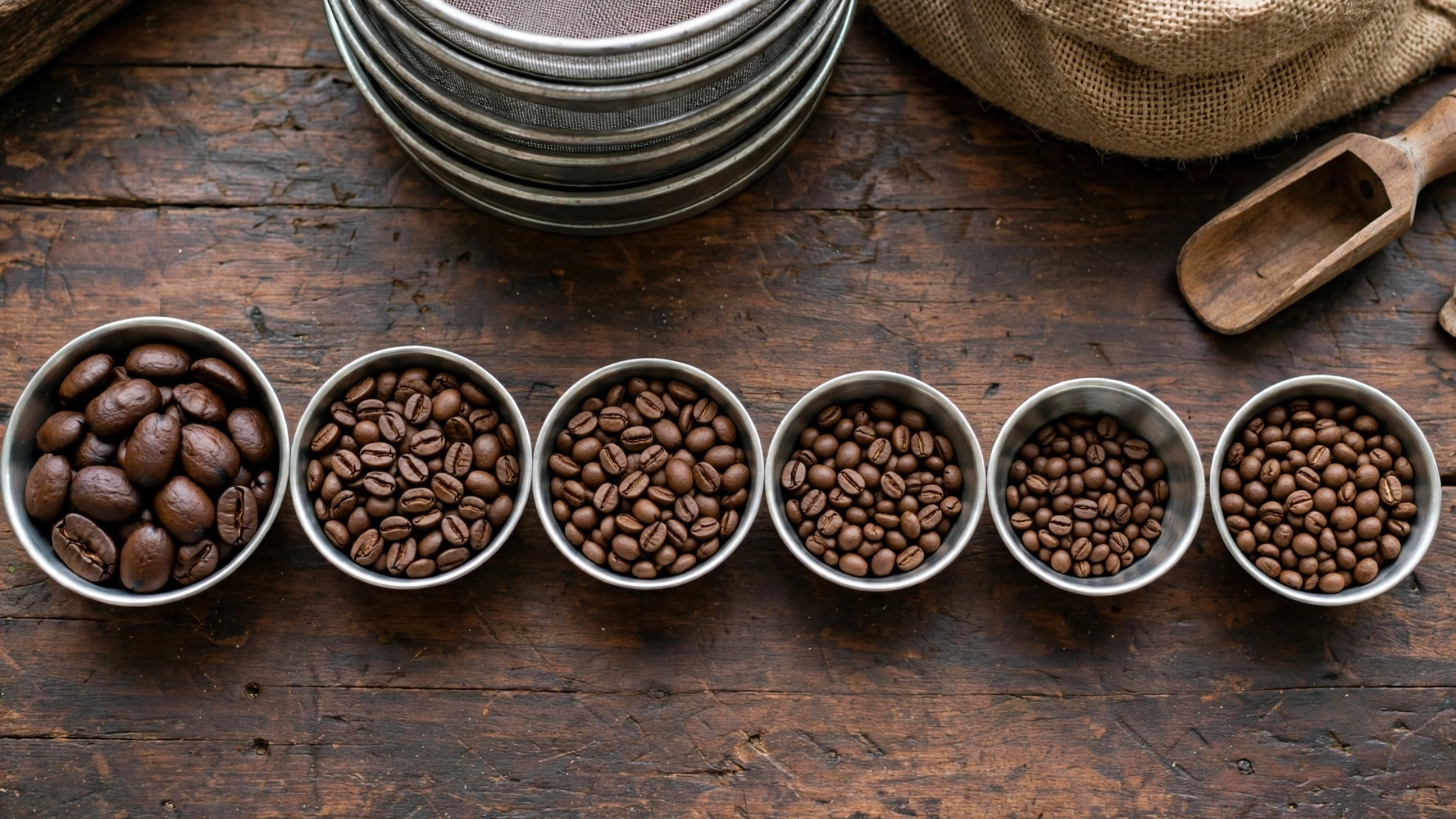
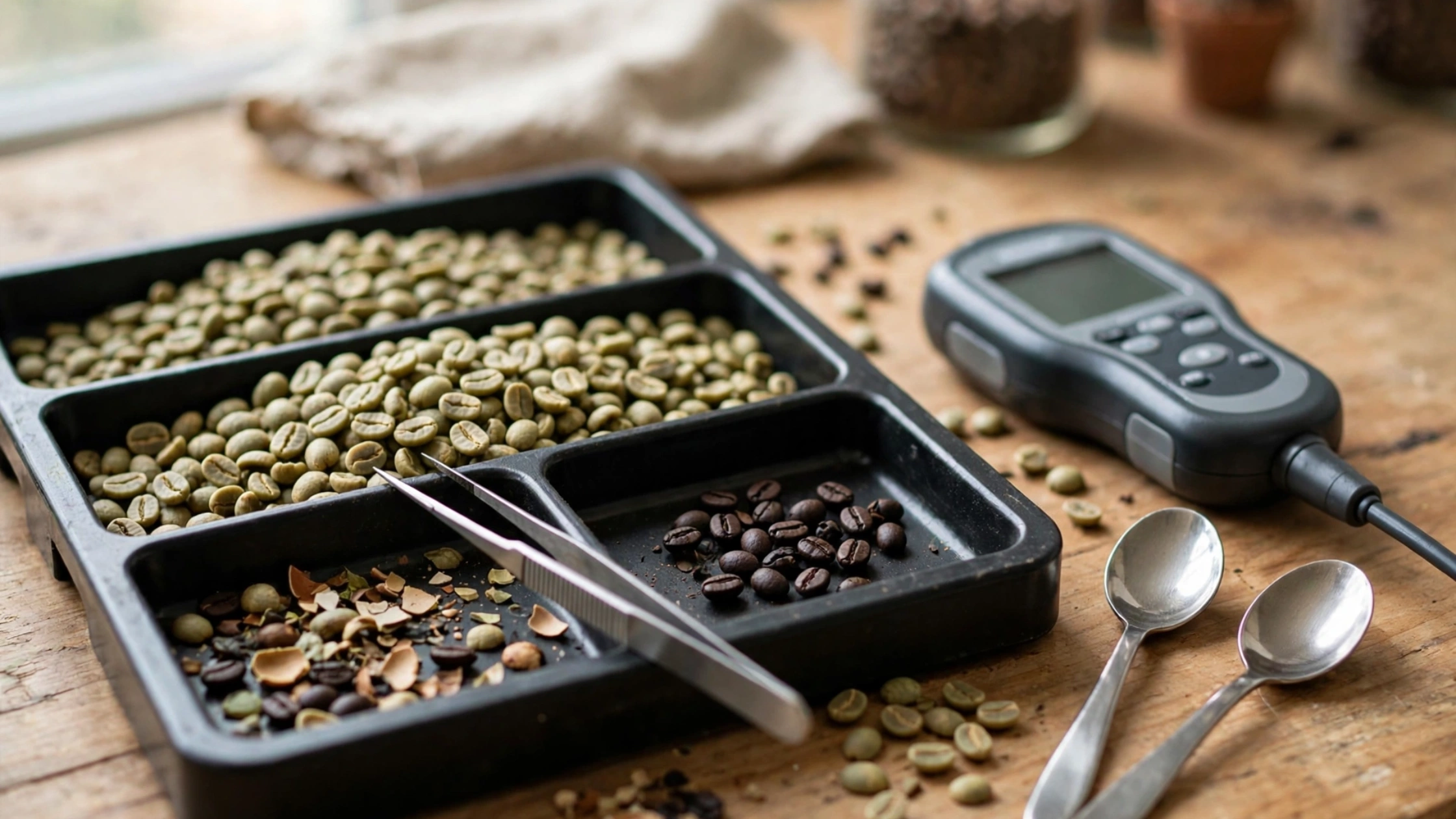
Grading happens at the curing works, after hulling. The lot is cleaned, then passed over perforated screens that sort by size, through gravity tables that separate by density, and usually across a colour sorter that ejects blacks, browns and foreign matter. What comes out the other end is a set of size-and-density fractions, each carrying a grade name.
A grade name has two parts in practice: the processing type and the size class. "Plantation" means washed arabica. "Cherry" means naturally dried. "Parchment" indicates washed robusta. The letters that follow, from AAA down through C, describe how much of the lot is retained on a given screen.
Arabica and Robusta Grades Side by Side
Screen numbers refer to perforations in 1/64-inch increments, so screen 18 is roughly 7.1mm. Treat the mapping of Indian Coffee Grades below as typical trade usage rather than a legal definition.
Peaberry deserves a note. One seed develops instead of two, and it's separated out because those small round beans roast differently. Some buyers pay a premium; others find the yield too small to bother with.
Indian Coffee Quality Standards Beyond Bean Size
Indian Coffee Grades tell you how a lot will roast, not how it will taste or whether it will survive the voyage. Indian Coffee Quality Standards worth writing into a contract cover:
- Moisture between 10% and 12%, measured at loading.
- Water activity, ideally between 0.55 and 0.62 for a long sea crossing.
- Defect count per 300g against a named grading system.
- Black beans, sours, insect damage and husk expressed as separate limits.
- Ochratoxin A and pesticide residues to your destination's requirement.
- Cup score with descriptors, from a cupping dated within the last few weeks.
Most rejections trace to that list rather than to screen size, which is why a sensible Coffee Bean Supplier India buyers trust volunteers the full analysis instead of waiting to be asked. A Coffee Bean Supplier India importers use repeatedly will also tell you when a parameter is unrealistic for the season.
Where defects come from
Blacks and sours usually come from overripe or fermented cherries reaching the drying yard. Insect damage traces to field conditions. Husk and stick point at careless hulling. Each defect has a different cause, and naming them separately in your contract gives you a much stronger position than a single catch-all percentage.
What Indian Coffee Grades Don't Tell You
Three things sit outside the grade entirely, and they matter more than the letters.
Crop year and curing date
A Plantation A from two harvests ago is still a Plantation A, yet it roasts flatter and should be priced accordingly. Ask for crop year and curing date separately, because coffee often sits as parchment for months before hulling.
Estate, elevation and the cup
Two lots of identical grade from Kodagu and from the high Nilgiris cup differently. Grade sets a physical floor, but only a cupping tells you whether the coffee suits your roast, which is why any offer of Export Quality Coffee Beans should arrive with a score sheet rather than a classification alone.
Matching Grades to What You Actually Make
Different production lines want genuinely different Indian Coffee Grades:
- Speciality filter roasters: Plantation AA or A from a named estate, tight defect count, recent crop.
- Espresso blenders: Robusta Parchment AAA or AA for crema and body, blended with washed arabica.
- Instant coffee manufacturers: Robusta Cherry grades, where extraction yield and price matter more than nuance.
- Retail private label: consistency across repeat shipments matters more than peak score, so mid grades with a firm specification work best.
- Dark roast lines: Monsooned Malabar AA, which behaves unlike anything else under heat.
Buying a higher grade than your product needs is a common, expensive habit. If the coffee disappears into a dark blend, paying up for screen 18 arabica rarely shows in the cup, and Export Quality Coffee Beans one tier down often do the same job.
Speciality Designations Worth Knowing
Three names sit outside the standard ladder of Indian Coffee Grades. Monsooned Malabar AA is exposed to monsoon winds in open warehouses until the beans swell and pale, producing very low acidity and heavy body. Mysore Nuggets Extra Bold is a bold-screen washed arabica cleaned to a tighter standard than ordinary lots. Robusta Kaapi Royale is its robusta equivalent.
These carry premiums, and they're worth it only if your customers care about the story or the profile. They're also where verification matters most: Indian Coffee Beans sold under a speciality label deserve a matching certificate and sample, and Indian Coffee Beans relabelled up a tier are not unheard of.
Checking Grade Claims With Your Indian Coffee Exporter
Verifying Indian Coffee Grades is straightforward in the right order. Ask for an offer sample from the actual lot, then a pre-shipment sample drawn after packing. Run a screen test on both if size is central to your purchase; a set of test screens costs very little and settles arguments quickly.
Beyond that, a third-party inspection at loading is worth the fee on any first shipment, particularly for weight and moisture verification. A credible Indian Coffee Exporter will welcome it, because an independent report protects them as much as you. If a supplier resists inspection or won't quote defect counts, that tells you more about the shipment than any grade name will.
Frequently Asked Questions
What do the letters in Indian Coffee Grades actually mean?
They describe bean size, based on how much of the lot is retained on a given screen. AAA and AA sit at the large end, AB in the middle and C at the small end, while PB marks peaberry. The word before the letters, such as Plantation or Cherry, tells you how the coffee was processed.
Is Plantation A better than Robusta Parchment AAA?
They're not comparable, because they're different species. Plantation A is washed arabica; Robusta Parchment AAA is a large-screen washed robusta. Which is better depends entirely on your product. For espresso body and crema the robusta may serve you better, while a filter roaster will almost always choose the arabica.
What defect count should I specify?
Ask your supplier what's realistic for the grade and season, then write the agreed figure into the contract per 300g with the grading system named. Speciality lots are held to a tighter count than commercial grades, and being specific matters more than being demanding, since an unrealistic limit invites disputes.
Do Indian Coffee Grades guarantee cup quality?
No. Grades describe physical characteristics such as size, density and processing, not flavour. Two lots of identical grade can cup several points apart depending on estate, elevation, crop year and drying. Cup an offer sample before signing, then confirm again on the pre-shipment sample before loading.
Conclusion
Indian Coffee Grades give you a fast shorthand for size and processing, and once the naming logic clicks, reading an offer sheet takes seconds. What they don't cover is flavour, freshness or safety, so treat the grade as the first line of a specification rather than the whole thing. Add moisture, water activity, defect limits, crop year and a cup score, then verify with samples at both stages. Prism Exports helps buyers look beyond grade names and focus on the specifications that matter for consistent coffee sourcing. Buyers who do that rarely get unpleasant surprises at the roastery.
Follow Prism Exports on Instagram.
If you're unsure which grade fits your blend or your budget, a conversation with Prism Exports will usually shorten the list quickly.