
Indian Red Chilli Grades: Red Chilli Quality Standards for Importers
Published by Prism Exports
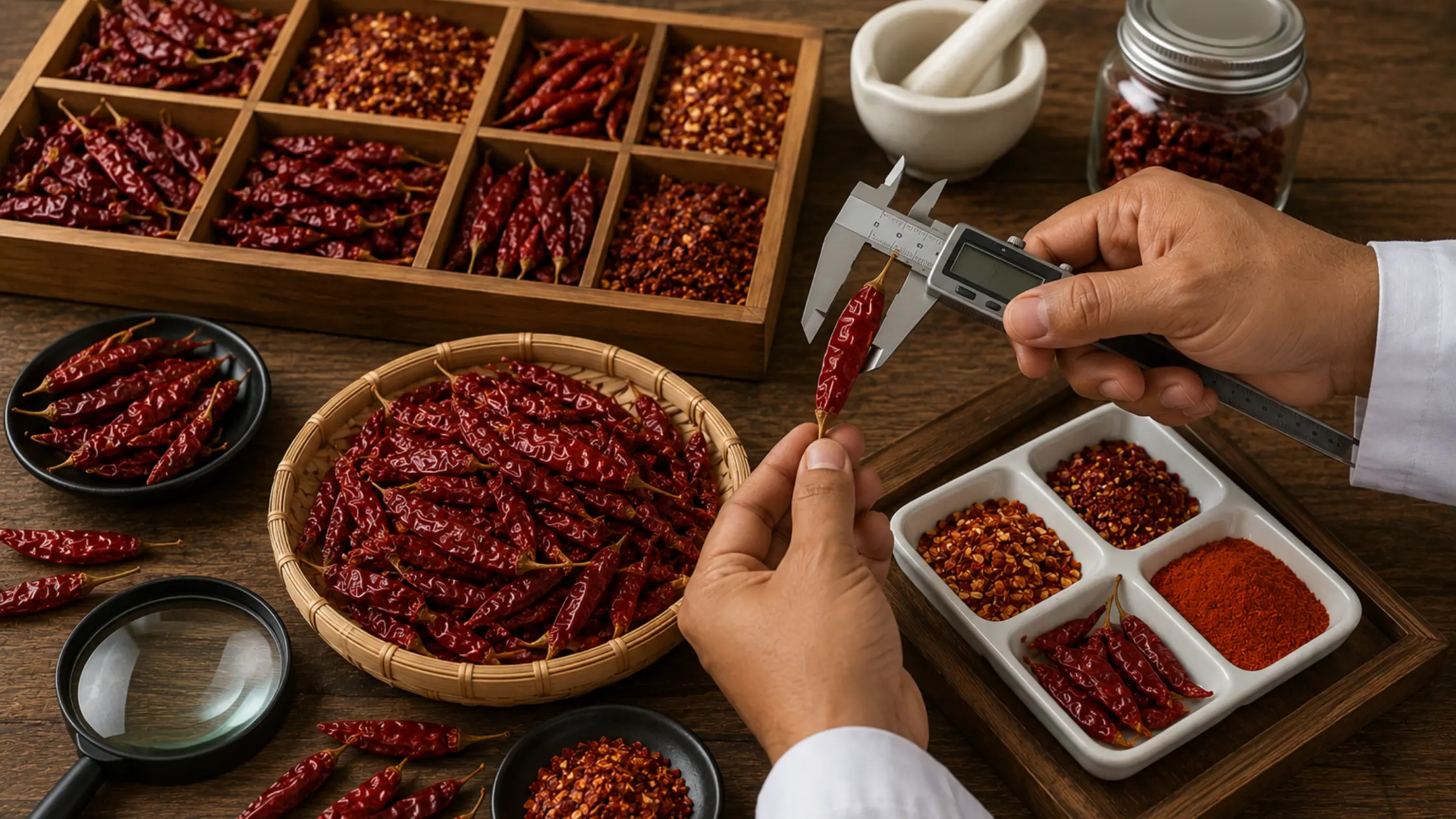
Three offers land in your inbox for what looks like the same product. One says “Sannam S4 stemless, best quality”. The second says “Byadgi Kaddi, premium grade”. The third lists moisture, ASTA colour, SHU, aflatoxin and residue limits with a testing method beside each. Only the third tells you anything you can act on, and that difference is what red chilli quality standards are really about. Prism Exports understands the importance of clear, measurable specifications when supplying Indian red chilli to international buyers.
Indian grade names carry genuine meaning in the domestic trade, but they don’t cross borders intact. This guide explains what the grades actually describe, which parameters your contract needs, and how the requirements shift depending on where the container is headed.
Why Grade Names Alone Don’t Travel Well
Indian grading grew out of a domestic market where buyers and sellers shared context. Everyone in a Guntur trading yard knows roughly what a particular grade implies about pod length, colour and heat. Ship that same terminology to a buyer in Rotterdam or Jeddah and the shared context disappears.
No single legal standard binds the phrase “premium” or “export quality”. Agmark specifications exist for certain spices and Spices Board norms apply to registered exporters, but day-to-day grade names in trade offers are commercial shorthand, not regulated categories. Published red chilli quality standards are the reference point; grade names are conversation.
The practical consequence is simple. Ask what the grade means in numbers. A credible Indian red chilli supplier will answer immediately, because they already test that way.
How Indian Red Chilli Grades Are Actually Named
Grade names combine two different things, and separating them helps enormously.
Variety and Origin Naming
Most Indian red chilli grades start with variety and growing belt: Guntur Sannam S4, Byadgi Kaddi, Byadgi Dabbi, Teja S17, Wonder Hot, Ramnad Mundu, 334, Kashmiri type. This part tells you the broad colour and heat character you can expect. Sannam sits mid-range on both. Byadgi runs high colour, low heat. Teja is the opposite.
Processing and Presentation Naming
The second half of a grade name describes what’s been done to the pods. Stemless, stem-cut, tips removed, machine-cleaned, sortex-cleaned, hand-picked, single-sorted, double-sorted, seedless. These affect price considerably and have nothing to do with variety.
A quoted grade of “Sannam S4 stemless sortex” is therefore two claims stacked together. Both need verifying against red chilli quality standards, and only one of them shows up in a lab report.
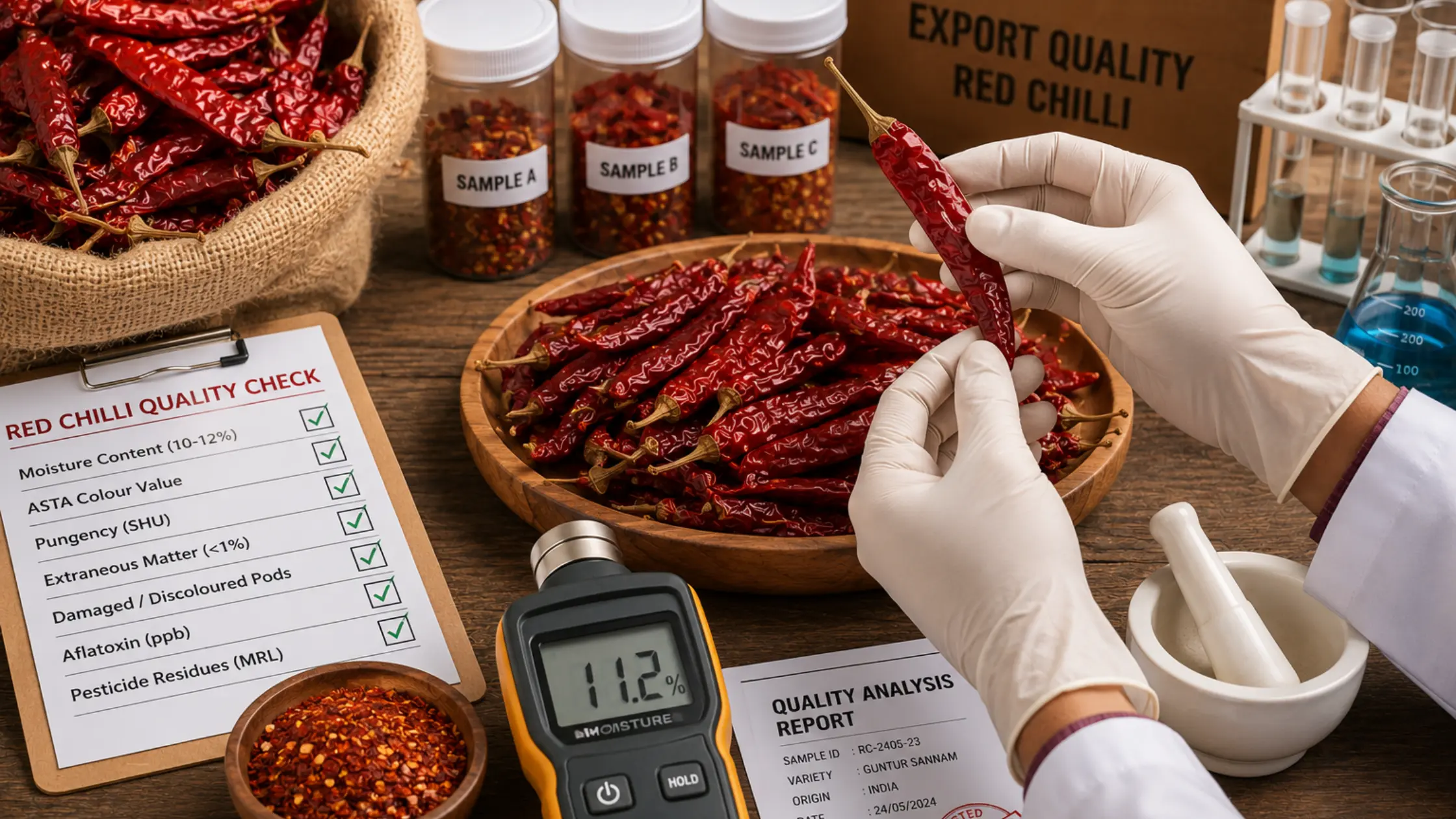
The Core Red Chilli Quality Standards Buyers Test
Those are indicative ranges, not guarantees. Crop year, rainfall during drying and post-harvest handling all move the numbers, which is why export quality red chilli is contracted as tested figures with tolerances rather than target values borrowed from a brochure.
How Red Chilli Quality Standards Shift by Destination
The same container can be perfectly compliant in one market and rejected in another.
European buyers generally apply the tightest limits, particularly on pesticide residues and mycotoxins, and any red chilli exporter from India serving that market keeps documentation to match. North American requirements focus heavily on cleanliness, foreign matter and microbiological load, with sterilisation often expected. Middle Eastern and South Asian markets tend to weight appearance, pod length and colour more heavily in commercial grading, though food safety documentation still applies. East Asian sauce and extraction buyers care most about pungency and consistency of supply.
None of this means one market is stricter overall. It means your specification should be built from your own destination’s rules. A red chilli exporter from India who ships regularly into your market will know these differences without being told; one who doesn’t will learn them at your expense.
Writing Red Chilli Specifications That Hold Up
A workable specification does four things: it states a value, a tolerance, a test method, and who tests. Missing any one of those creates a gap someone will eventually stand in.
1. State each parameter with a number and a tolerance, not “as per standard”
2. Name the test method for moisture, colour and pungency
3. Specify testing at an NABL-accredited laboratory on the actual production lot
4. Define stem treatment, sorting level and packing as separate line items
5. Set aflatoxin and residue limits by reference to your destination’s current rules
6. Agree the remedy if a parameter falls outside tolerance before you sign anything
Good red chilli specifications also cover the boring logistics: bag type and weight, liner material, marking, palletisation, seal photographs and crop year. Send the same document to every red chilli exporter from India you’re quoting, and the comparison between offers becomes genuinely useful.
Grade Pricing and Red Chilli Quality Standards
Price differences between Indian red chilli grades come from four places, and it’s worth knowing which one you’re funding.
- Variety scarcity: Byadgi commands a premium over Sannam largely on colour and limited acreage
- Sorting labour: hand-picked and double-sorted material costs more because people did the work
- Stem and tip removal: removing stems cuts shipped weight but adds processing cost
- Testing and traceability: documented, farm-traceable, residue-tested material carries a real premium
That last item is the one buyers most often try to negotiate away and most often regret. Paying a modest premium per tonne for genuine export quality red chilli with full test documentation is inexpensive protection against a rejected container.
Documentation That Backs the Grade
A grade claim without paperwork is a sales line. Ask for the pre-shipment analysis report from an accredited lab covering every parameter in your agreed red chilli quality standards, plus the phytosanitary certificate, certificate of origin, fumigation certificate where required, and the exporter’s Spices Board registration and FSSAI licence. Organic material needs a valid scope certificate under the standard your market recognises.
Where your destination applies particularly tight limits, request the raw residue screening report rather than a summary certificate. The full report shows which compounds were screened, and that list matters as much as the pass or fail line at the bottom.
Frequently Asked Questions
Are Indian red chilli grades officially regulated?
Partly. Agmark specifications and Spices Board norms cover certain aspects for registered exporters, but the commercial grade names used in trade offers are industry shorthand rather than legal categories. Always convert a grade name into tested numbers before contracting, and ask your supplier to confirm those figures in writing on the offer sheet.
Which red chilli quality standards matter most for EU imports?
Pesticide residues and aflatoxin limits cause the most rejections, followed by moisture-related issues found on arrival. Test against the current EU MRL list rather than Indian defaults, and insist on pre-shipment testing at an accredited laboratory. Ask for the full screening report, not just a summary pass certificate.
What ASTA colour should I ask for?
It depends on variety and end use. Sannam typically sits in the 30 to 45 range, while Byadgi runs far higher. Rather than picking a number in isolation, start from what your customer rejects on appearance, then set the minimum in your red chilli quality standards slightly above it to allow for transit fade.
Can one supplier hold the same grade all year?
A good Indian red chilli supplier can hold a specification within tolerance across a year, but not identically, because crops vary. Expect small shifts in colour and heat between fresh crop and carry-over stock. Agree a tolerance band up front rather than assuming every container will match the first sample exactly.
Conclusion
Grade names give you a useful shortcut for conversation, and nothing more. The work that protects your business sits in the numbers underneath: moisture, colour, pungency, cleanliness, aflatoxin and residues, each with a tolerance, a test method and an accredited lab behind it. Build your red chilli quality standards from your own destination’s rules, write them into the purchase order, and check them before loading rather than after arrival. Prism Exports understands the importance of measurable specifications and proper quality checks when supplying red chilli to international markets. Do that consistently and the difference between a good grade and a bad one stops being a matter of trust and becomes a matter of record. Connect with Prism Exports on Instagram and stay updated on our latest spice products. If you’re putting together a specification for a new market or volume, talking it through with Prism Exports is the quickest way to get answers matched to your requirement. Talk to Prism Exports About Your Requirements.



