
Indian Red Chilli Varieties: A Guide for Global Importers
Published by Prism Exports
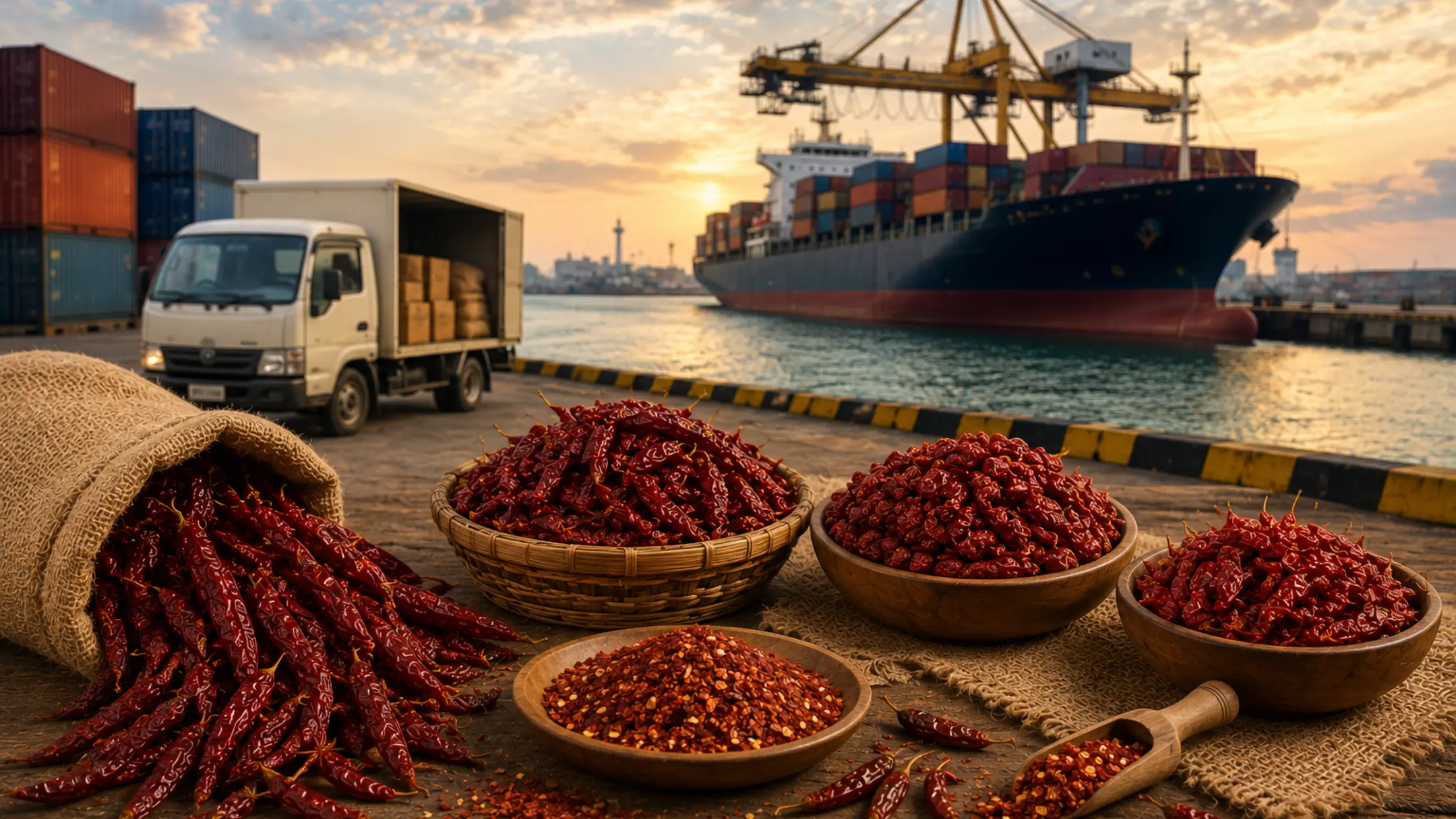
A buyer in Poland orders “Indian red chilli, good colour” and receives Teja. It’s fiery, it’s cheap, and it’s completely wrong for the mild paprika-style blend the customer wanted. That mismatch happens constantly, and it’s almost never fraud. It’s vocabulary. Indian red chilli varieties differ so widely on heat and colour that the same product name can mean two opposite things. Prism Exports understands the importance of clear product specifications and variety selection when supplying Indian spices to international buyers.
Get the variety right and everything downstream gets easier: your blend stays consistent, your extraction yields hold up, and you stop arguing about a specification nobody wrote down properly. This guide covers the varieties that actually move in export volume, what separates them, and how to put that into a contract.
Why Indian Red Chilli Varieties Are Not Interchangeable
Two numbers do most of the work. ASTA colour value measures extractable red pigment, and Scoville Heat Units measure pungency. They move independently. Byadgi sits high on colour and low on heat. Teja does the reverse. Guntur Sannam lands in between and became the export default largely because it’s predictable.
If you’re blending a table masala, colour carries the product and heat has to stay controlled. If you’re supplying a hot sauce plant, you’re buying capsaicin and colour is secondary. Oleoresin extractors care about a third thing entirely: yield per tonne, which pushes them toward high-colour, low-moisture material regardless of how it eats.
Price follows this logic. High-ASTA Byadgi typically trades at a premium over Sannam, while high-heat material swings sharply with the crop and with Chinese demand. Indian red chilli varieties are priced as separate commodities, so any Indian red chilli exporter quoting one “chilli price” without asking your end use is guessing.
The Major Indian Red Chilli Varieties and Where They Grow
Treat those ranges as indicative. Crop year, rainfall, drying method and the lot itself shift the numbers, which is why you contract against a tested figure, not a variety name.
Byadgi and the Colour Buyers
Byadgi comes in two commercial forms. Kaddi is the longer, wrinkled pod that dominates oleoresin buying; Dabbi is shorter and thicker, usually sold whole. Both are prized for deep red colour and gentle heat, which makes them the natural choice if your customers expect visual impact without burn. The trade-off is price and availability: a short Byadgi crop tightens supply fast.
Guntur Sannam and the Volume Trade
Sannam is the workhorse. It ships in more containers than any other Indian dry red chilli because it’s consistent and acceptable to a broad range of processors. If you’re new to Indian sourcing, Sannam is a sensible first container. Be specific about stem type and heat range.
Stemmed, Stemless, Whole or Broken
Presentation affects both price and freight, and buyers routinely underestimate it.
- With stem: cheapest, but you’re paying freight on inedible weight and a stem can puncture bags
- Stemless (cut stem): the common export form for most Indian red chilli varieties, and the safest default
- Stemless with capsicum tips removed: cleaner for grinding lines, slightly higher price
- Broken or crushed: suits blenders who grind anyway, but assess dust and colour loss
- Seedless: noticeably more expensive, since seeds carry weight and much of the handling cost
Whole pods hold colour and aroma longer than ground product. A competent whole red chilli supplier India based lets you pick stem treatment as a priced line item rather than burying it in a vague grade.
Quality Specifications to Put in the Contract
A variety name is not a specification. Indian red chilli varieties vary lot to lot, so write these into your purchase order and pre-shipment test scope:
1. Moisture, usually 10–12% for whole chilli
2. ASTA colour value, with a stated minimum
3. Pungency in SHU or capsaicin percentage
4. Extraneous and foreign matter, generally under 1%
5. Damaged and discoloured pods, expressed as a maximum percentage
6. Aflatoxin and ochratoxin limits matched to your destination
7. Pesticide residues checked against your market’s MRL list, not Indian defaults
That last point catches out more first-time buyers than any other. EU limits on certain residues are stricter than the norms applied domestically, and a lot can pass in India and still fail at Hamburg. A serious red chilli supplier India based tests against your destination before loading, not after.
Packing, Loading and What Fits in a Container
Whole chilli is bulky, and that single fact governs the freight economics of red chilli for export.
A 40ft high cube container typically takes somewhere in the range of 8 to 12 MT of whole pods depending on compression, packing and stem type, while ground chilli in the same box goes far heavier. Standard packing for Indian dry red chilli is 20 kg or 25 kg cartons or PP bags with food-grade liners, sometimes compressed bales. Ask about compression explicitly: it improves loadability but breaks pods and costs colour on visual grading.
Lead times of roughly three to four weeks from confirmed order to loading are realistic when material is in stock and cleaning is straightforward. Fresh crop timing matters too. Chilli arrivals broadly peak from February into April, and lots bought close to arrivals usually give better colour than carry-over stock offered late in the year.
Matching Variety to Market
Indian red chilli varieties sort themselves by market fairly cleanly. European blenders and colour-driven manufacturers favour Byadgi and Kashmiri-type material, and they’ll pay for a tested ASTA figure. Middle Eastern and South Asian diaspora retail usually wants Sannam. Sauce plants and extractors in East Asia buy on heat, which pushes them to Teja.
If you serve several of those segments, don’t try to force one variety across all of them. Two SKUs with clean, separate specifications will cost you less in complaints than one compromise product. Discuss this openly with your supplier before the first sample, because a good Indian red chilli exporter will steer you away from a variety that won’t suit your line even if it’s the one they hold most of.
Frequently Asked Questions
Which of the Indian red chilli varieties gives the best colour?
Byadgi, generally, with Kashmiri-type material also rating high on colour and very low on heat. Both suit buyers whose customers want a deep red finish without strong pungency. Always contract against a tested minimum ASTA value rather than the variety name, because colour varies noticeably between crop years and lots.
Can I mix two Indian red chilli varieties in one container?
Yes, and it’s common for buyers testing a new market. Keep the varieties in separately marked, clearly segregated lots with individual test reports, and confirm your customs paperwork reflects both. Expect a small handling premium and a slightly longer lead time compared with a single-variety load.
How much whole chilli fits into a 40ft container?
Usually 8 to 12 MT of whole pods, since chilli fills volume long before it reaches the weight limit. Compression, stem type and packing format all shift that figure. Ask for confirmed loadability in tonnes for your exact specification before you calculate landed cost per kilo.
Is whole chilli or powder better for import?
Whole pods hold colour, aroma and pungency longer and let you grind to your own mesh. Powder saves processing but fades faster and is harder to verify visually. Buyers who handle red chilli for export onward and own grinding capacity almost always prefer whole pods.
Conclusion
Choosing between Indian red chilli varieties comes down to two questions asked in the right order: what does your end product need on colour and heat, and what will your destination’s residue rules allow? Answer those before you compare prices and the rest of the sourcing decision becomes straightforward. Byadgi for colour, Sannam for versatility, Teja for heat, with specification numbers rather than variety names doing the real work in your contract. Start with a sample tested at your own cost, then scale once the numbers hold across two shipments. Prism Exports can help international buyers evaluate chilli varieties based on quality specifications, application, and market requirements.
Follow Prism Exports on Instagram for the latest updates and products.
If you’re weighing up which variety suits your blend and market, talking it through with Prism Exports, an experienced whole red chilli supplier India based, is the fastest way to get answers matched to your requirement. Talk to Prism Exports About Your Chilli Requirements .



