
Peanut Exporter to Egypt: What Buyers Should Know
Published by Prism Exports
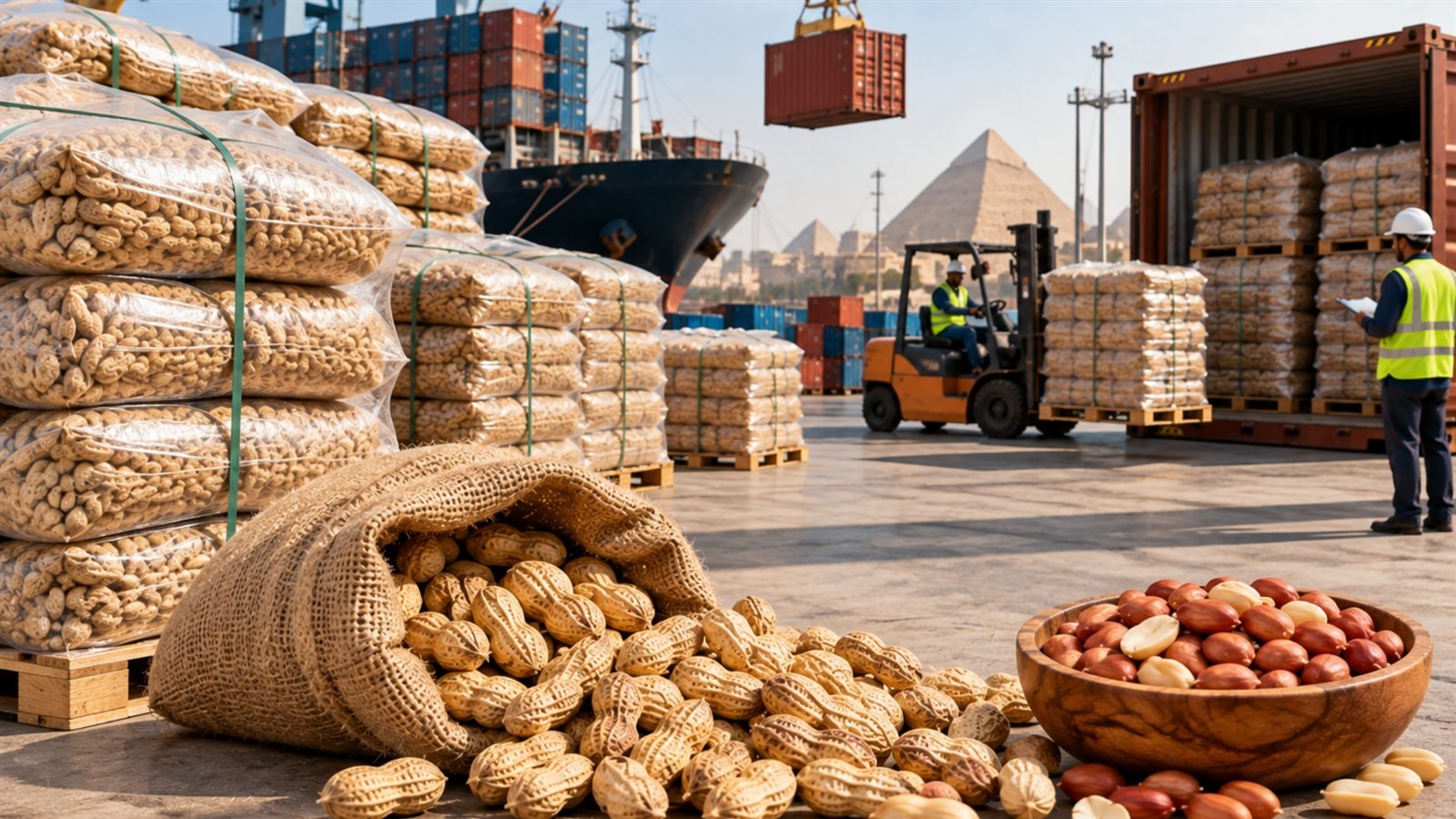
Egypt both exports and imports peanuts. Local growers supply graded kernels, while roasters, halawa makers, and confectioners in Cairo and Alexandria may also source from abroad to meet their needs for volume, count, and price. For buyers, working with a peanut exporter to Egypt involves careful attention to documentation and timing. Prism Exports can help importers discuss specifications and shipment planning.
Indian supply is one option for bulk requirements. Buyers should pay particular attention to advance cargo registration, aflatoxin documentation, and payment arrangements. This guide explains these considerations and how to prepare for them. Prism Exports can help you review the details for your planned order.
Why Egypt Buys Peanuts From Abroad
The domestic crop is real but committed. Exportable grades earn hard currency, so the best material is sold outward, leaving local processors competing for what remains at prices that climb through the season. Demand at home is not flat either. Ramadan pulls confectionery, halawa and roasted nut consumption sharply upward, and a line that runs short in Sha’ban has no second chance.
Imported cover smooths that. A peanut exporter to Egypt shipping from Gujarat or Andhra Pradesh holds several counts at once, quotes against a written spec, and delivers into Alexandria, Damietta, Port Said or Ain Sokhna depending on your clearing setup. Transit from Mundra is usually two to three weeks, though Red Sea routing has been unsettled, so confirm the schedule rather than assuming last year’s transit applies.
What Egyptian Buyers Order
Counts and Their Uses
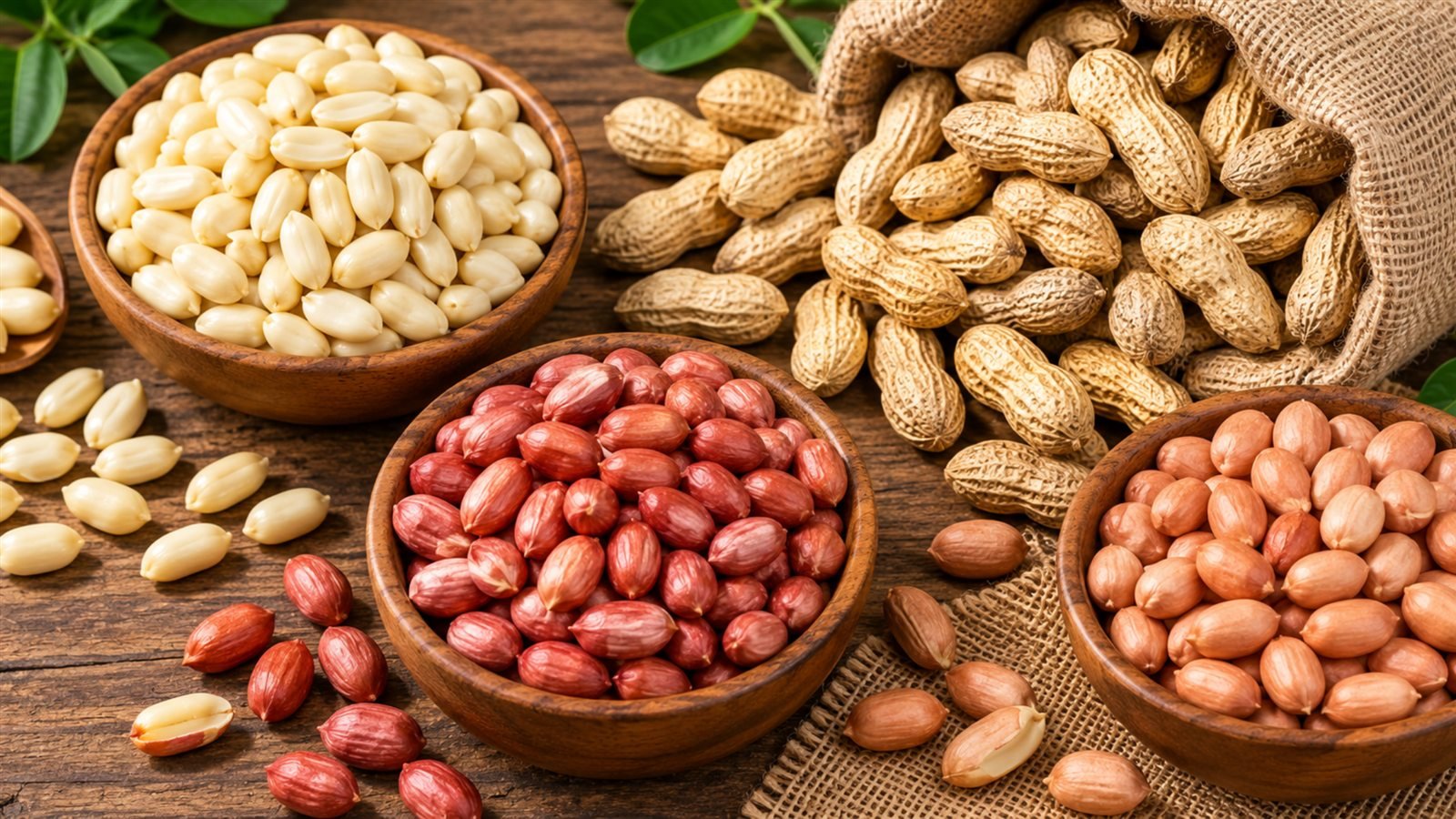
Roasted and salted nuts sold through kiosks take the larger whole kernels. Halawa, chocolate fillings and paste lines take smaller counts, splits and blanched material, where flavour and oil content matter more than appearance.
| Type and count | Kernel size | Main use | Price position |
| Java 38/42 | Large | Retail packs, table nuts | Highest |
| Java 50/60 | Medium-large | Roasted and salted snacks | High |
| Java 60/70 | Medium | Roasting, blending | Mid |
| Java 70/80 | Small | Halawa, confectionery, paste | Lower |
| Blanched kernels | Skins removed | Chocolate, bakery, fillings | Premium |
| Splits and brokens | Irregular | Grinding, industrial use | Lowest |
Moisture, FFA and Oil Content
Numbers belong in the contract you sign with a peanut exporter to Egypt. Moisture 8% maximum is standard, and 7% earns its premium if cargo waits at a Mediterranean port through summer. Free fatty acid 1% matters most for paste and halawa, since a high-FFA lot turns rancid faster than stock moves. Add admixture 1%, damaged kernels 2%, oil content in the mid to high forties for Java types. An Indian peanut exporter quoting against those figures can be held to them.
Aflatoxin, Residues and Testing
Aflatoxin is the commonest reason consignments get held, and Egypt is no exception. Work to the limit your own output demands, not the loosest available, particularly if you re-export confectionery to the Gulf or Europe, where thresholds run tighter than origin markets apply.
Sampling protocol decides whether a certificate means anything. Contamination sits in pockets, so one grab sample from a 20-tonne lot proves little. Agree how many incremental samples form the composite, who draws them, and which accredited laboratory reports. Require the certificate to name your specific lot and container. On a first order with a new peanut supplier to Egypt, independent inspection at the load port is worth its few hundred dollars.
Advance Cargo Registration and Document Matching
The ACID Number Comes First
Egypt runs an advance cargo information system, and the importer must obtain an ACID number before goods ship, then share it so it appears on the documents. Details uploaded on your side and the exporter’s have to correspond. A mismatch in description, weight or consignee produces port delays that are expensive to unwind. Send the ACID and exact wording to your peanut supplier to Egypt in writing, and approve a draft document set before the bill of lading issues.
Certificates Travelling With the Cargo
- Commercial invoice and packing list with bag count and net weight
- Bill of lading carrying the ACID reference correctly
- Phytosanitary certificate from Indian plant quarantine, plus fumigation certificate
- Certificate of origin, attested where your agent requires it
- Aflatoxin and residue reports naming the lot
- Exporter registration papers and marine insurance on CIF terms
Food import control sits with the national food safety authority, and certain categories require the exporting facility to be registered in advance. Check whether your product falls inside that scope before ordering, not after the vessel sails.
Choosing a Peanut Exporter to Egypt
Price sheets from every peanut exporter to Egypt look similar. These checks show who can actually deliver.
1. Ask for two recent document sets from shipments cleared into Egypt.
2. Confirm they control sorting and grading rather than buying finished lots.
3. Request stuffing photographs and the seal record from a past container.
4. Check they hold stock through August to October, when Indian old-crop thins.
5. Get the claims procedure in writing before signing.
6. Open with one container. A peanut exporter from India pressing you to start with five is telling you something.
Loading: What a Bulk Peanut Supplier Owes You
A 20ft container carries roughly 19 to 20 MT in 25kg or 50kg woven bags, and weight rather than volume sets the ceiling. Summer is the risk period. Cargo loaded warm in Gujarat, crossing the Red Sea, then sitting in Mediterranean sun will sweat, and condensation on the roof drips onto the top bags. A careful bulk peanut supplier lines the box with kraft paper, hangs desiccant sized for the voyage, and tests moisture in the week of stuffing. Ask for the seal number photographed against closed doors.
Pricing, Currency and Payment With an Indian Peanut Exporter
Indicative FOB Mundra levels for Java kernels have generally sat in a broad band of roughly USD 1,000 to 1,600 per MT depending on count, crop year and blanching, with CFR Alexandria adding freight that has been unusually volatile. Ask any peanut exporter to Egypt for a quote validity period, and compare landed cost rather than FOB headlines.
Currency deserves early attention. Access to foreign exchange has tightened and loosened repeatedly, and rules on documentary collection versus letters of credit changed with it. Talk to your bank before agreeing terms, confirm which instrument they will process today, and build that into the contract. A seasoned Indian peanut supplier knows these constraints and will not push for a structure your bank cannot execute.
Lead Times and Booking a Peanut Exporter to Egypt
Kharif arrivals build from late October into December, and the summer crop from Andhra Pradesh and Karnataka lands around March to May. Availability is widest and pricing keenest between November and February, convenient for building stock ahead of Ramadan. Work backwards: two to three weeks at the peanut exporter from India for grading and stuffing, two to three weeks in transit, then clearance. Six to eight weeks door to door is sensible, more for a first shipment.
Frequently Asked Questions
Which Egyptian port should I use?
That depends where your plant and clearing agent sit. Alexandria and Damietta suit most Delta and Cairo buyers, Port Said works for transhipment cargo, and Ain Sokhna can suit Upper Egypt or favourable Red Sea routing. Ask your peanut exporter to Egypt to quote more than one.
What happens if the ACID details do not match?
Delays, and occasionally penalties. The advance cargo data you register must correspond with the invoice, packing list and bill of lading. Approve a draft document set before the bill of lading is issued, and correct discrepancies while the cargo is still at origin rather than after arrival.
What aflatoxin limit should I specify?
Specify the limit your finished product needs, not the loosest one permitted. If you re-export confectionery or paste, your buyer’s threshold governs. Name the accredited laboratory, the sampling protocol and the number of incremental samples, and agree what happens if an arrival retest disagrees.
Can I order less than a full container?
LCL consolidation is possible but per-kilo cost climbs and extra handling raises moisture risk. One 20ft container of about 19 to 20 MT is the practical unit. Ask the Indian peanut supplier for sealed courier samples from the offered lot and run your own roasting trial.
Conclusion
Sourcing from a peanut exporter to Egypt is easier to manage when documentation is part of the plan from the start. Register the ACID early, check that shipment documents match it, and put measurable limits for moisture, admixture, and aflatoxin in the contract. Confirm payment terms with your bank before finalizing the agreement. Planning purchases around the Indian arrival season can also help avoid last-minute buying ahead of Ramadan.
If you’re comparing origins or specifications for the coming season, Prism Exports can help you review grades, volumes, and shipment timing. Arrange a sourcing discussion with the Prism Exports team to explore options for your business.
For updates, follow Prism Exports on Instagram.



