Peanut Exporter to Kenya: A Guide for Importers
Published by Prism Exports
For first-time importers in Nairobi, paperwork can be as important as cargo quality. A conformity certificate issued at the wrong stage can delay clearance and add costs at Mombasa. Choosing a peanut exporter to Kenya familiar with the applicable requirements can help buyers prepare the shipment documentation in advance. Prism Exports can help you discuss product specifications and export documents before ordering.
Kenya produces groundnuts, but local supply may not meet demand from peanut butter makers, roasters, and confectioners. Imported supply helps fill that gap. This guide covers grades, aflatoxin requirements, PVoC, permits, Mombasa clearance, and timelines. Prism Exports can help you review these considerations when planning an import.
Why Kenyan Buyers Import
Local production is concentrated around Busia, Homa Bay and Bungoma, largely on smallholdings, with drying and storage varying from good to alarming. Buyers needing consistent volume with a lab report attached cannot build a business on that alone. A peanut exporter to Kenya shipping from Gujarat or Andhra Pradesh offers several counts at once, year-round, at a spec you can write into a contract.
Geography helps too. Mombasa is one of the shorter runs from western India, often eight to fourteen days direct, which keeps freight modest and limits the time cargo spends absorbing moisture. From there, rail or road moves containers up to Nairobi.
What Kenyan Processors Order
Counts and What They Suit
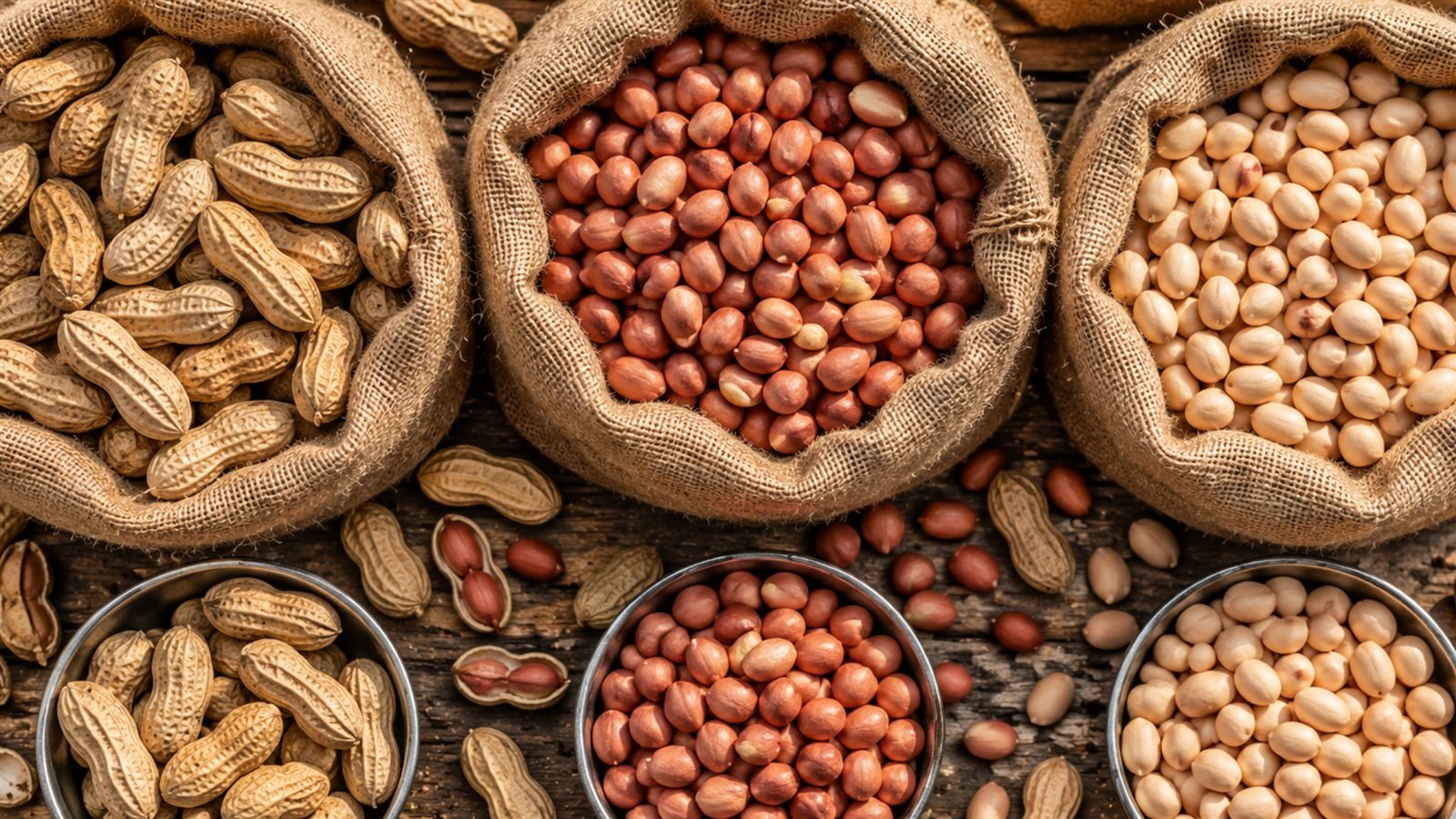
Peanut butter and paste dominate demand, so smaller counts, splits and brokens move in the largest volumes. Roasters supplying salted njugu and coated snacks want whole kernels with even colour, and pay for them.
| Type and count | Kernel size | Main use | Price position |
| Java 38/42 | Large | Retail packs, table nuts | Highest |
| Java 50/60 | Medium-large | Salted and coated snacks | High |
| Java 60/70 | Medium | Roasting, blending | Mid |
| Java 70/80 | Small | Peanut butter, confectionery | Lower |
| Blanched kernels | Skins removed | Butter, bakery, fillings | Premium |
| Splits and brokens | Irregular | Grinding, crushing | Lowest |
Moisture, FFA and Oil Content
Put the numbers in writing. Moisture 8% maximum is standard, and 7% is worth a small premium if the box will wait at Mombasa. Free fatty acid 1% matters most for butter, since a high-FFA lot goes rancid faster than your stock turns. Add admixture 1%, damaged kernels 2%, oil content in the mid to high forties for Java types. An Indian peanut exporter quoting against those figures is easy to hold to account; one quoting “best quality” is not.
Aflatoxin: The Line You Cannot Cross
Kenya treats aflatoxin as a public health matter, not a trade technicality, and enforcement reflects that history. Groundnut standards applied here commonly set total aflatoxin around 10 ppb with a lower sub-limit on B1, tighter than several other African and Asian markets accept. Assume your consignment gets sampled.
Sampling method decides outcomes. Contamination sits in pockets rather than spreading evenly, so one grab sample tells you almost nothing about a 20-tonne lot. Agree in writing how many incremental samples form the composite, who draws them, and which accredited laboratory reports. Insist the certificate names the specific lot and container, not the exporter’s general production, and make that a condition of every order you place with a peanut exporter to Kenya.
Compliance and Clearing: PVoC, Permits and Duties
The Conformity Certificate You Need Before Loading
Kenya operates a pre-export verification of conformity programme, and food consignments generally require a Certificate of Conformity issued by an appointed inspection agent in the exporting country. The critical word is pre-export. Ship without it and you face penalty charges and possible refusal at destination, and no negotiation at Mombasa fixes it retrospectively. Book inspection with the agent covering India before the vessel closes, and confirm the Indian peanut supplier has done so rather than assuming.
Permits, Levies and Clearing at Mombasa
- Plant import permit from the national plant health authority, obtained before shipment
- Phytosanitary and fumigation certificates issued in India
- Import declaration lodged through the electronic single window
- Commercial invoice, packing list, bill of lading and certificate of origin
- Aflatoxin and pesticide residue reports naming the lot
Duty follows the East African Community common external tariff, plus the import declaration fee, railway development levy and VAT. Ask your clearing agent to price the full landed cost before you commit.
Choosing a Peanut Exporter to Kenya
Quotes from every peanut exporter to Kenya look interchangeable until something goes wrong. These checks separate a real peanut supplier to Kenya from a broker forwarding someone else’s stock.
1. Ask for two recent Certificates of Conformity from shipments to East Africa.
2. Confirm they control sorting and grading rather than buying finished lots at a mandi.
3. Request stuffing photographs and the seal record from a past load.
4. Check they hold stock through August to October, when Indian old-crop thins.
5. Get the claims procedure in writing before signing anything.
6. Open with one container. A peanut exporter from India pushing you to start with five is telling you something.
Loading: What a Bulk Peanut Supplier Owes You
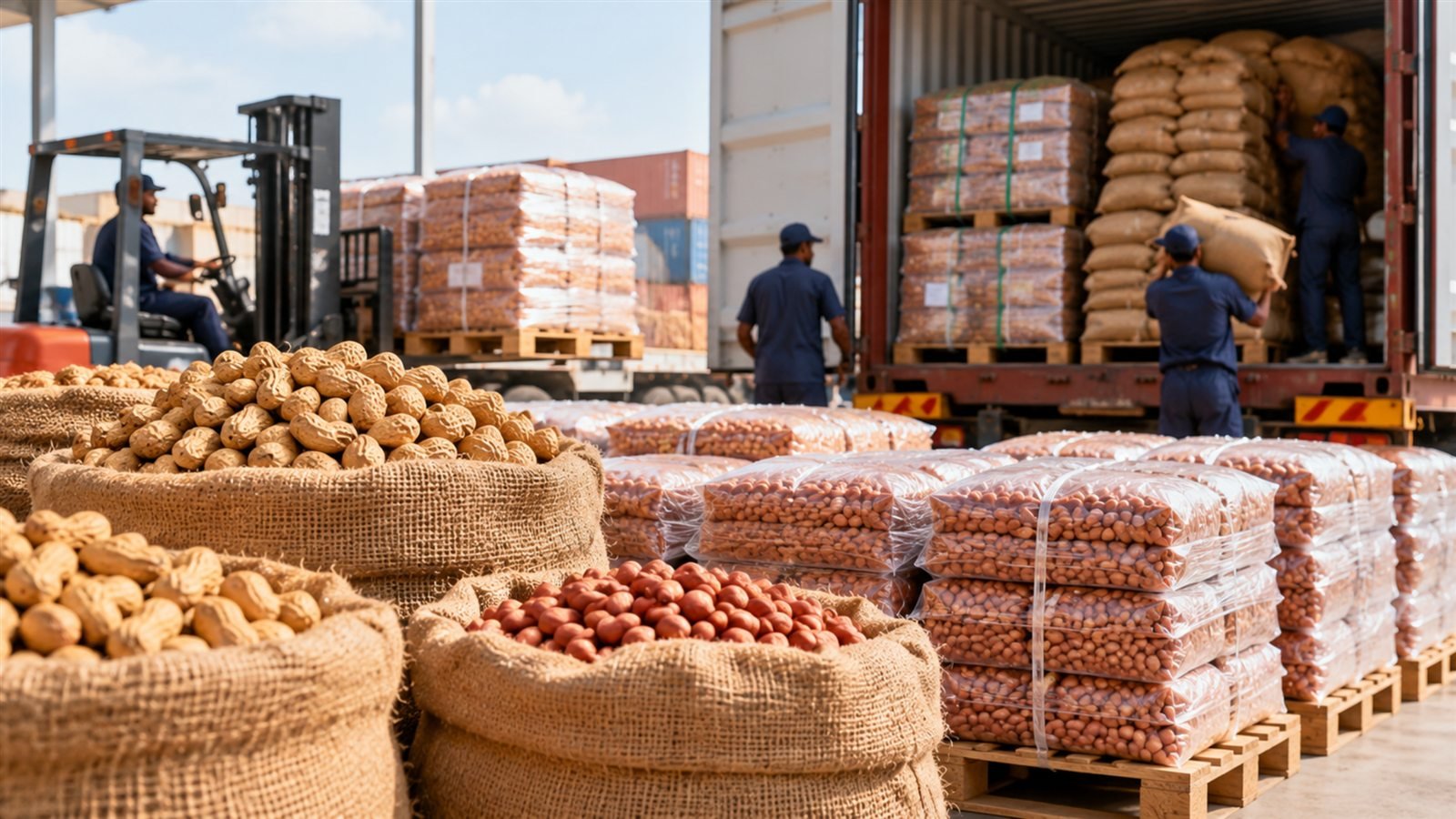
A 20ft container carries roughly 19 to 20 MT in 25kg or 50kg woven bags, and payload weight rather than space sets the ceiling. The crossing is short, but humidity at both ends is not kind. Warm cargo loaded in Gujarat meets cooler air at sea, condensation forms on the roof and drips onto the top bags, and by Mombasa you have caking on material that left the warehouse dry. A careful bulk peanut supplier lines the box with kraft paper, hangs desiccant sized for the voyage, and tests moisture in the week of stuffing. Ask for the seal number photographed against closed doors.
Pricing and Payment With an Indian Peanut Exporter
Indicative FOB Mundra levels for Java kernels have generally sat in a broad band of roughly USD 1,000 to 1,600 per MT depending on count, crop year and blanching, with CFR Mombasa adding modest freight given the short run. Treat any number as a snapshot, and ask for a validity period on every quote from a peanut exporter to Kenya.
Payment starts formal and loosens with familiarity. A first order commonly runs on an irrevocable letter of credit at sight, or a 20% to 30% advance with the balance against scanned documents. Documents against payment comes later. Keep the LC wording simple, since a document discrepancy causes more delay than shipping ever does.
Lead Times: When to Book a Peanut Exporter to Kenya
Kharif arrivals build from late October into December, and the summer crop from Andhra Pradesh and Karnataka lands around March to May. Availability is widest and pricing keenest between November and February. Work backwards: two to three weeks at the peanut exporter from India for grading, testing, conformity inspection and stuffing, roughly two weeks at sea, then clearing and haulage. Five to seven weeks door to door is realistic once the routine is established.
Frequently Asked Questions
How long does shipping take from India to Mombasa?
Direct sailings from Mundra or Kandla run eight to fourteen days, with transhipment adding several more. Allow two to three weeks before that for grading, testing, conformity inspection and stuffing, then clearing and haulage to Nairobi. Ask your peanut exporter to Kenya to confirm the sailing before you plan production.
What happens if I ship without a Certificate of Conformity?
You risk penalty charges and possible refusal of the consignment, and the certificate cannot be issued retrospectively once goods have sailed. Book inspection with the appointed agent in India before the vessel closes. Any experienced peanut supplier to Kenya will raise this before you do.
What aflatoxin level should the contract specify?
Specify the limit applied to groundnuts here rather than a looser origin-market figure, and name the accredited laboratory, the sampling protocol and the number of incremental samples. Agree in advance what happens if your arrival retest disagrees with the pre-shipment certificate. Vague wording causes most disputes.
Can I start with less than a full container?
You can consolidate LCL, but per-kilo cost rises sharply and extra handling raises moisture risk. One 20ft container of about 19 to 20 MT is the practical unit. Ask the Indian peanut supplier for sealed courier samples from the offered lot and run your own trial first.
Conclusion
Working with a peanut exporter to Kenya rewards preparation. Define the grade and measurable limits in your contract, agree on the aflatoxin sampling process, and arrange the required conformity certificate before the vessel is closed. Calculate the full landed cost, including applicable levies and inland transport, and plan orders around the Indian crop calendar. These steps can help make imported supply a more predictable part of your production plan.
If you’re comparing specifications or origins for your next order, Prism Exports can help you review grades, volumes, and timing. Discuss your requirements with the Prism Exports team to explore sourcing options for your business.
For updates, follow Prism Exports on Instagram.