Peanut Exporter to UAE: Indian Peanut Buying Guide
Published by Prism Exports
A container may arrive at Jebel Ali in July, clear in a few days, then sit in a yard in extreme heat before reaching a repacking unit in Al Quoz. By then, the kernels can develop an off-odour even if they were in good condition at loading. Choosing a peanut exporter to UAE means considering heat, timing, and storage alongside count and price. Prism Exports can help buyers discuss shipment planning and quality requirements for the Gulf market.
The route from Gujarat to Dubai is relatively short, giving Gulf buyers more flexibility in replenishing stock than many importers farther away. Prism Exports can help you consider shipment timing and handling needs when planning an order.
Why UAE Importers Buy Indian Groundnuts
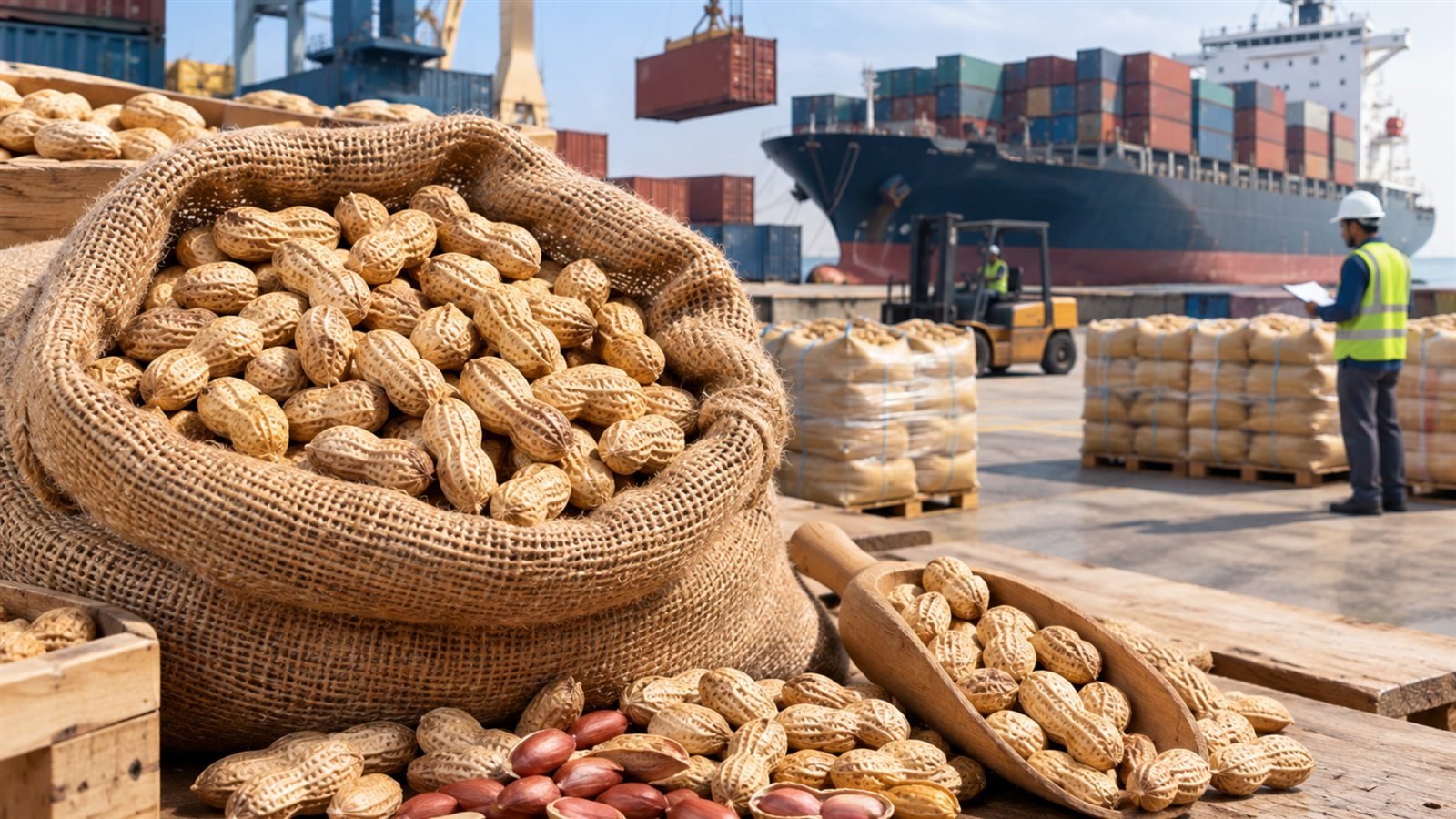
Proximity is the obvious answer. Sailings from Mundra, Kandla and Nhava Sheva to Jebel Ali run constantly, transit is short, and a peanut exporter to UAE can react to a firm order in weeks rather than months. That matters when you’re feeding a repacking line or covering a sudden retail commitment.
Range matters too. India offers Java and Bold types, blanched and split kernels, red skins and in-shell material from one origin, so a single supplier relationship can cover several product lines.
Product Formats for the Gulf Trade
Raw Kernels for Roasters and Repackers
Most volume moves as raw kernels in 50 kg bags, roasted and salted locally or repacked for retail. Java counts around 50/60 and 60/70 suit snack packs; Bold counts work where a larger kernel looks better in a clear pouch. Ask your peanut exporter to UAE for uniformity tolerance in writing, because retail packs expose inconsistency far more than industrial use does.
Blanched, Split and In-Shell
Blanched kernels serve confectionery and peanut butter production. Splits are cheaper and fine for grinding. In-shell material sells through traditional roasting shops and gift packs, and fills a container on volume rather than weight, so freight per tonne looks worse than expected.
Specifications a Peanut Exporter to UAE Should Confirm
Trade names carry no weight in a dispute. Put numbers on the contract: variety and count, count tolerance, moisture ceiling, admixture and foreign matter, damaged and discoloured kernel limits, and packing detail including bag type and pallet requirement.
Free fatty acid content deserves a line of its own for this market. Kernels that sat too long before shipment, or travelled through a Gulf summer, develop rancidity that roasting won’t hide. Any experienced Indian peanut exporter understands why a UAE buyer asks about it.
Aflatoxin, Moisture and Gulf Heat
Testing That Actually Proves Something
Gulf standards set ceilings for aflatoxin in groundnuts, and the importer of record carries the responsibility at the border. Require your peanut exporter to UAE to supply lot-specific certificates from an accredited laboratory, and specify the sampling protocol, since aflatoxin distribution through a lot is famously uneven. A single grab sample is close to meaningless. Confirm current limits with your clearing agent, as standards are revised periodically.
Summer Heat a Peanut Supplier to UAE Must Plan For
Loading moisture of 7 to 8 per cent maximum is standard, but the real risk here is temperature. Container interiors on a summer yard get brutally hot, and kernel oil degrades faster than most buyers assume. Practical steps: schedule sensitive lots outside June to September where possible, use container liners, book temperature-controlled storage rather than open warehousing, and clear cargo quickly instead of leaving it at the port.
Documents and Labelling for a Peanut Exporter from India
Clearance in the Emirates is quick if the paperwork is right and slow if it isn’t. Expect your peanut exporter to UAE to provide:
- Commercial invoice and packing list matching bag and lot numbers
- Bill of lading consigned per agreed payment terms
- Certificate of Origin attested as required
- Phytosanitary certificate from Indian plant quarantine
- Aflatoxin and pesticide residue reports from an accredited laboratory
- Halal documentation where the product is processed or flavoured
Retail packs bring an extra layer: Arabic labelling, ingredient and allergen declarations, production and expiry dates, and label registration through the local food control system. Shelf life on arrival is also checked, so a peanut exporter from India shipping consumer packs needs production dates that leave you plenty of runway. Confirm requirements with your clearing agent before printing anything.
Pricing, MOQ and Container Loading
Groundnut values move with harvests, oil-crop sentiment and currency, so treat these as indicative rather than a quote from any peanut exporter to UAE.
| Item | Indicative range | Notes |
| Java 50/60 raw kernels, FOB | USD 1,100–1,600 / MT | Moves with crop year |
| Bold 40/50 raw kernels, FOB | USD 1,150–1,700 / MT | Bigger counts priced higher |
| MOQ | 19–20 MT, one 20ft container | LCL costs more per kilo |
| 40ft container, kernels | 26–27 MT | 50 kg bags or 25 kg vacuum packs |
Free zone storage is worth modelling if you re-export. Holding stock in a Jebel Ali facility can defer duty until goods enter the local market, which changes working capital more than a small price saving. A bulk peanut supplier will often support that structure with staggered shipments rather than one large consignment.
Lead Times, Ramadan Peaks and Re-Export
Transit from Indian west coast ports runs about four to seven days, with documentation and clearance adding a few more. That speed tempts buyers into ordering late. Resist it during peak windows: demand for nuts climbs sharply before Ramadan, and supplier capacity and container space tighten together. Placing orders six to eight weeks ahead of that window is the difference between covering the season and paying spot prices for it.
Re-export volumes add another consideration. If cargo moves onward to Africa, Iraq or the CIS, your onward buyer’s specification governs, not yours, so pass their requirements upstream to your Indian peanut supplier before production rather than after.
How to Vet a Peanut Exporter to UAE
Before you commit to a programme with any bulk peanut supplier, work through the basics:
1. Verify APEDA registration, IEC and FSSAI details from the issuing bodies directly.
2. Establish whether they process and sort in-house or buy finished lots from traders.
3. Ask for laboratory reports from three recent Gulf shipments.
4. Run one trial container and check it against a sealed, numbered pre-shipment sample.
5. Agree who inspects, which laboratory arbitrates disputes, and who pays for retesting.
A serious Indian peanut supplier answers all five plainly. If the answers get vague around processing ownership, assume you’re buying from a broker and price the risk accordingly.
Frequently Asked Questions
How long does shipping peanuts from India to Dubai take?
Typically four to seven days port to port from Gujarat or Mumbai to Jebel Ali, plus a few days for documentation and clearance. Sailings are frequent, so scheduling is flexible outside peak periods. Ordering ahead still pays before Ramadan, when capacity tightens quickly. Ask your peanut supplier to UAE to book space early.
What aflatoxin limit should I specify?
Set a contractual ceiling at or inside the applicable Gulf standard, and require lot-specific testing from an accredited laboratory rather than a generic certificate. Specify how samples are drawn and composited. Confirm the current limit with your clearing agent, and agree in advance which laboratory’s result settles a disagreement between you and your peanut exporter to UAE.
Is summer shipping to the Gulf a real problem?
It’s manageable, not trivial. Heat accelerates rancidity in kernel oil, and cargo left on a yard or in an uncooled warehouse suffers most. Use liners, arrange temperature-controlled storage, clear quickly and avoid holding long stock positions through July and August. An experienced Indian peanut exporter will plan shipments accordingly.
Do I need Arabic labelling for peanut retail packs?
Yes for consumer packs. Arabic ingredient and allergen declarations, production and expiry dates, and registration through the local food control system all apply, and shelf life remaining on arrival is checked. Bulk 50 kg bags for further processing follow simpler marking rules. Confirm the detail with your clearing agent before artwork goes to print.
Conclusion
Sourcing groundnuts for the Emirates means managing the factors that can affect cargo quality: heat, transit time, storage, and clear specifications. Put counts, tolerances, moisture limits, and aflatoxin requirements in the contract, agree on a sampling protocol before shipment, and plan orders around Ramadan. A dependable peanut exporter to UAE should be ready to discuss these details and help identify potential risks. Starting with one container lets you assess the results before building a larger programme.
If you’re comparing suppliers, Prism Exports can help you review counts, specifications, and shipping windows for your business. Arrange a discussion with the Prism Exports team to explore a sourcing plan that fits your requirements.
For updates, follow Prism Exports on Instagram.