
Red Chilli Powder Exporter to France: Importer’s Guide
Published by Prism Exports
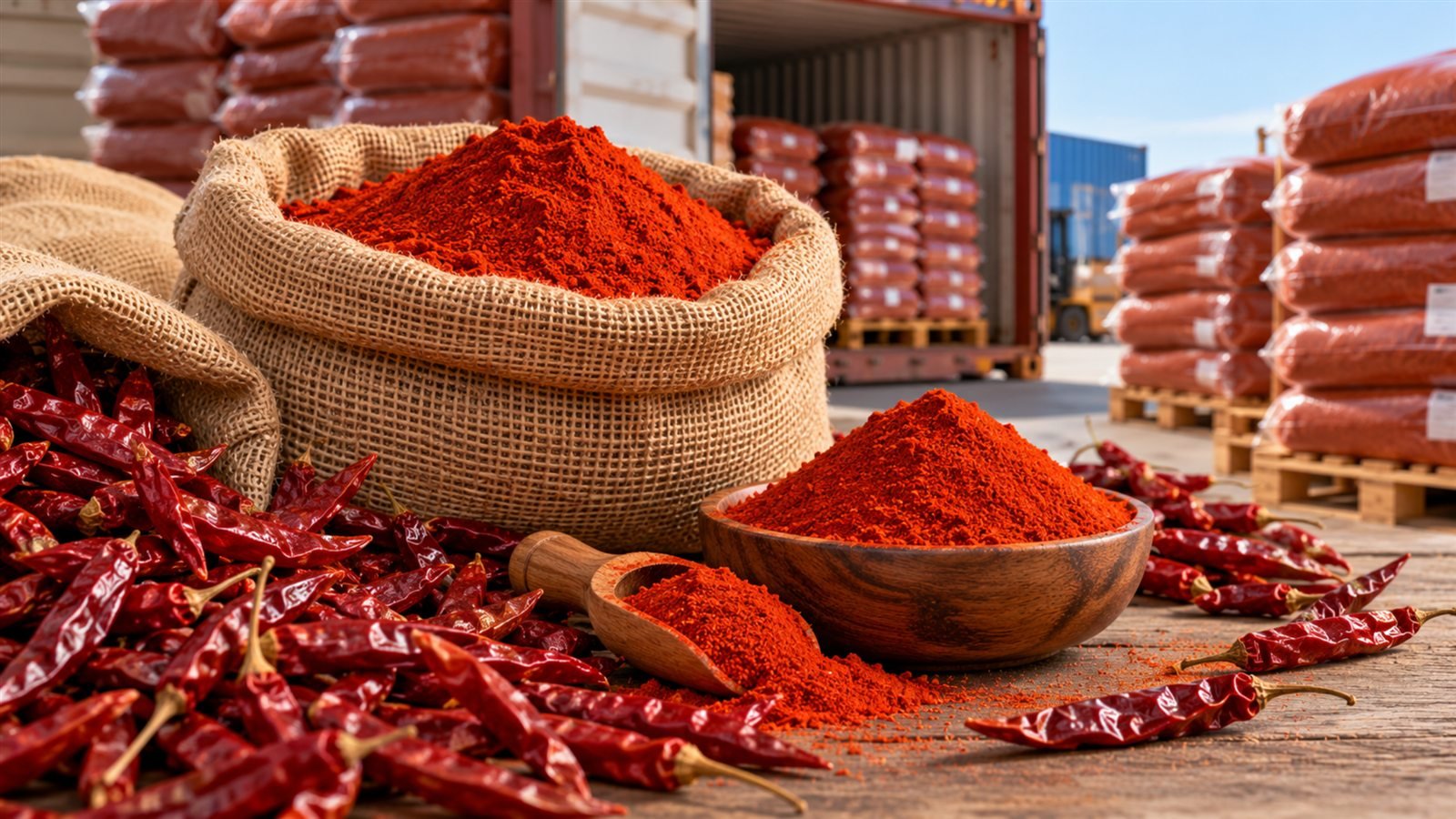
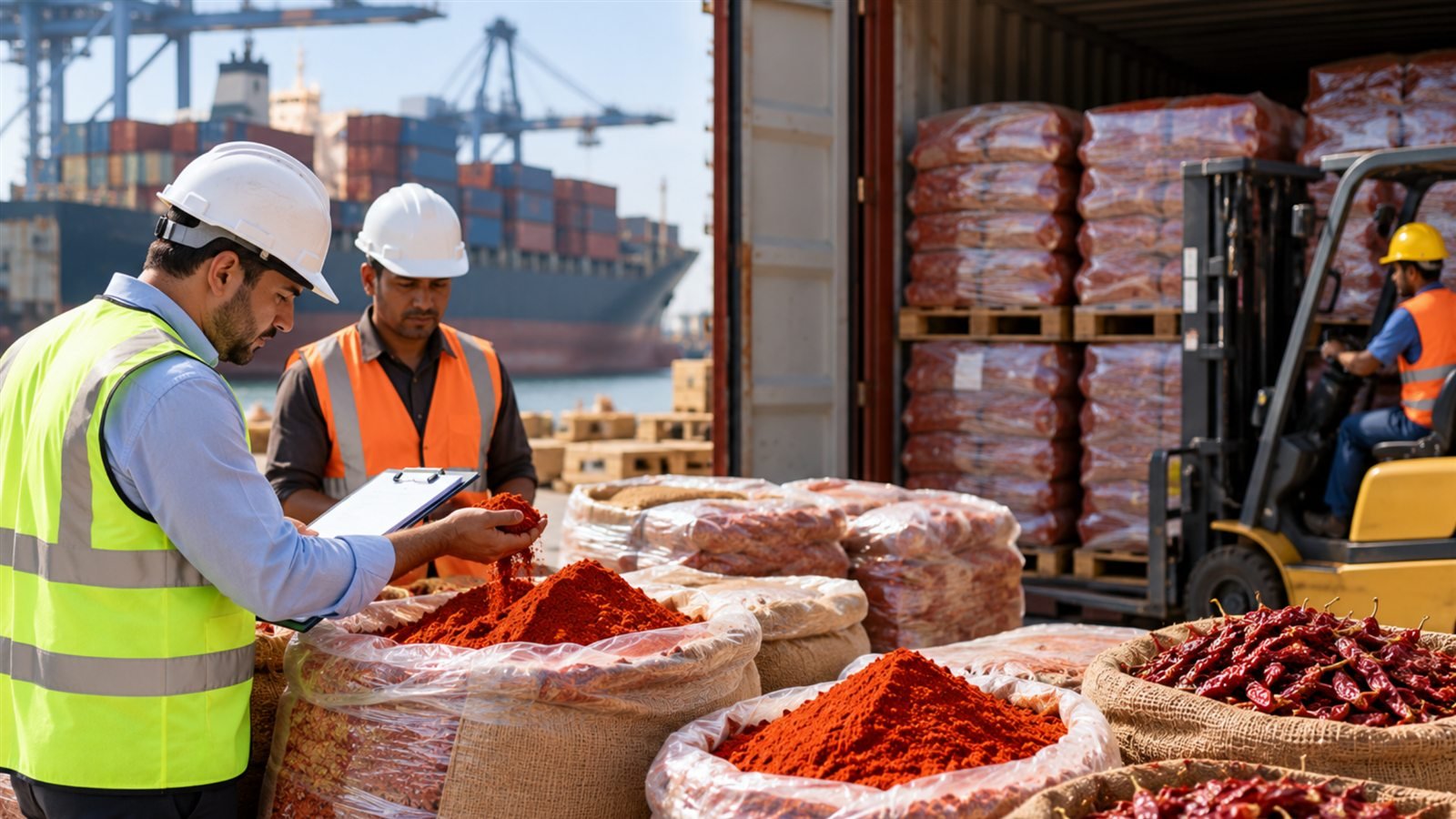
A container arrives at Le Havre, the broker forwards the analysis certificate, and a test finds pesticide residues above the applicable EU limit. The lot is held, and payment is delayed. That scenario shows why choosing a red chilli powder exporter to France involves more than comparing prices: buyers need clear specifications and documentation that supports border checks. Prism Exports can help importers discuss quality requirements and shipment documents before ordering.
Whether you’re buying for a spice blender in Lyon, a wholesale network around Paris, or a private-label retail programme, focus on specific questions: Which grade and ASTA colour do you need? What residue testing is required? And how will the contract allocate risk if a consignment is detained? Prism Exports can help you review these details for your sourcing plan.
What French Buyers Actually Order
French demand splits into three streams that rarely want the same product. Retail and private-label blenders want bright colour, low heat and a clean residue file above all else. Ethnic and HoReCa distributors serving North African, West African and South Asian kitchens want heat and flavour, and will accept a darker powder if the pungency is right. Industrial buyers (sauce plants, snack seasoning houses, ready-meal manufacturers) care about repeatability across twelve months, nothing else.
Knowing which stream you sit in changes everything downstream: variety, grinding spec, packaging and price. Tell an Indian Chilli Powder Supplier only that you want good quality powder and you’ll get whatever the mill happened to be running that week.
Grades, Colour and Heat: Matching Spec to End Use
Indian chilli is not one product. Varietal choice decides colour and pungency long before grinding starts, so the spec conversation should begin there. Ask your Red Chilli Powder Supplier India-side which varieties they can actually secure at scale, because real access matters more than a brochure claim.
ASTA Colour and Heat Bands
Teja and similar high-pungency types run hot, often in the 75,000–100,000 SHU band, with moderate colour. Byadgi and Kashmiri-type chillies give deep red colour at low heat, which is why colour-led blends rely on them. Sannam sits between the two and carries most general-purpose volume.
| Spec point | Typical range | Why it matters |
| ASTA colour | 40–160 | Drives visual appeal in retail packs and sauces |
| Pungency | 8,000–100,000 SHU | Defines end use and dosage in blends |
| Moisture | 8–11% max | Controls caking, mould risk and shelf life |
| Mesh / fineness | 40–80 mesh | Affects dispersion, mouthfeel and settling |
| Total ash | 6–8% max | Proxy for grit and adulteration |
Fineness Checks Worth Asking a Bulk Red Chilli Powder Supplier
Ask for mesh size in writing, not “fine powder”. A sauce plant dosing by weight behaves very differently with 40 mesh than with 80. Stem content, seed ratio and extraneous matter limits belong in the contract too. They’re the quiet variables that shift cost by several percent without showing up in a colour reading.
The EU Compliance Bar Every Red Chilli Powder Exporter to France Must Clear
France applies EU rules, and for spices those rules are strict and actively enforced. An exporter that treats testing as an afterthought will eventually cost you a container.
Pesticide Residues and MRLs
Maximum residue levels are the most common reason chilli consignments get refused at EU entry. Ethylene oxide has generated repeated alerts across the spice trade, and the EU treats it as non-negotiable. Insist on a residue scan against the current EU MRL list, from an accredited lab, on the actual export lot rather than a generic annual sample.
Aflatoxins, Ochratoxin A and Sudan Dyes
Chilli is mycotoxin-sensitive because drying happens partly in the open. EU limits for aflatoxin B1 and total aflatoxins are tight, ochratoxin A is checked alongside, and Sudan dyes remain a standing concern. A serious Indian Chilli Powder Supplier pre-tests, keeps retained samples, and shares the raw lab report rather than a summary certificate.
Documentation and Border Formalities
Paperwork is where deals stall. Expect a commercial invoice and packing list, bill of lading, certificate of origin, phytosanitary certificate, Spices Board registration proof, FSSAI licence details, and lab certificates of analysis covering residues, aflatoxin and microbiology. APEDA registration may apply depending on classification and packing.
Two practical points. Ask any Red Chilli Powder Exporter from India for draft documents before shipment, so a wrong HS code or mismatched net weight gets corrected while it’s still cheap. Then confirm which EU-side food business operator carries the compliance duty once goods land.
Packing, Container Loading and Shelf Life
Standard bulk packing is 20 kg or 25 kg multi-wall paper bags with an inner food-grade liner, sometimes nitrogen-flushed for colour retention. Retail packs run from 100 g pouches to 5 kg cartons.
- A 20 ft container typically takes 14–18 MT of bagged powder depending on bag weight and pallet pattern.
- Palletised loading costs volume but cuts damage and speeds up EU-side handling.
- Shelf life is usually declared at 12–18 months, and colour fades faster than heat does.
Agree the loading pattern once with your Red Chilli Powder Supplier to France and then lock it. Changing bag size mid-programme quietly changes your landed cost per kilo.
Pricing, MOQ and Incoterms
Chilli pricing moves with the Guntur and Byadgi harvest cycle, roughly February through May, and with cold-storage releases later in the year. Indicative FOB levels for standard grades commonly sit anywhere from the mid hundreds to well over a thousand USD per MT depending on variety, ASTA colour, sterilisation and packing. Treat any number as a snapshot, not a quote.
MOQ from an established Bulk Red Chilli Powder Supplier is usually one 20 ft container, though a first trial of 3–5 MT is often negotiable. FOB Nhava Sheva or Chennai suits buyers with their own freight contracts; CIF Le Havre or Marseille simplifies life for smaller importers. Payment usually starts with a documentary letter of credit or part advance, moving to open credit after a few clean shipments.
How to Vet a Red Chilli Powder Exporter to France
Judge suppliers on evidence, not adjectives. Request a pre-shipment sample from the actual production lot, then run your own confirmatory test in an EU lab for the first two or three consignments.
Red Chilli Powder Supplier to France: Questions Worth Asking
Ask how many EU shipments they completed last year, whether any were detained, and what happened next. Ask whether sterilisation is steam-based rather than ETO. Ask to see the moisture and colour spread across recent lots, because averages hide inconsistency. Shortlist two: a large Bulk Red Chilli Powder Supplier with EU references, and a smaller Red Chilli Powder Exporter from India willing to run trial quantities.
Frequently Asked Questions
What ASTA colour should I specify for the French market?
It depends on application. Retail packs and visible sauces usually call for 100 ASTA and above, often using Byadgi or Kashmiri-type material. Blend components hidden inside seasonings can work fine at 40–80 ASTA. Specify a minimum rather than a target, and state the test method in the contract.
Is steam sterilisation necessary for EU shipments?
Practically, yes. Ethylene oxide is not acceptable in the EU, and irradiation faces labelling and acceptance issues in France. Steam sterilisation cuts microbial load while keeping the lot compliant. Ask any Red Chilli Powder Exporter to France to confirm the method in writing, since it affects both colour retention and price.
How long does shipping from India to France take?
Sea transit to Le Havre or Marseille commonly runs 22–35 days port to port, plus one to three weeks for production, testing and documentation. Build in buffer around Indian harvest peaks and European holiday periods. Air freight is viable for samples and small urgent lots only.
Can I get private-label packing from an Indian supplier?
Most established exporters offer private label, including printed pouches and cartons to your artwork. You’ll need to supply EU-compliant label copy covering ingredients, allergen statements, lot coding, best-before dating and the responsible EU operator. Expect artwork approval and plate costs on the first run, then lower unit costs at volume.
Conclusion
Sourcing chilli powder for France calls for precise specifications. Put the variety, ASTA colour, mesh size, moisture level, and sterilisation method in writing. Request lot-specific residue and aflatoxin reports from an accredited laboratory, and consider independent checks on initial shipments. A reliable red chilli powder exporter to France should be prepared to discuss these requirements as part of the sourcing process.
Start with a smaller order, review the quality data, and scale when the results meet your needs. If you’re comparing quotes from Indian suppliers, Prism Exports can help you assess specifications, documentation, and shipment options. Discuss your requirements with the Prism Exports team to explore a sourcing plan for your programme.
For updates, follow Prism Exports on Instagram.



