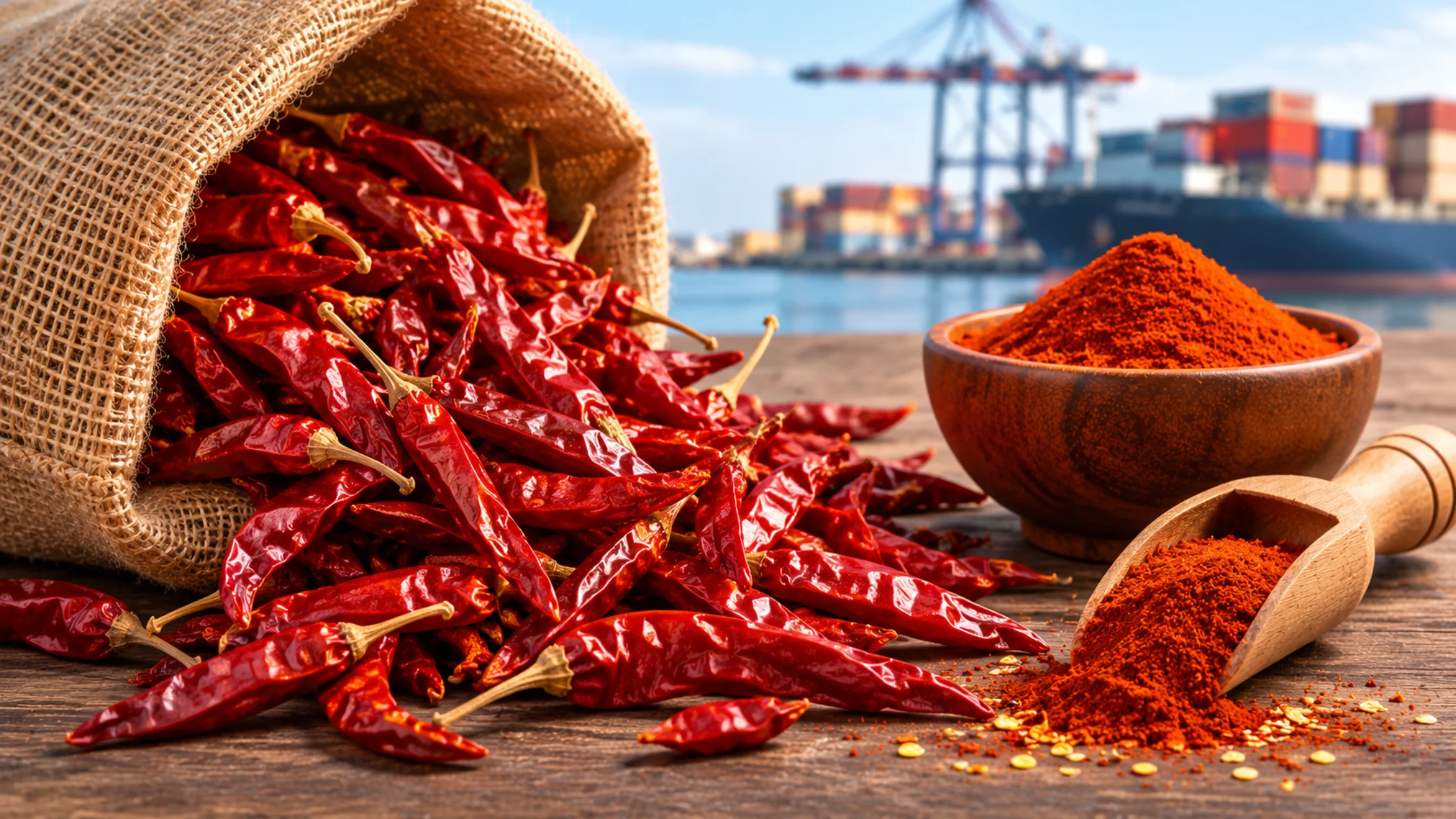
Red Chilli Powder Exporter to Italy: Import Guide
Published by Prism Exports
Ask an Italian food importer what worries them most, and it usually isn’t price. It’s the call from the port saying a lot has been held for a residue check. Choosing the right red chilli powder exporter to Italy is largely about avoiding that call. A rejected consignment can cost you the goods, freight, demurrage, and the customer waiting on the delivery. Prism Exports helps importers plan shipments with product specifications and export requirements in mind.
Italy buys chilli in real volume for salami and ’nduja production, chilli oils, retail packing, and the ingredient trade that supplies the rest of Europe. The rules are strict, but predictable. In this guide, Prism Exports covers grades, EU limits, packing, Incoterms, and lead times to help your first shipment run as smoothly as your tenth.
Why Italy Sources Its Chilli From India
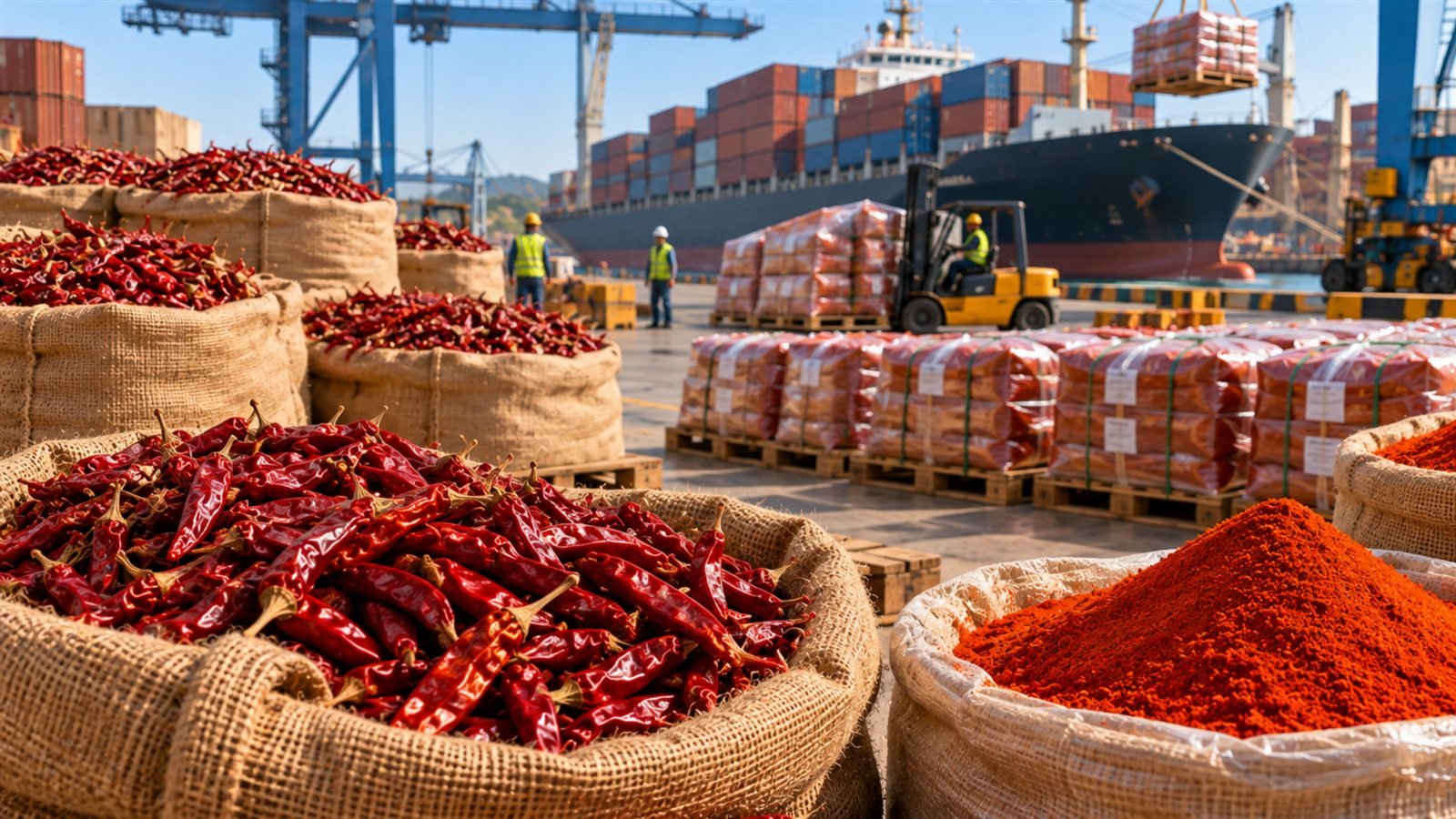
India grows chilli across Andhra Pradesh, Telangana, Karnataka and Madhya Pradesh at a scale few origins match, and the varieties suit Italian processing well. Guntur Sannam carries pungency. Byadgi gives deep red colour with modest heat. Teja sits at the hot end for oleoresin extraction. An Indian chilli powder supplier can blend to a target colour value and heat band, which matters if your salumificio needs the same red in March that it had in October.
Volume is the other reason. Buyers needing thirty or forty tonnes a quarter rarely find that consistency elsewhere, and an established Indian chilli powder supplier holds price better through the thin months because the main crop arrives between December and March.
What Makes a Reliable Red Chilli Powder Exporter to Italy
Plenty of firms will quote you. Far fewer can show a signed load plan, a pre-shipment report from an accredited laboratory, and the address of the grinding unit. A dependable red chilli powder exporter to Italy owns or directly controls processing, because that’s the only way to rule out cross-contamination with turmeric, undeclared colour additives, or the re-grinding of returned stock.
Traceability Back to the Farm Gate
Ask for lot-level traceability: the mandi or farm cluster, the harvest window, the drying method and the grinding date. Pods that sat in open yards through unseasonal rain carry a mould risk that no amount of post-cleaning fixes. A red chilli powder supplier India has cleared for export should name the district behind a lot within a day.
Documents a Red Chilli Powder Exporter From India Should Produce
- Spices Board Certificate of Registration as Exporter and a valid IEC code
- FSSAI licence covering the processing and packing unit
- Certificate of origin and, where required, a phytosanitary certificate
- Pre-shipment analysis: moisture, ASTA colour, Scoville, total ash, acid-insoluble ash, aflatoxin, ochratoxin A and a multi-residue pesticide screen
- Packing list and health certificate matching the container seal number
If a red chilli powder exporter from India hesitates on any of these, you already have your answer.
EU Limits That Decide Whether Your Container Clears
Italy applies EU-wide rules, and enforcement is not theoretical. Dried chilli sits in a higher-risk category, so consignments face documentary, identity and physical checks at the border control post at a frequency set by regulation.
The recurring rejection reasons are worth memorising. Aflatoxins, especially B1, are capped at very low single-digit parts per billion for chilli, with total aflatoxins only marginally higher, and ochratoxin A carries its own ceiling. Ethylene oxide has driven a large share of EU alerts on spices, and since the permitted level sits at the detection floor, any EtO fumigation in the chain ends the shipment. Unauthorised colours such as Sudan dyes still surface in cheap material, and salmonella must be absent.
Check current thresholds against EU regulation before contracting, since they get revised.
Grades, Colour and Heat: Writing a Spec You Can Enforce
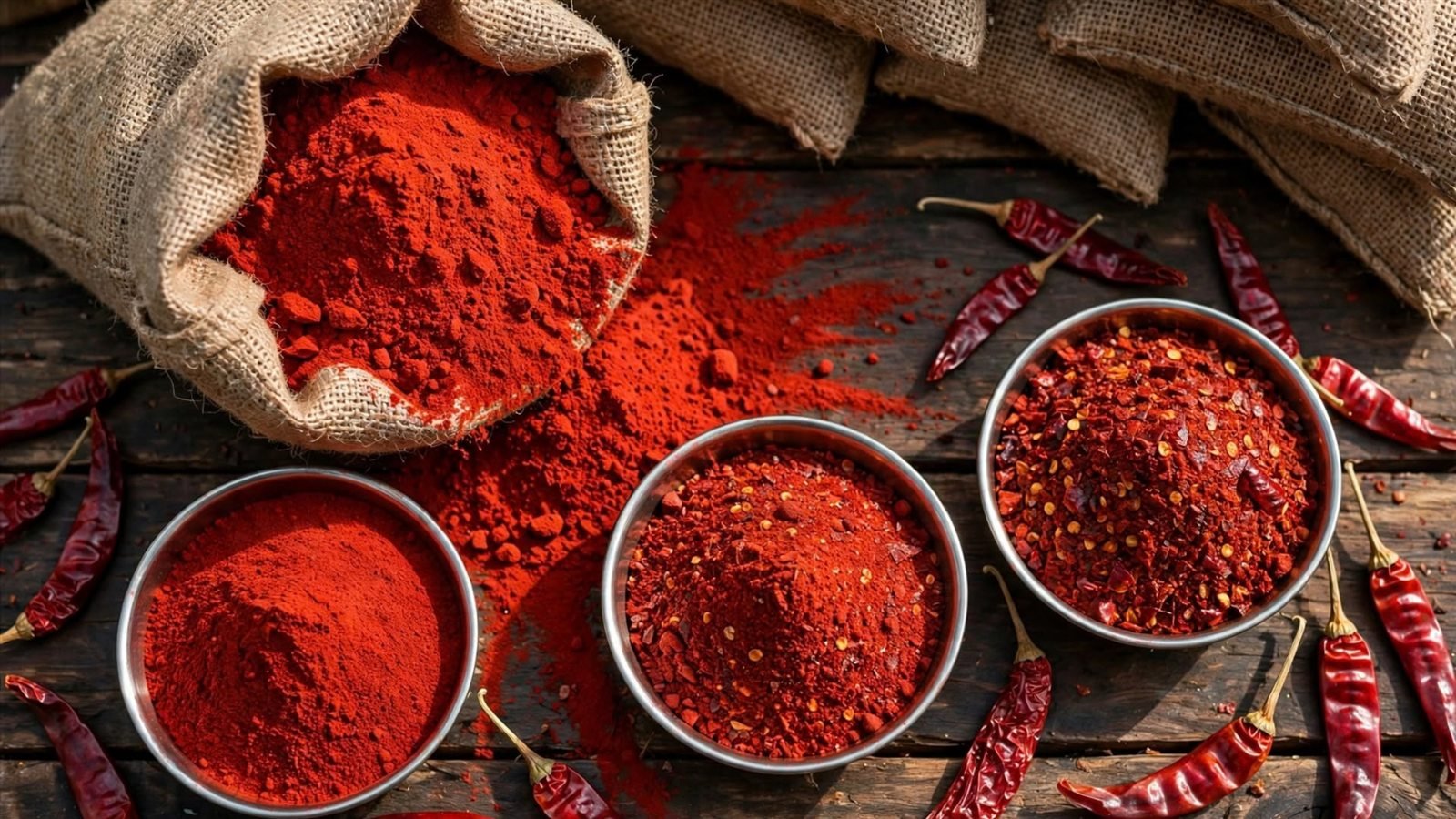
Buying “red chilli powder” with no spec is how disputes begin. Two lots can both be honest chilli powder and still sit far apart on colour, heat and mesh. Write the variety, ASTA colour range, Scoville band, mesh size, moisture ceiling and stem content into the contract, with the tolerance you’ll accept.
| Variety | Indicative ASTA colour | Approx. heat (SHU) | Typical Italian use |
| Byadgi | 70–110 | 8,000–15,000 | Colour-led blends, salami, paprika-style uses |
| Guntur Sannam S4 | 32–45 | 30,000–40,000 | General purpose, sauces, retail packs |
| Teja S17 | 55–75 | 75,000–100,000 | Oleoresin, hot chilli oil, ’nduja |
| Kashmiri type | 60–90 | 1,500–3,000 | Mild, colour-forward preparations |
Ranges shift by crop year and region, so treat them as indicative and confirm against the lot analysis.
Mesh, Moisture and Shelf Life
Most European buyers take 60 mesh for industrial use and 80 mesh for retail packing. Moisture is the quiet variable: at or below roughly 10% the powder holds colour and flows properly, and above that you invite caking. Colour also fades with light and heat, so a lot testing at 90 ASTA in February reads lower after a hot summer in store.
Packing and Loading a Red Chilli Powder Supplier to Italy Should Confirm
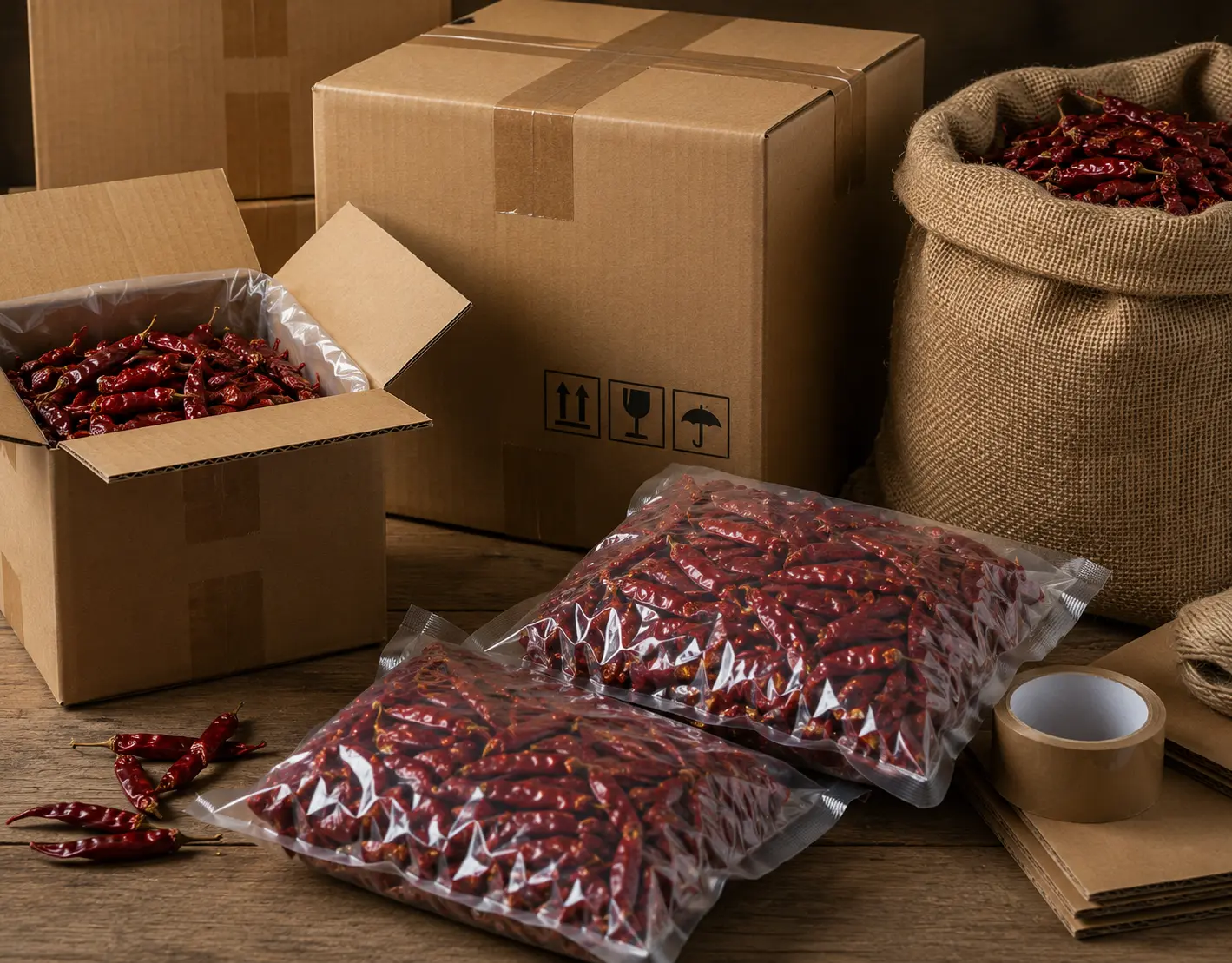
Standard export packing is 25 kg multi-wall paper bags with a food-grade inner liner, though 20 kg cartons and jumbo bags both have their place. Confirm these points in writing with your red chilli powder supplier to Italy:
1. Container inspection before stuffing, with no residual odour from a prior cargo
2. Desiccant and a kraft liner to control condensation on the sea leg
3. ISPM-15 compliant pallets, or a clear floor-loading plan if shipping unpalletised
4. No ethylene oxide, and no chemical fumigation without your written agreement
5. Photographs of the stuffed container and the seal before the doors close
Incoterms and Payment With a Bulk Red Chilli Powder Supplier
Most Italian buyers start on CIF Genoa, Livorno or La Spezia, then move to FOB Nhava Sheva, Mundra or Chennai once they trust their own freight arrangements. FOB gives carrier control and a better rate at volume; CIF removes coordination work early on.
Pricing is quoted in USD per metric tonne and moves with the crop, so ask any bulk red chilli powder supplier to split the quote into product, packing, inland haulage and freight rather than handing you one number. An irrevocable letter of credit at sight is the usual starting point, and a red chilli powder supplier India has registered for export will rarely object to a pre-shipment inspection clause at the load port.
Running a First Trial With a Red Chilli Powder Exporter to Italy
Ask for 500 g to 1 kg drawn from a real production lot rather than a hand-picked show sample, and test it yourself. Allow three to five weeks from signed contract to loading, and place the whole trial with one supplier so the results actually tell you something.
Frequently Asked Questions
What MOQ should I expect from a red chilli powder exporter to Italy?
One full container is the standard minimum, usually 15 to 18 tonnes of bagged powder. Some suppliers accept 5 MT as part-container for a first trial, though the per-tonne cost rises noticeably. Samples of 500 g to 1 kg are normally free, with courier charges billed to the buyer.
How long does shipping take from India to Genoa or Livorno?
Sea transit typically runs eighteen to twenty-five days from west coast Indian ports, longer from Chennai. Add three to five weeks of production and documentation beforehand, plus a few days for border checks on arrival. A lot flagged for physical testing can sit another week or two.
Who is responsible for EU compliance, the exporter or the importer?
Legally, the EU importer carries responsibility for placing compliant food on the market. Practically, the exporter controls nearly everything that determines compliance. Split it contractually: the supplier warrants the spec and testing, you verify through independent pre-shipment inspection, and both sides agree what happens if a lot fails.
How should chilli powder be stored once it lands?
Keep it cool, dark and dry, ideally under 25°C with low humidity, on pallets away from external walls. Colour and pungency fade with heat and light. Sealed liners should stay intact until use, and stock should rotate by lot date, not by whichever bag sits nearest the door.
Conclusion
Sourcing chilli well takes careful, consistent work. Write a clear specification, require pre-shipment testing, review documents line by line, and choose a red chilli powder exporter to Italy who treats a failed lot as a shared responsibility. That diligence helps prevent costly surprises and makes future price discussions more predictable.
If you’re comparing origins or planning a trial shipment, Prism Exports can help you discuss your specifications, volumes, documentation, and target ports. Contact the Prism Exports team to explore options for your business and plan your next shipment with confidence.
For updates and more information, follow Prism Exports on Instagram.