
Red Chilli Powder Exporter to Nepal: Sourcing Guide
Published by Prism Exports
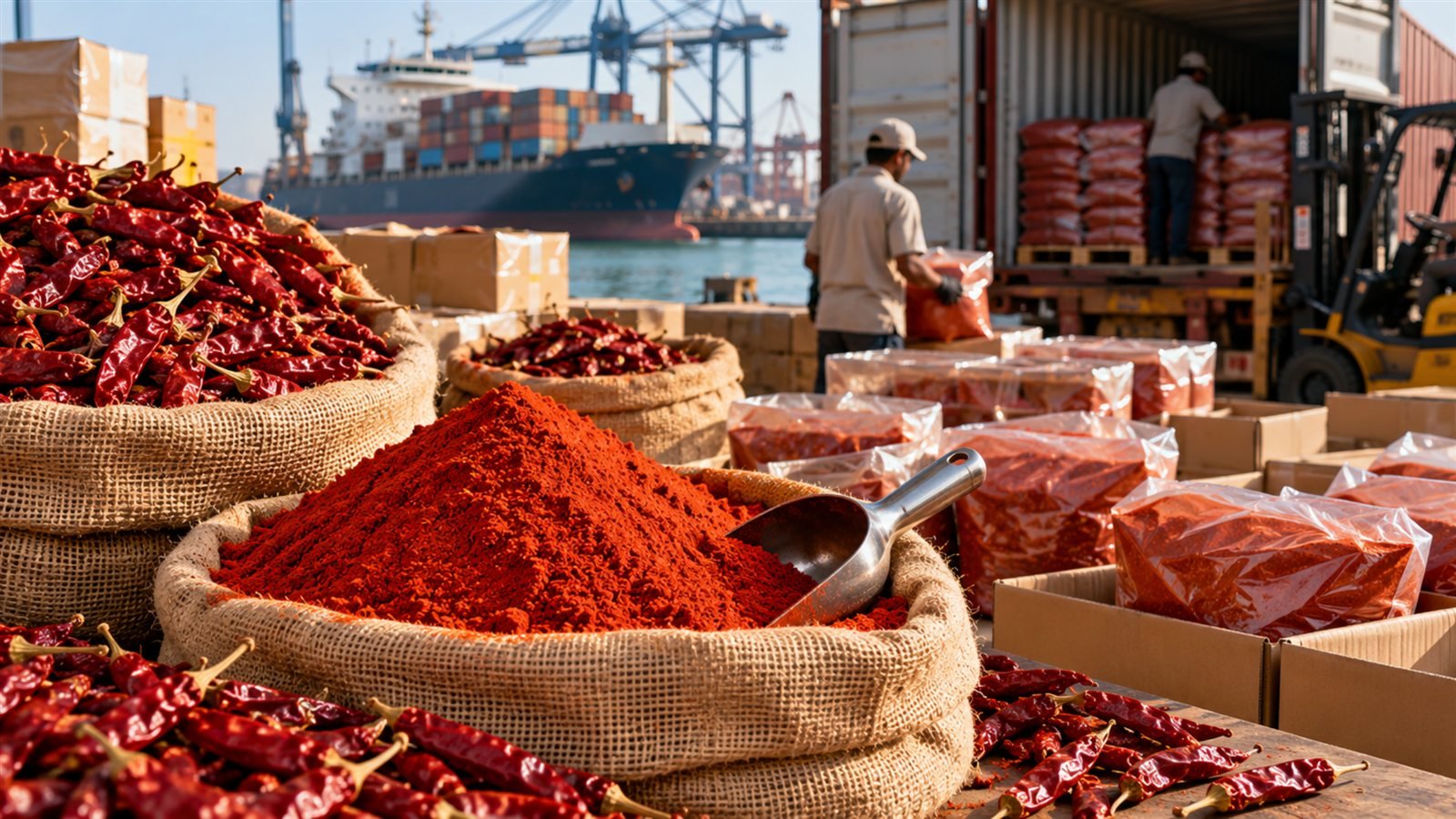
A trader in Birgunj can have chilli powder loaded in Guntur on Monday and unloaded in Kathmandu by the weekend. There’s no ocean freight, transshipment, or six-week planning horizon. That proximity is a major advantage when working with a red chilli powder exporter to Nepal, and it shapes how buyers plan order sizes, stock cover, and price risk. Prism Exports helps buyers plan sourcing around their requirements and delivery timelines.
Proximity also brings challenges. Border paperwork, truck detention, monsoon landslides, and quality checks at the entry point can delay a load expected in four days. In this guide, Prism Exports explains the product specifications, documents, loading details, and payment routes that can help keep delays to a minimum
Why Nepal Buys Its Chilli From India
Nepal grows chilli in the Terai and mid-hills, but domestic production doesn’t match consumption. Chilli goes into almost every daily meal, into pickles, into the masala trade and into restaurant kitchens running on volume, and the shortfall is filled across the southern border.
Geography does the rest. An Indian chilli powder supplier sitting near the Guntur or Byadgi belts can deliver to Raxaul or Sunauli in a few days by road, at freight costs a fraction of any sea route. Preferential access under the India-Nepal trade arrangement helps further, though confirm the duty and quota position for your HS line before committing.
Grades and Grinds Nepali Buyers Actually Order
The Nepali market is not one market. A wholesaler supplying Kathmandu’s retail packers wants something different from a pickle unit in Biratnagar. Write the spec down instead of ordering “best quality”, which means nothing once a load is rejected.
| Buyer type | Typical grind | What they prioritise |
| Retail spice packers | 60–80 mesh | Colour, consistent shade, clean flow |
| Pickle and masala units | 40–60 mesh | Heat, low moisture, low seed |
| Hotels and catering | 60 mesh | Steady heat, price stability |
| Re-grinders and blenders | Whole or coarse | Stem content, pod integrity |
Colour Versus Heat
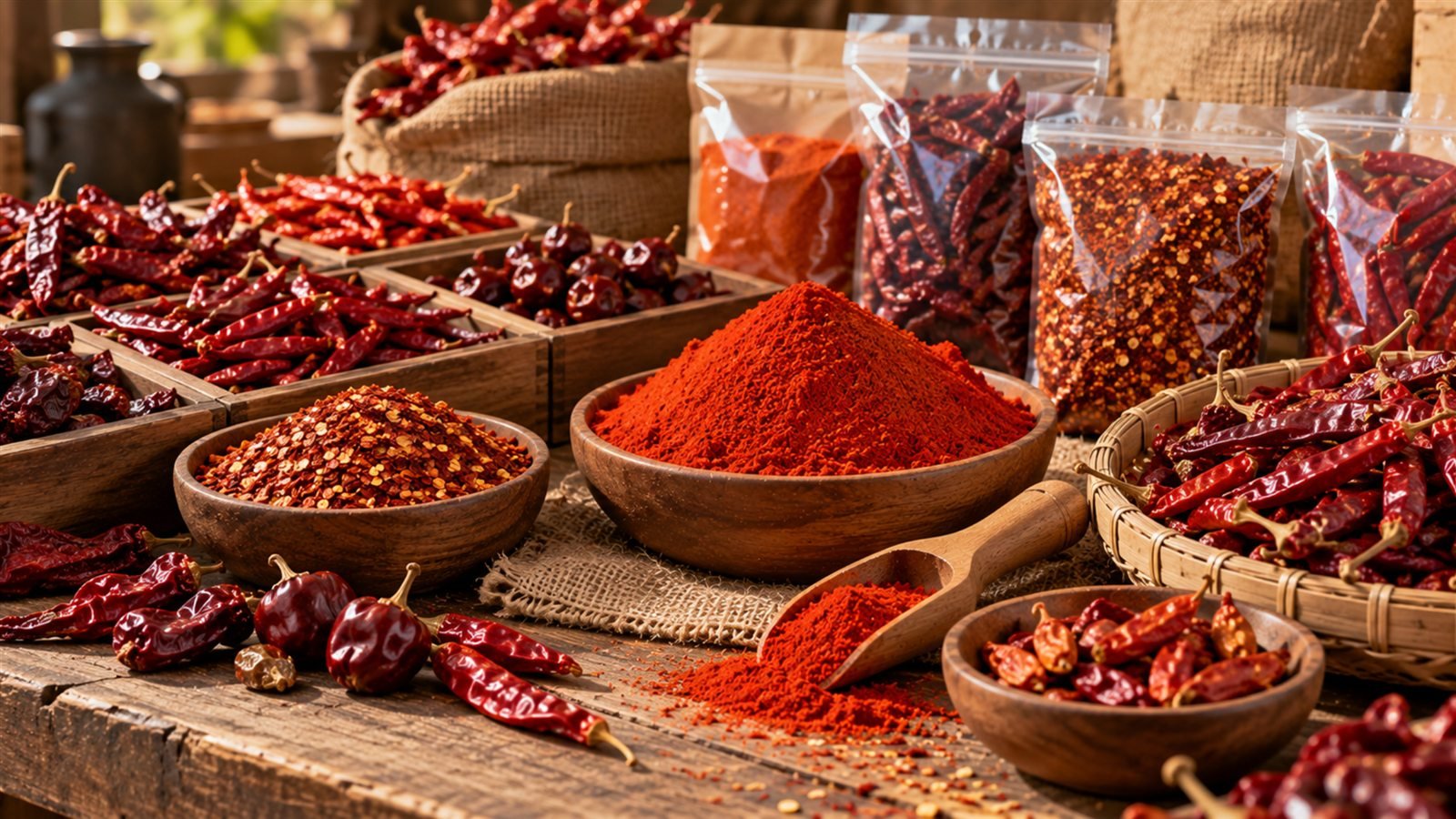
Byadgi delivers colour with modest pungency and suits products where a deep red matters. Teja and Guntur Sannam bring the heat most Nepali cooking expects. Many buyers order a blend. Fix a target colour value and Scoville band, then let your bulk red chilli powder supplier hold it as crops change through the year. A settled Indian chilli powder supplier does that without renegotiating every month.
Moisture, the Quiet Deal-Breaker
Powder leaving India at acceptable moisture can still cake in a humid warehouse through the monsoon. Keep the contract ceiling around 10% or below, and check it on arrival rather than trusting a certificate issued a week earlier at the mill.
What a Red Chilli Powder Exporter to Nepal Tests Before Loading
Nepal’s food regulator tests imported commodities, and a load flagged at the entry point sits until results return. That’s expensive in detention and worse in lost sales. A red chilli powder supplier India has approved for export should send the lot analysis before dispatch: moisture, ASTA colour, Scoville, total ash, acid-insoluble ash, aflatoxin, salmonella and a pesticide residue screen.
Adulteration is the other risk worth naming plainly. Added starch, spent chilli, brick dust and unapproved colours still circulate at the cheaper end of the trade. The protection is simple: buy from a red chilli powder exporter from India that grinds its own material, ask for the mill’s address, and keep a retained sample from every lot.
Documents for the Border Crossing
Nepal-bound consignments move on road documentation rather than ocean paperwork, and details must agree across every sheet. A quantity mismatch between invoice and transport document will hold a truck at the integrated check post, so a red chilli powder exporter to Nepal worth using checks the set twice before dispatch.
- Commercial invoice and packing list with the correct HS code for ground capsicum
- Certificate of origin, which supports preferential duty treatment where applicable
- Phytosanitary certificate from Indian plant quarantine
- Lot-wise certificate of analysis from an accredited laboratory
- FSSAI licence and Spices Board registration of the red chilli powder exporter from India
- Nepali import permission or product registration where your product category requires it
- Transport document, e-way bill and customs declarations for both sides
Requirements shift, so confirm the current list with your clearing agent at Birgunj, Bhairahawa or Kakarbhitta before the truck is loaded rather than after it arrives.
Packing and Truck Loading Your Red Chilli Powder Supplier to Nepal Should Confirm
Most Nepal-bound cargo moves in 25 kg or 30 kg multi-wall paper bags with a food-grade liner, or laminated PP bags where the buyer wants tougher handling for hill transport. A standard truck carries roughly 9 to 16 tonnes, and because powder is light you fill the deck long before the weight limit.
Insist on a covered vehicle with an intact tarpaulin. Roads through the Churia hills and on to Kathmandu are exposed, and monsoon rain on paper bags is a total loss rather than a partial one. Pallets are rare on this route, so stacking pattern and bag strength do the work.
Pricing and Payment for a Bulk Red Chilli Powder Supplier
Chilli is quoted per quintal or per metric tonne, and the market moves with the Indian crop calendar. Arrivals run heaviest between December and March, and prices generally sit softer then than in the thin pre-harvest months. Buyers with storage often build cover during arrivals; those without should at least avoid signing long contracts at seasonal peaks.
Payment between India and Nepal usually settles in Indian rupees through banking channels, subject to the rules applied by both central banks. Advance payment, documentary collection or a letter of credit are all used, and the choice tends to follow relationship history more than anything else. Ask your red chilli powder supplier to Nepal for standard terms in writing, including who bears detention if a truck is held at the border, because that clause decides who pays when something goes wrong.
Lead Times When Working With a Red Chilli Powder Exporter to Nepal
Production and packing typically take one to two weeks, less if the red chilli powder supplier India registers for export already holds ready stock in your spec. Road transit from the southern chilli belts to the border runs a few days, plus clearance, plus onward movement to Kathmandu, Pokhara or the eastern towns. Total planning horizon is generally two to four weeks, which is short enough to reorder frequently and avoid sitting on stock through a humid summer.
Two periods deserve buffer: the monsoon, when landslides close highway sections without warning, and the Dashain and Tihar run, when demand, truck availability and border traffic peak together.
Frequently Asked Questions
What is the minimum order for a red chilli powder exporter to Nepal?
Because cargo moves by road rather than by container, minimums are lower than for sea shipments. Many exporters accept part-truck loads of 3 to 5 tonnes, while a full truck of 9 to 16 tonnes earns the better freight rate per tonne. Samples are normally free.
How long does delivery take from India to Nepal?
Allow one to two weeks for production and packing, then a few days of road transit to the border, then customs clearance and onward movement. Two to four weeks door to door is a fair plan. Monsoon road closures and festival-season congestion can add a week, so order earlier during those periods.
Which documents are needed at the Nepal border?
At minimum an invoice, packing list, certificate of origin, phytosanitary certificate, lot analysis, transport documents and the exporter’s FSSAI and Spices Board credentials. Depending on your product category, Nepali import permission may also apply. Confirm the current list with your clearing agent, because requirements are updated from time to time.
How should chilli powder be stored in Nepal’s climate?
Keep bags sealed, off the floor on wooden dunnage, away from external walls, in the coolest and darkest part of the godown. Humidity is the enemy during the monsoon, and caking usually starts at the bottom of a stack. Order in smaller, more frequent lots rather than holding three months of cover.
Conclusion
Short distances make this trade forgiving in some ways and unforgiving in others. You can reorder quickly and hold less stock, but a paperwork error or an unsheeted truck in July can cost more than a season of hard negotiating. Write the product specification clearly, keep the document set complete, agree who pays for detention, and choose a red chilli powder exporter to Nepal with experience moving loads through your check post.
If you’re setting up a new supply line or reviewing your current one, Prism Exports can help you discuss grades, volumes, documentation, and border logistics. Talk with the Prism Exports team to map out a practical sourcing plan for your requirements and delivery schedule.
For updates and more information, follow Prism Exports on Instagram.



