Red Chilli Powder Exporter to Singapore: Sourcing Guide
Published by Prism Exports
Warehouse space in Singapore is costly, which shapes how buyers source spices. Many prefer smaller, more frequent shipments over holding months of chilli powder in a rented warehouse exposed to high humidity. That means a Red Chilli Powder Exporter to Singapore may need to meet specific expectations for lot size, delivery frequency, and climate-suitable packaging. Prism Exports can help buyers discuss sourcing plans for Singapore’s storage conditions.
Singapore also serves as a re-export hub for Southeast Asia and other regional markets. As a result, shipment documents may need to support requirements beyond the initial import. Prism Exports can help you review documentation and packaging needs when planning your order.
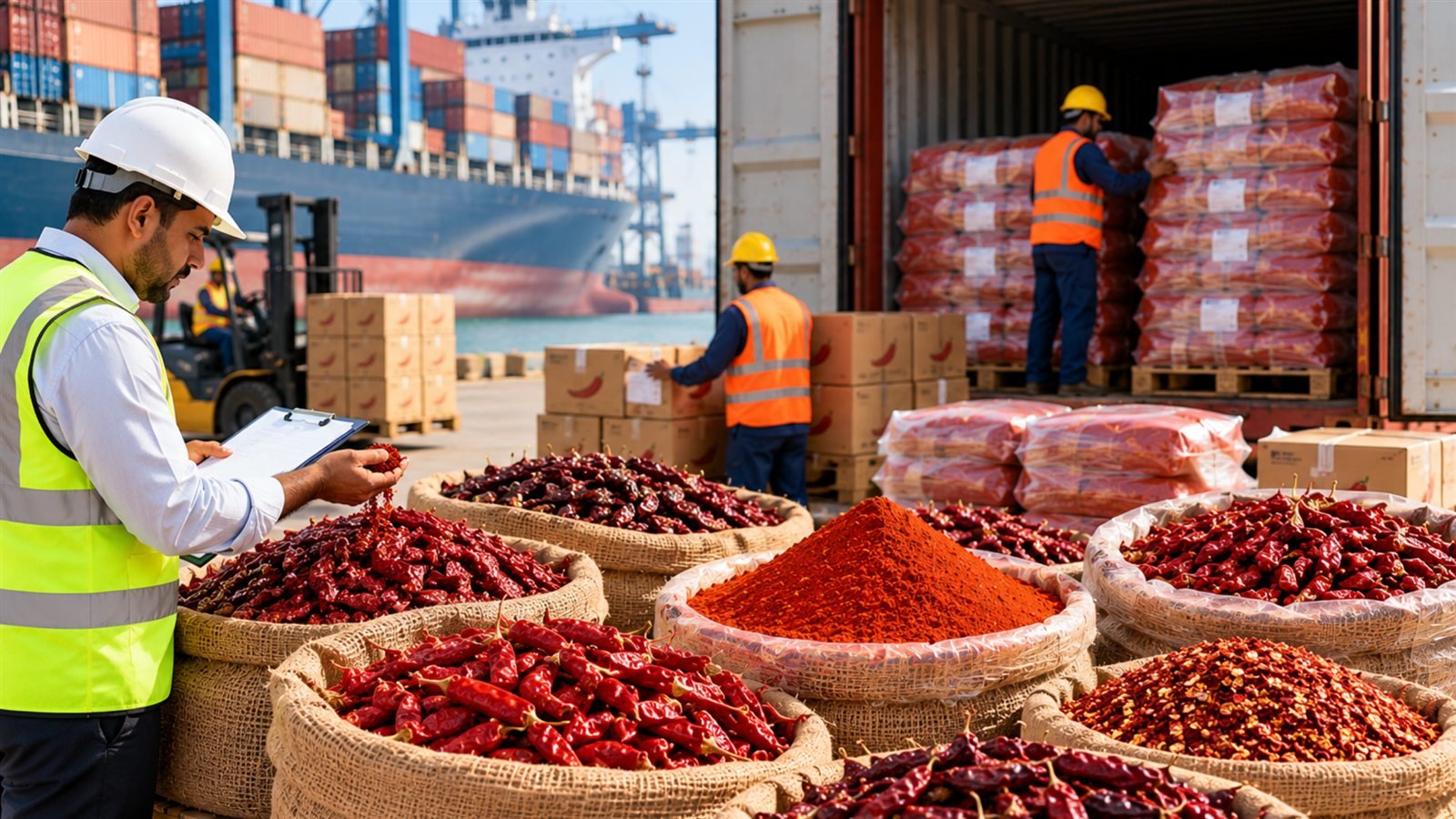
Singapore Buys Small, Fast and Often
Most importers here are not filling 18 MT of a single grade. They’re mixing two or three grades, sometimes combining chilli with turmeric, coriander and cumin in one container to keep freight efficient. Consolidation matters more than raw price per tonne.
That shapes who you should be talking to. A Red Chilli Powder Exporter from India geared only to full-container single-SKU shipments will find your order awkward, and it’ll show up in slow responses and rigid MOQs. Suppliers used to mixed loads treat it as normal.
Regulatory Reality: Licensing and Permits
Singapore’s food import system is administered by the Singapore Food Agency, and it is orderly rather than obstructive. That said, the responsibility sits squarely with the importer.
Licences, Registration and Consignment Permits
You need a registered entity with a UEN, an SFA licence appropriate to processed food import, and a permit for each consignment declared through the national trade platform. Product descriptions and HS codes must match the shipping documents. Errors are usually fixable, but they cost days you didn’t budget.
Contaminant and Residue Limits
Singapore applies its own limits for pesticide residues, heavy metals, aflatoxins and prohibited colourants such as Sudan dyes. Testing at port is risk-based, so a Red Chilli Powder Supplier to Singapore with a clean history attracts fewer checks. Ask for lot-specific certificates from an accredited lab, covering residues, mycotoxins and microbiology, and keep them on file for at least the shelf life of the product.
Grades That Suit Singapore Buyers
The market splits between colour-driven and heat-driven demand, and both exist in volume.
| Requirement | Typical spec | Where it goes |
| High colour, mild heat | 120–160 ASTA, low SHU | Sauces, sambal bases, retail packs |
| Balanced | 80–110 ASTA, medium SHU | General blends, foodservice |
| High heat | 60–90 ASTA, high SHU | Curry pastes, regional export blends |
| Moisture | 9% max preferred | Humid storage conditions |
| Mesh | 60–80 mesh | Wet-grind and paste applications |
Byadgi and Kashmiri-type material handles the colour end, Teja carries the heat, and Sannam covers general use. Ask for the spec sheet before the price; a serious Red Chilli Powder Supplier India will send one without being pushed. An honest Indian Chilli Powder Supplier will tell you when a colour target is unrealistic for the price you’ve quoted rather than shipping something borderline and hoping.
Halal Certification and Labelling
A large part of Singapore’s food trade runs through halal-certified supply chains. Even for a single-ingredient spice, buyers serving the Malay-Muslim market or exporting onward to Malaysia and Indonesia will usually want halal certification issued at origin by a recognised body.
Check whether your Indian Chilli Powder Supplier already holds recognised certification before you ask them to obtain it. Labelling should be in English and cover product name, country of origin, net weight, ingredient statement, batch code and date marking. If you’re repacking locally, confirm early who prints what, since printed pouches from India carry artwork lead time and plate costs on the first run.
What a Red Chilli Powder Exporter to Singapore Should Prove
Claims are cheap. Evidence isn’t. Before you commit to a first container, ask for:
1. A pre-shipment sample drawn from the actual production lot, not a showroom sample.
2. Full lab reports, in original form, with lab accreditation details visible.
3. Confirmation of sterilisation method, with steam preferred over any chemical treatment.
4. Names of the varieties used, plus the harvest year of the raw chilli.
5. Photographs of stuffing and container sealing for the first shipment.
Points four and five sound minor and are not. Old-crop material shows up as dull colour after two months in your warehouse, and poor stuffing shows up as torn bags at discharge.
Packing for Humidity and Small-Lot Storage
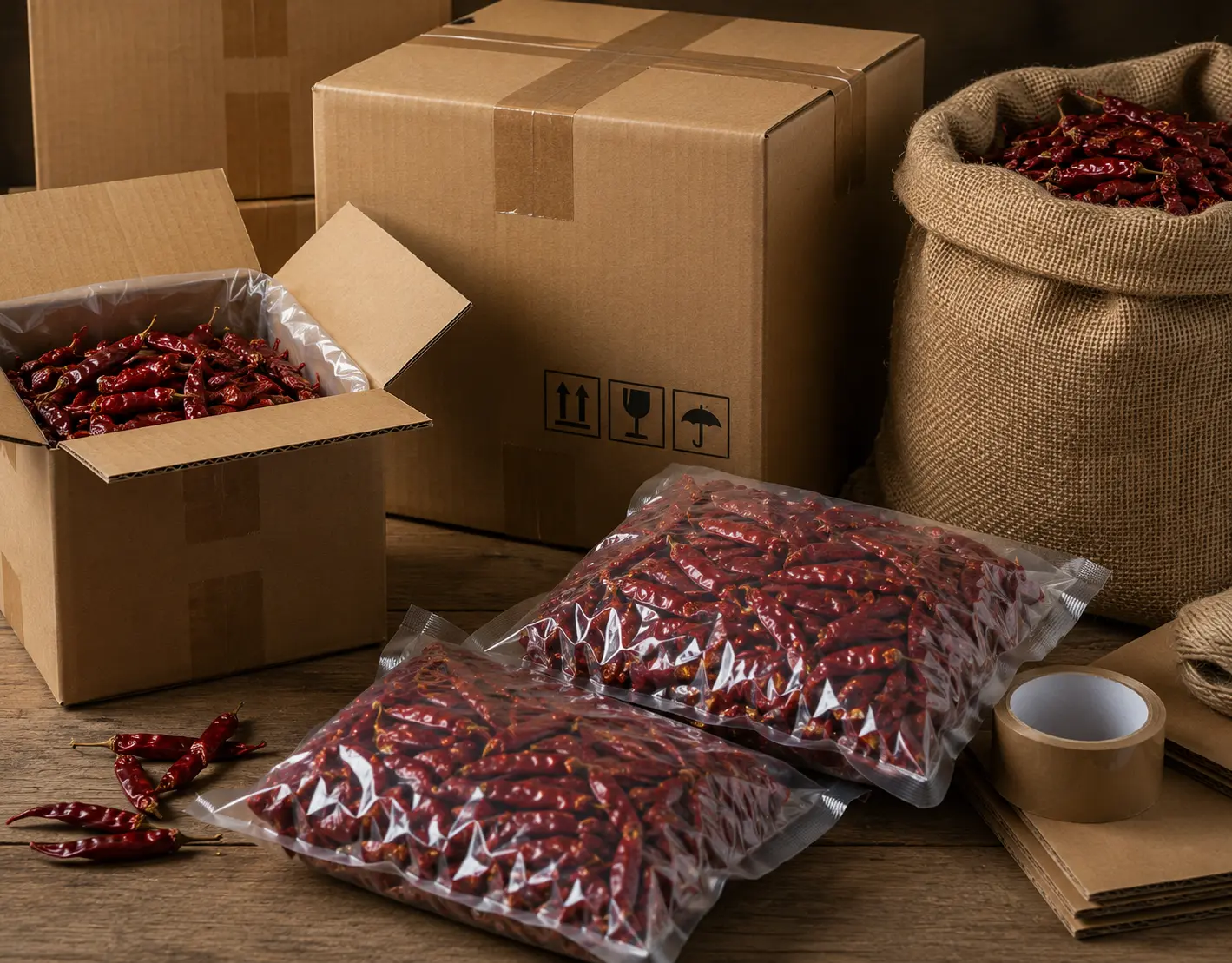
Standard bulk packing is 20 kg or 25 kg multi-wall paper bags with a food-grade liner. In Singapore’s climate, ask for the liner to be sealed rather than folded, and consider vacuum or nitrogen-flushed inner packs if you’re holding stock beyond two months.
- 25 kg bags suit manual handling; palletised loads discharge faster and tear less.
- A 20 ft container takes roughly 14–18 MT of bagged powder.
- Declared shelf life is commonly 12–18 months, with colour fading before heat does.
MOQ Talks With a Bulk Red Chilli Powder Supplier
Full-container MOQs are standard, but most exporters will run a 3–5 MT trial or consolidate your chilli with other spices. Say so at the enquiry stage. A Bulk Red Chilli Powder Supplier who knows you’re testing will quote differently from one who assumes you’re wasting time.
Freight, Lead Times and Payment
Sea transit from Chennai, Tuticorin or Nhava Sheva is short, commonly 7–14 days, and sailings are frequent. A Red Chilli Powder Exporter from India will still need two to three weeks for production, testing and documentation, so a realistic first-order lead time is four to six weeks.
Indicative FOB pricing for standard ground grades runs from the mid hundreds to over a thousand USD per MT depending on variety, ASTA colour, sterilisation and packing. CIF Singapore suits smaller importers; FOB works better if you already have freight contracts. First shipments are usually on a letter of credit or partial advance, easing to open terms once a few consignments have cleared cleanly.
Working With a Red Chilli Powder Exporter to Singapore Long Term
The value of a settled supplier shows up in the boring things: consistent colour between lots, documents that arrive before the vessel, and honest warnings when the crop is poor.
Red Chilli Powder Supplier to Singapore: First-Call Questions
Ask how many shipments they’ve made into Singapore, whether any were held by SFA, and what the resolution was. Ask whether they hold cold storage. Ask what their lot-to-lot ASTA variation looks like across a year. A capable Red Chilli Powder Supplier India can answer all three from records rather than memory.
Frequently Asked Questions
Do I need halal certification to import chilli powder into Singapore?
Not legally for a plain spice, but commercially it’s often decisive. Buyers serving Muslim consumers, manufacturers with halal-certified plants, and anyone re-exporting to Malaysia or Indonesia expect origin-issued certification. Ask your Red Chilli Powder Exporter to Singapore to arrange it at enquiry stage rather than after production, since retro-certifying a finished lot is awkward.
How small an order will an Indian exporter accept?
Trial quantities of 3–5 MT are commonly accepted, and many suppliers will consolidate chilli with other spices to fill a container. Below about 1 MT, air freight or courier samples make more sense than sea shipment. Expect a higher per-kilo cost on small lots, which is normal rather than a penalty.
What shelf life should I expect on arrival?
Chilli powder is generally declared at 12–18 months from production, and you should receive it with the large majority of that remaining. Colour deteriorates faster than pungency, particularly in humid storage. Ask for the production date on every bag and reject consignments arriving with less than two-thirds of shelf life left.
Is steam sterilisation worth the extra cost?
For most buyers, yes. Steam treatment cuts microbial load without the regulatory problems attached to chemical fumigants, and it protects you if your customer runs their own testing. It does add cost and can soften colour slightly. Discuss the trade-off against your end use before deciding.
Conclusion
Sourcing chilli powder for Singapore rewards precision over volume. Specify the variety, ASTA range, moisture level, and mesh size; request lot-specific lab reports; and choose packaging suited to humid storage conditions. A dependable Red Chilli Powder Exporter to Singapore should also be prepared to discuss consolidation, halal documentation, and permit requirements.
Start with a trial lot, compare the results with the certificate, and scale once shipments consistently meet your requirements. Prism Exports can help you review specifications, packaging, and documentation before you place an order. Talk through your sourcing plans with the Prism Exports team to find an approach that fits your business.
For updates, follow Prism Exports on Instagram.