
How to Source Bulk Peanuts from a Reliable Bulk Peanut Supplier India Buyers Trust
Published by Prism Exports
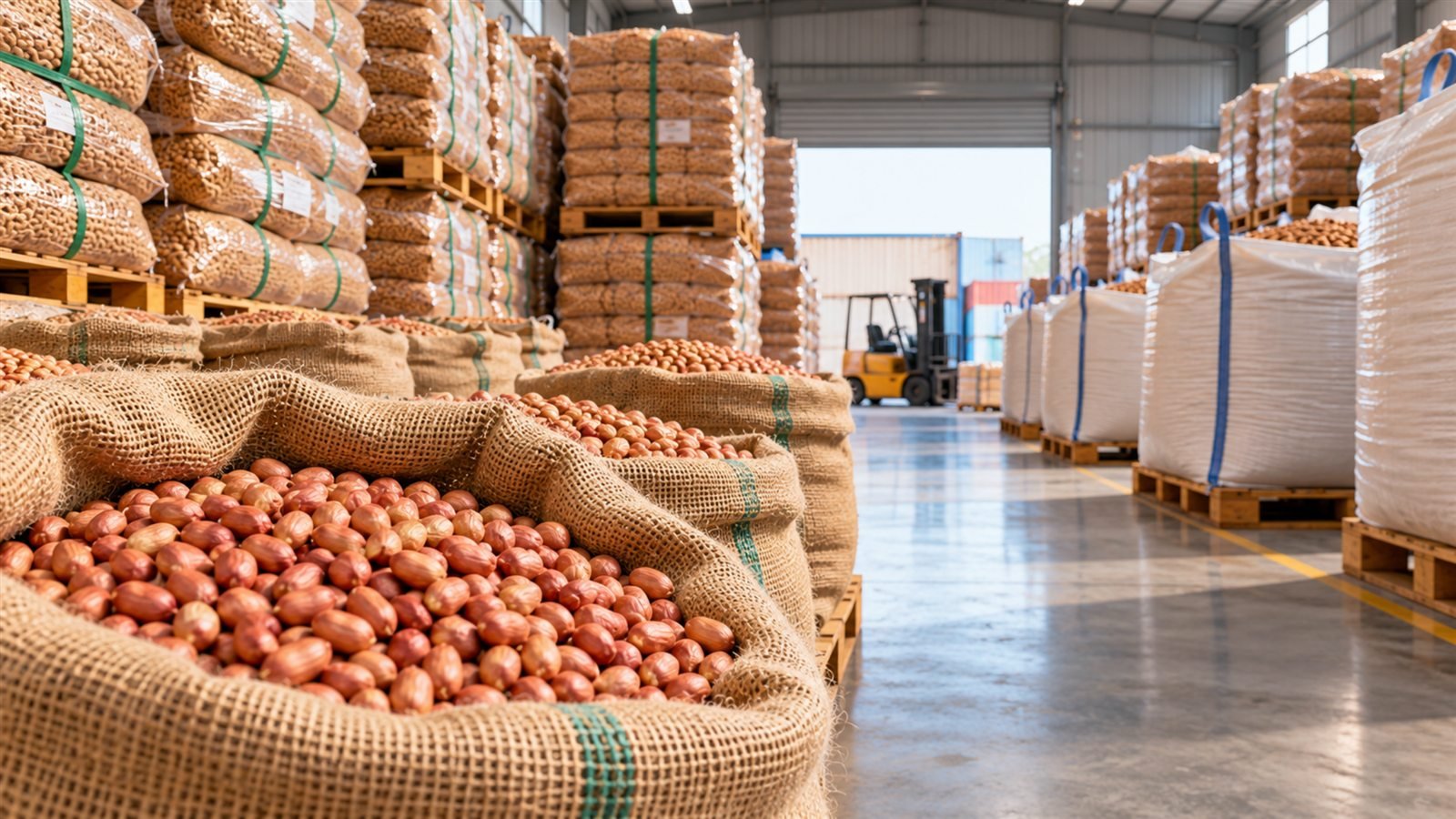
Three quotes for the same 40-foot container of Java peanuts can differ by over USD 200 per metric tonne. One supplier promises aflatoxin below 4 ppb but won’t identify the lab. Another lists 8% moisture without mentioning admixture. Sound familiar?
Choosing a bulk peanut supplier India buyers can rely on is about managing risk as well as comparing prices. A rejected consignment can erase savings across multiple shipments. Prism Exports helps buyers assess the details that matter before placing an order. This guide walks through the process: grade first, then testing, paperwork, and commercial terms. Prism Exports can help you evaluate each step against your sourcing needs
Why India Sits at the Centre of the Groundnut Trade
India harvests groundnut twice a year, the most useful fact a buyer can hold onto when planning a shipping calendar. The kharif crop arrives October through December out of Gujarat, Rajasthan and Madhya Pradesh; the summer crop follows around March to May from Andhra Pradesh, Telangana and Karnataka. So an Indian Peanut Supplier can offer fresh-crop material most of the year, with availability tightest in late monsoon months when old-crop stocks thin and prices firm.
Port choice follows the growing belt. Gujarat cargo moves through Mundra and Kandla; southern material sails from Chennai or Tuticorin. Ask where your goods will actually be stuffed. Any Bulk Peanut Supplier India buyers rate will answer plainly, because inland haulage of 300 to 900 km changes your cost and the hours your peanuts spend in a hot truck.
Get the Variety and Grade Right Before You Discuss Price
Java, Bold and TJ Types
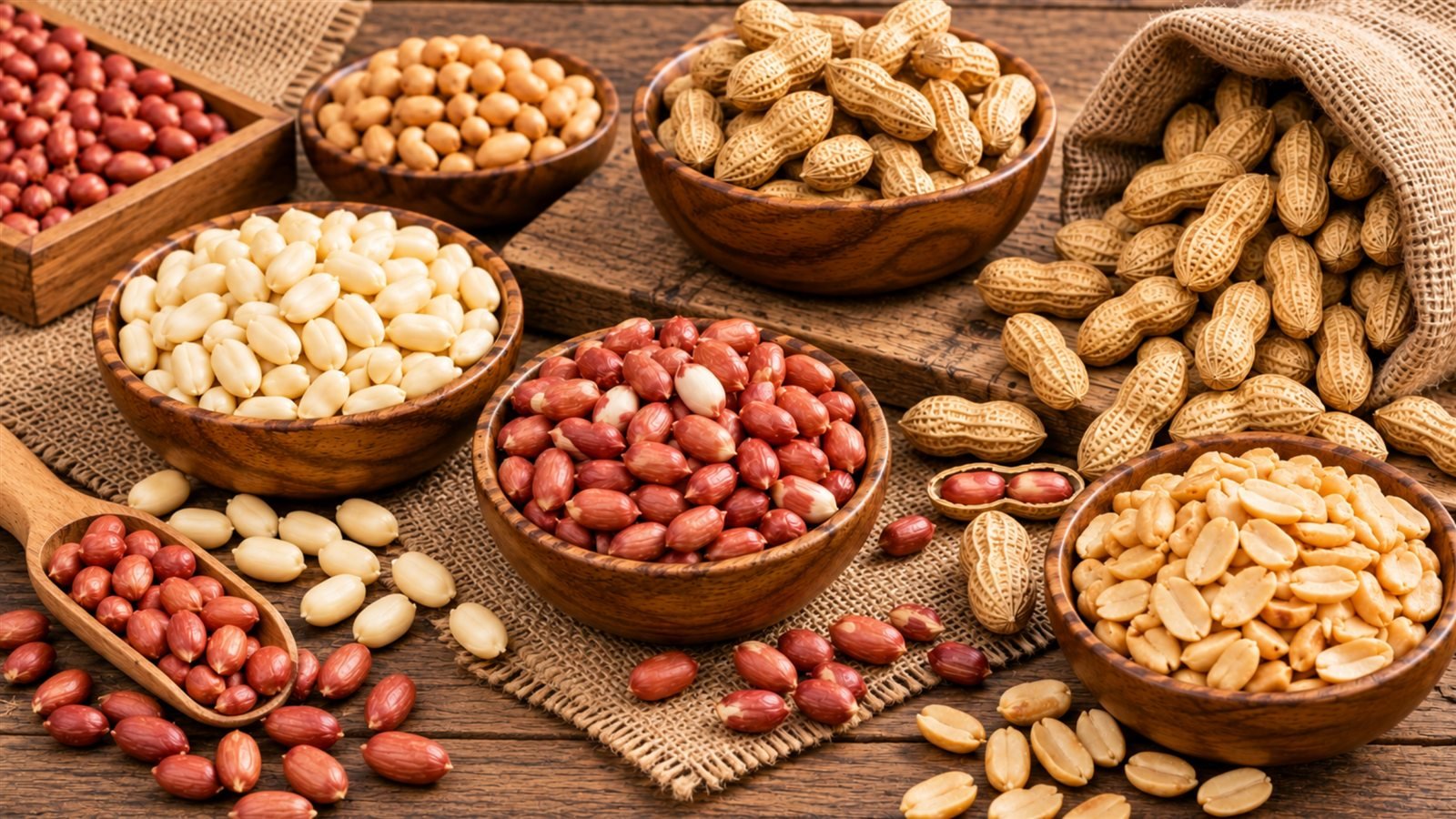
Indian groundnut trades mainly as Java (Spanish type), Bold (runner type) and TJ. Java kernels are smaller and rounder, favoured for roasting, snacks and confectionery, quoted in counts per ounce: 50/60, 60/70, 70/80, 80/90. Bold kernels are longer and heavier, common for peanut butter, quoted as 38/42 or 40/50. The count is not cosmetic. A 70/80 Java priced USD 60 below a 60/70 may suit a grinder and be wrong for a retail pack.
Blanched, Split and Processed Forms
Past raw kernels you’ll find blanched (skin removed), split, roasted and granulated material. Blanching carries a premium and shortens shelf life a little, since the skin protecting the kernel is gone. Any Bulk Peanut Exporter worth shortlisting sends a 1 kg sample drawn from the actual production lot, not a polished showroom sample. Put the count band in the contract, not just the type name.
Quality Norms a Bulk Peanut Supplier India Buyers Rely On Should Meet
Moisture, Admixture and Damage
Standard contract language sits around 7 to 8 percent maximum moisture, foreign matter under 1 percent, and defined tolerances for damaged or discoloured kernels. Moisture is the quiet troublemaker. Load at the top of spec, sail through the tropics, and you arrive with mould pressure nobody budgeted for.
Aflatoxin and Pesticide Residues
Aflatoxin is where consignments die. The EU applies tight limits, with a separate allowance for material going for further processing; the US, Gulf states and Southeast Asia each set their own ceilings. Write your destination’s exact figure into the contract instead of accepting a vague “as per international standards” clause. Residue screening matters most for European and Japanese buyers. Any Groundnut Supplier India importers take seriously works with an accredited lab, sends the raw report with the lot number on it, and keeps retained samples for a year so a later claim is settled on evidence.
Documentation a Peanut Exporter from India Must Provide
Ask for draft copies before shipment, while a wrong HS code or mismatched net weight is cheap to fix. A complete file usually includes:
- Commercial invoice and packing list showing lot numbers
- Bill of lading, plus certificate of origin (preferential where an FTA applies)
- Phytosanitary certificate from the plant quarantine authority
- Certificate of analysis covering aflatoxin, moisture and residues
- Fumigation certificate where the destination requires it
- Exporter’s APEDA registration and FSSAI licence details
Some markets add a layer of their own, such as facility pre-registration or an import permit issued before shipment. An established Peanut Exporter from India raises those at the enquiry stage.
Pricing, Incoterms and Payment Terms with a Bulk Peanut Supplier India
Groundnut prices move with crop size, domestic oil-crushing demand and the rupee. Indicative FOB levels for standard Java and Bold grades sit in the four-figure USD per MT range and shift within a season. Treat any quote from a Bulk Peanut Supplier India as a snapshot valid for 3 to 7 days.
| Incoterm | Seller’s duty ends | Suits you when |
| FOB Mundra / Chennai | Goods on board | You hold your own freight contracts |
| CFR destination | Freight paid, risk passes on board | You want one freight number |
| CIF destination | Freight and insurance arranged | You’re new to the route |
| EXW factory | At the gate | Rarely worth it for food cargo |
A first order commonly runs on an irrevocable letter of credit at sight, or 20 to 30 percent advance against scanned documents. Open credit from a Bulk Peanut Supplier India is earned over several clean shipments, not negotiated on day one.
Container Loading, Packing and Realistic Lead Times
Bulk kernels ship in 25 kg or 50 kg PP or jute bags with a food-grade liner. A 20 ft container takes roughly 19 to 20 MT bagged; a 40 ft moves 26 to 27 MT, subject to road weight limits at both ends. Ask for kraft lining and desiccants on humid transits, and insist the container is checked for rust stains, odour and pinhole light before stuffing. A careful Groundnut Supplier India buyers rely on sends photographs of the sealed load the same day.
Lead times run 15 to 30 days from a confirmed order and workable LC, plus sailing time. Mundra to Jebel Ali is under a week; Mundra to Rotterdam commonly runs three weeks or more, and port congestion around festival season adds days nobody warns you about. Agree the loading pattern with your Bulk Peanut Supplier India contact before booking, because changing bag size later shifts your landed cost per kilo.
How to Audit an Indian Groundnut Exporter Before the First Order
1. Ask how many containers of your grade they shipped last year, and where to.
2. Request two recent lab reports, then verify one with the lab directly.
3. Confirm whether processing is in-house or bought in from a trader.
4. Have a third-party agency draw pre-shipment samples on the first two orders.
5. Check the sortex and grading line exists, by video if you can’t visit.
6. Agree in writing what happens on a quality claim: replacement, discount or arbitration.
A credible Indian Groundnut Exporter answers all six without hedging. A trader posing as a processor qualifies every answer, and that hesitation tells you what a site visit would.
Frequently Asked Questions
What is the usual minimum order for bulk peanuts from India?
One 20 ft container, roughly 19 to 20 MT, is the practical floor. Some exporters accept a trial lot of 5 to 10 MT on an LCL basis, though per-tonne cost rises sharply. Most repeat buyers settle into full containers, since handling and paperwork cost much the same either way.
How do I confirm an aflatoxin report is genuine?
Check that it names the lot, the sampling date and the method used, then contact the laboratory using details you find yourself rather than those printed on the certificate. On early shipments, run a confirmatory test at destination and compare. Any Bulk Peanut Supplier India buyers rate highly expects that.
Java or Bold peanuts for peanut butter?
Bold, usually. The larger runner-type kernels give better yield and a rounder roasted flavour in grinding. Java suits roasting, coating and confectionery, where uniform small kernels matter visually. If you plan to blend, buy both from a Bulk Peanut Exporter and run a trial batch before locking a full-season contract.
Can an Indian Peanut Supplier handle private-label packing?
Many can, from 500 g retail pouches through 25 kg foodservice bags. You supply artwork and destination-compliant label copy covering allergen declarations, lot coding and best-before dating. Expect setup charges on the first run, then lower unit costs as volumes build.
Conclusion
Reliable groundnut sourcing starts with clear requirements and consistent checks. Confirm the variety and count, include your destination’s aflatoxin and residue limits in the contract, request lot-specific lab reports, and review loading practices before the container is sealed. Price matters, but a small per-tonne saving can disappear if a shipment is delayed or rejected. A dependable bulk peanut supplier India importers return to should welcome this level of scrutiny.
Consider starting with a trial container, arranging independent testing, and scaling up once the results meet your requirements. Prism Exports can help you compare offers and assess which grade fits your end use. Discuss your sourcing needs with the Prism Exports team to explore options for your programme.
For updates, follow Prism Exports on Instagram.



